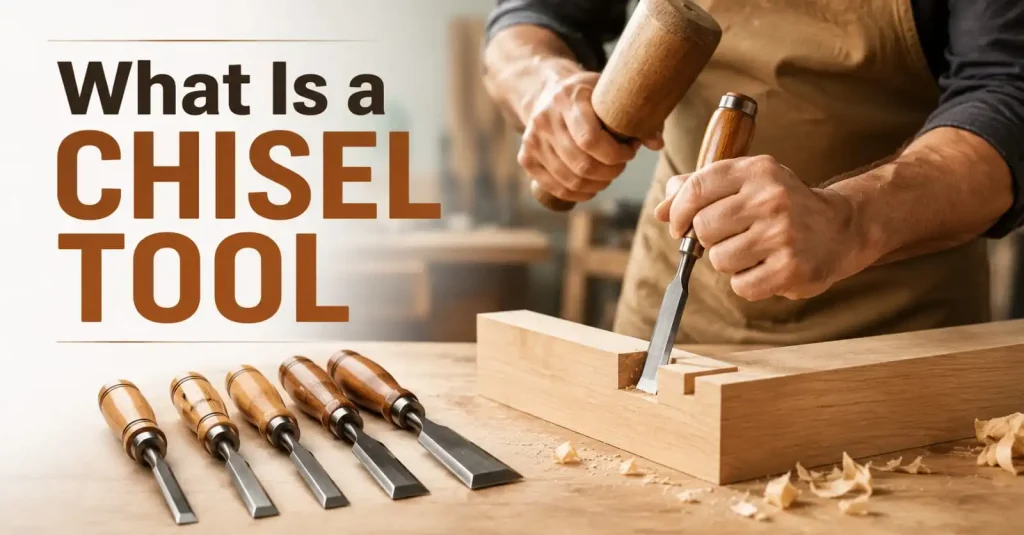
Have you ever seen a carpenter working at a construction site? You will usually find a tool lying next to the hammer. That tool is known as a chisel. It is the most useful hand tool in construction. It not only helps carpenters shape wood for furniture but also removes old tiles during renovation. Thinking about what the chisel meaning is and how to use it safely? Read on to find out all about the chisel tool in this blog post.
What Is a Chisel Tool?
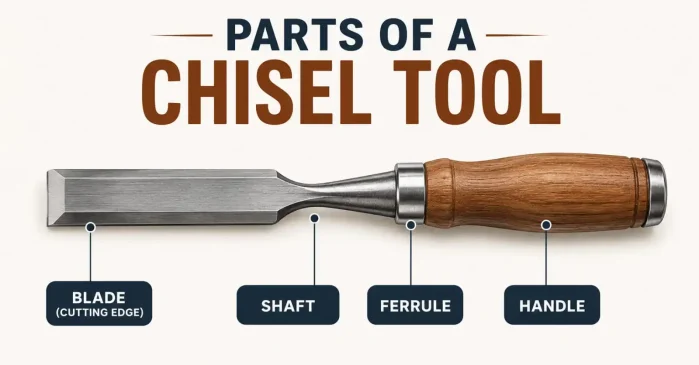
The chisel is a hand tool with a sharp cutting edge that carpenters use to cut or shape hard materials. The blade and handle design of the chisel tool vary as per the construction material. A chisel has the three main parts:
- Blade or cutting edge
- Shaft
- Handle made of wood or plastic
Some people confuse it with saws that remove large sections of material. However, it is a tool that only helps the engineers shape the material. Let’s understand it this way: The painter adds color carefully. However, a sculptor removes tiny pieces to form the final shape. The chisel tool works on the same principle.
What Are the Different Types of Chisel Tools?
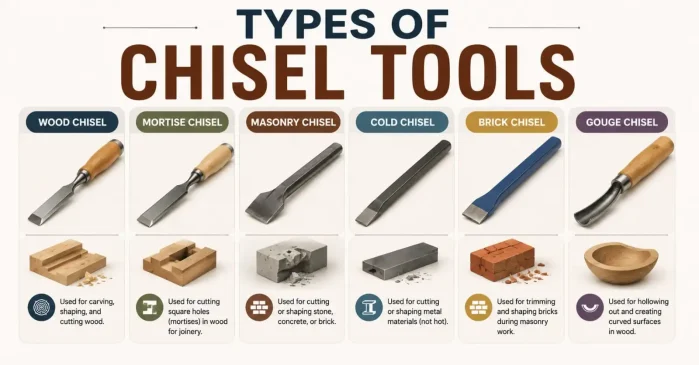
Given below are the different types of chisel tools available as per the different blade shapes and strengths:
- Wood Chisel
It is the most common chisel tool that carpenters use for the following:
- Cut wood joints
- Trim wooden edges
- Carve decorative patterns
- Make furniture
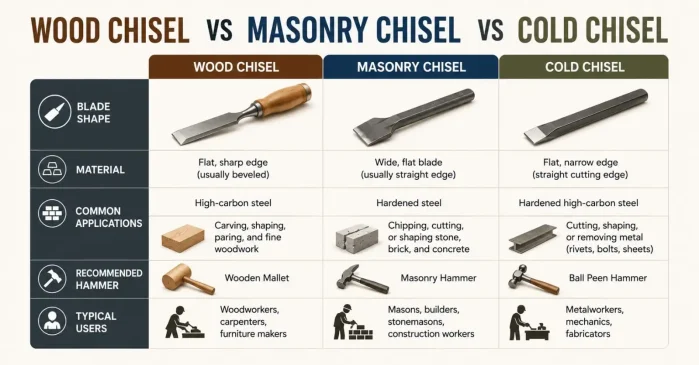
You will often see a wood chisel struck with a wooden or rubber mallet. They don’t have a steel hammer to protect the handle.
- Mortise Chisel
It has a thick and strong blade that creates deep rectangular holes. These holes are called mortises. The common uses of a mortise chisel are:
- Door frames
- Wooden windows
- Heavy timber construction
The design of the mortise chisel allows you to repeat hammer strikes without any damage to the blade.
- Masonry Chisel
Masons mostly use the masonry chisel tool when they work with bricks and concrete blocks. It helps with the following:
- Break bricks
- Cut paving stones
- Remove old mortar
- Concrete repairs
Construction workers pair a masonry chisel with a club hammer for better impact.
- Cold Chisel
A cold chisel helps you cut metals that don’t heat up. Mostly, people use it in workshops to:
- Remove rivets
- Cut bolts
- Shape metals
- Split steel sheets
Cold chisels are different from wood chisels. They are made from hard high-carbon steel.
- Brick Chisel
Brick chisels have a wider blade than the masonry chisels. They are ideal for the following:
- Split bricks cleanly
- Trim brick edges
- Bricklay adjustments
The broad cutting edge of the brick chisel creates straight cuts across the surface.
- Gouge Chisel
A gouge chisel has a cutting edge in curved shape. The engineers mostly use it to:
- Carve wood
- Sculptures
- Decorate furniture
- Make bowls
The best part? The curve blade allows smooth and round cuts.
What Are the Common Applications of Chisel Tools?
The versatility of a chisel tool is the reason behind its popularity across industries. Given below are the common applications of chisel tools:
- Woodworking
A chisel is often found with the carpenters, as it helps them in the following:
- Fit doors
- Make cabinets
- Repair furniture
- Create wood joints
- Decorate carvings
Many advanced woodworking machines are available today. However, many people still use chisels for final finishing touches.
- Masonry and Construction
Chisels are really useful at construction sites. They are common for the following purposes:
- Remove damaged tiles
- Cut concrete edges
- Repair walls
The engineer might also use it to shape stone blocks.
- Flooring Work
Workers also use a chisel tool to remove adhesive residue or chipped tiles when replacing an old floor. The most intriguing part? It prevents the surroundings from damage.
- Fabricate Metals
Mechanics and metalworkers use cold chisels for the below reasons:
- Cut rusted bolts
- Remove seized fasteners
- Split stubborn metal parts
People mostly take advantage of it when power tools cannot access tight spaces.
Note: A chisel tool is also valuable for DIY home projects. Many home toolkits have one wood chisel as it is versatile.
How to Use a Chisel Tool Safely?
Given below are some tips you should follow to use a chisel safely:
- Keep the Blade Sharp
A sharp chisel requires less force. However, a dull blade slips more easily, which can cause injury. The worker sharpens it regularly to improve the quality of cuts.
- Choose the Right Chisel
A wood chisel is not suitable for cutting concrete or metal. This means every chisel has its own purpose. The wrong one may damage the tool and the workpiece.
- Wear Safety Equipment
It is advisable to wear safety goggles and work gloves before using a chisel tool. You might also have to wear a dust mask at the time of cutting concrete or stone.
- Secure the Material
Always hold the material tightly when you are using a chisel. You can also use clamps or a vice whenever possible. A stable workpiece not only improves safety but also accuracy.
- Strike Properly
The most important thing to remember is to use a proper hammer or mallet. Avoid excessive force. Blows in control are safe and produce clean results.
The Final Words
The chisel tool offers advantages beyond the regular machines. It provides precision and control for many applications. Modern construction relies on advanced equipment. However, experts still use chisels for fine detailing or shaping. This means the chisel continues to have an important place in workshops and construction sites.
FAQs
1. How do you choose the right chisel for a project?
Choose a chisel based on the material and task. Use wood chisels for timber, masonry chisels for brick and concrete, and cold chisels for metal. Selecting the correct chisel improves accuracy, safety, and tool life.
2. What material are chisel tools made from?
Most quality chisels are made from high-carbon steel or chrome-vanadium steel for durability and edge retention. Many feature ergonomic wood, plastic, or rubber handles that provide a comfortable and secure grip during use.
3. What safety precautions should you follow while using a chisel?
Always wear safety glasses, keep the chisel sharp, secure the workpiece, and strike with the correct hammer. Cut away from your body and inspect the tool regularly to prevent slips, flying debris, and accidental injuries.
4. How do you maintain a chisel tool?
Keep the blade clean, sharpen it regularly, and store it in a dry place with a blade guard. Lightly oil the metal parts to prevent rust and inspect the handle for cracks before every use.
5. What is the difference between a cold chisel and a masonry chisel?
A cold chisel is designed to cut and shape metal, while a masonry chisel is made for brick, concrete, stone, and mortar. Using the correct type ensures cleaner cuts and prevents unnecessary tool damage.
6. Can beginners use a chisel tool?
Yes. Chisels are beginner-friendly when used correctly. Start with basic woodworking projects, learn proper cutting techniques, use the right hammer, and always follow safety practices to achieve accurate and controlled results.
7. How long does a chisel tool last?
A high-quality chisel can last for decades with proper care. Regular sharpening, correct usage, rust prevention, and proper storage help maintain its cutting performance and extend its lifespan, making it a worthwhile long-term investment.