Concrete is popular due to its strength. Every building stands strong for decades because of it. But do you know that even premium concrete fails to perform due to poor construction? Although there are many consequences, the most common problem is spalling concrete. It may look like a small chip or a patch on the peeling surface. Want to know spalling meaning and its causes? Read on this blog post to find out!
What Is Concrete Spalling?
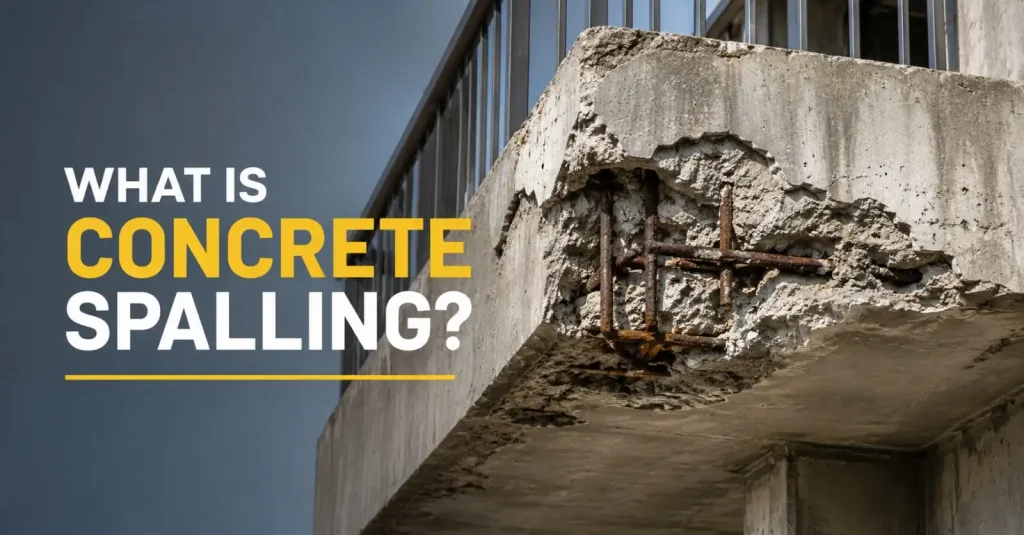
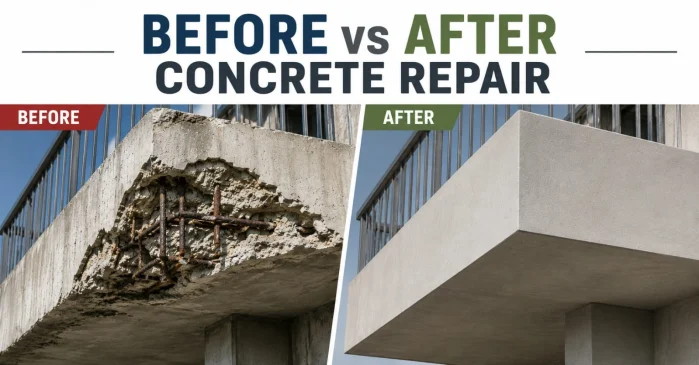
Spalling concrete occurs when concrete pieces detach from the surface. Hence, it exposes rough patches or even the reinforcing steel in the structure. But how do you detect concrete spalling? If you see your concrete in any of the following conditions, it means concrete spalling:
- Small flakes or chips
- Surface scaling
- Deep cracks with loose concrete
- Visible Reinforcement bars
The spalling begins on the surface. However, the actual problem develops inside the concrete.
What Are the Causes of Concrete Spalling?
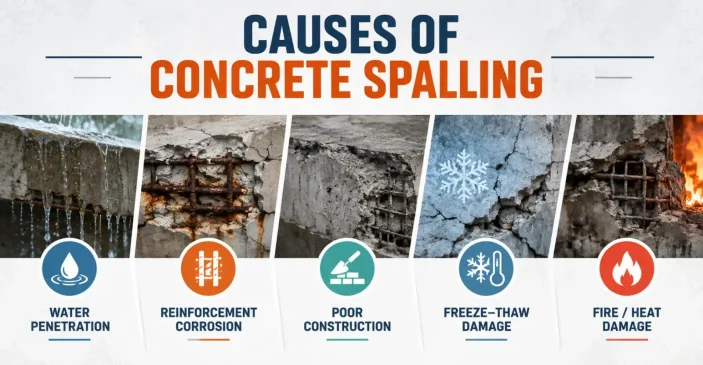
Given below are the common causes of concrete spalling in buildings:
- Corrosion of Reinforcing Steel
The alkaline environment of concrete protects the steel inside reinforced concrete. However, the steel begins to rust when different elements penetrate the concrete. Some of these components are as follows:
- Water
- Oxygen
- Chlorides
- De-icing salts
Hence, the surrounding concrete cracks when the rust expands in the area. This type of concrete spalling is most common in open areas like bridges and balconies.
- Water Penetration
Concrete contains microscopic pores. It becomes weak when water enters these pores continuously. Thus, the spalling concrete may appear if temperatures fluctuate or moisture remains trapped.
- Poor Construction Practices
Many cases of spalling concrete happen due to poor construction. Given below are some of the common mistakes:
- Improper concrete mix ratio
- Inadequate curing
- Insufficient concrete cover over reinforcement
- Poor compaction
It is advisable to hire an expert engineer to avoid these common mistakes.
- Freeze-Thaw Damage
Water inside concrete freezes and expands in colder regions. Hence, internal pressure due to continuous freezing and thawing causes spalling concrete. It is common internationally and in hill stations in India.
- Fire or Extreme Heat
The internal moisture and strength of concrete are reduced because of high temperatures. This is why spalling occurs after a fire. The concrete surface expands quickly and breaks apart under thermal stress.
What Are the Tips to Follow to Prevent Concrete Spalling?
Given below are the tips to prevent concrete spalling:
- Use High-Quality Materials
Good quality materials directly influence the performance of concrete. Thus, it is necessary to choose the right grade of cement and clean aggregates for construction. The experts recommend using dense concrete because it is less vulnerable to moisture and corrosion.
- Ensure Proper Concrete Cover
It is necessary to apply a sufficient amount of concrete on steel reinforcement. Why? This is because a protective layer keeps moisture and chlorides away from the steel. Thus, it reduces the risk of spalling.
- Cure Concrete Properly
Good curing allows cement to hydrate properly. It not only increases the strength but also resists water penetration. The result? You see fewer shrinkage cracks on concrete surfaces.
- Improve Waterproofing
Proper drainage and waterproofing keep the water away from concrete structures. This is why it is ideal to install these systems in open areas like basements and terraces.
- Schedule Regular Inspections
Small cracks expand over time. So, it is necessary to follow regular structural inspections. They help you identify the early signs of spalling concrete.
What Are the Methods to Repair Concrete Spalling?
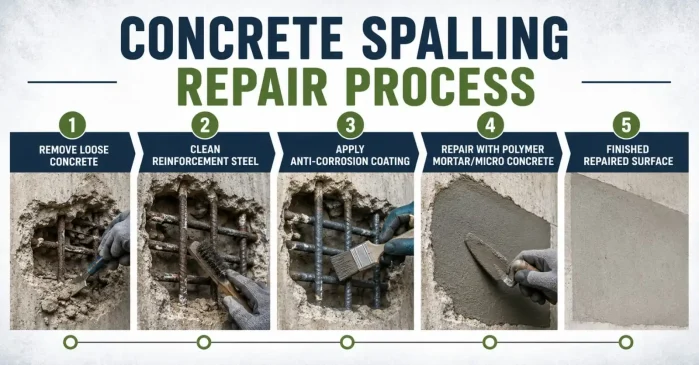
Given below are the methods to repair concrete spalling:
- Surface Patching
The engineers remove loose material and clean the surface if there is minor concrete spalling. Thereafter, they apply a polymer-modified repair mortar. This lets your building restore its appearance. The best part? It protects the concrete from further damage in the surrounding area.
- Repairing Corroded Reinforcement
The experts recommend following the actions below immediately if your reinforcement steel rusts:
- Remove damaged concrete completely
- Clean the steel using mechanical methods
- Apply anti-corrosion treatment
- Rebuild the section using repair mortar or micro-concrete
The spalling concrete may return if you ignore rusted reinforcement.
- Epoxy Injection
Epoxy injection restores continuity and seals the cracks against future moisture ingress. The engineers often use this method for structural repairs.
- Concrete Replacement
Patch repairs are not sufficient if the damage is extensive. Hence, the engineers remove the affected portion and recast it using fresh concrete. It is an expensive method to treat concrete spalling. However, it ensures long-term durability in the structure.
The Final Words
The spalling concrete meaning is more than a chipped surface. It is an early warning signal for excessive moisture and corrosion in the structure. The ideal way to prevent spalling concrete is to perform regular structure inspections. Moreover, it is advisable to use high-quality materials like cement and sand for concrete. After all, saving a penny at construction can become a maintenance cost later.
FAQs
1. Can spalling concrete spread if it is not repaired?
Yes. Spalling concrete usually worsens if left untreated. Moisture continues to enter the damaged area, causing reinforcement steel to corrode and expand. This leads to larger cracks, more concrete loss, and expensive structural repairs over time.
2. Is spalling concrete only a cosmetic issue?
No. While minor spalling may only affect appearance, severe damage can expose reinforcement bars and weaken the concrete. Early inspection helps determine whether the issue is cosmetic or requires structural repair.
3. How long does a concrete spalling repair last?
A well-executed spalling concrete repair can last 10–20 years or longer. Its lifespan depends on repair quality, environmental exposure, and whether the root cause, such as corrosion or water ingress, has been properly addressed.
4. Which parts of a building are most likely to experience spalling?
Spalling concrete commonly occurs in balconies, terraces, parking decks, beams, columns, retaining walls, and bridge decks. These areas face constant exposure to moisture, temperature changes, and environmental pollutants.
5. Can poor construction practices cause concrete spalling?
Yes. Improper concrete mix, inadequate curing, poor compaction, and insufficient concrete cover around reinforcement are major causes of spalling. Following good construction practices significantly improves the durability and service life of concrete.
6. When should I consult a structural engineer for spalling concrete?
Consult a structural engineer if spalling concrete exposes reinforcement steel, affects load-bearing members, or is accompanied by large cracks or sagging. A professional assessment ensures the correct repair method and maintains structural safety.