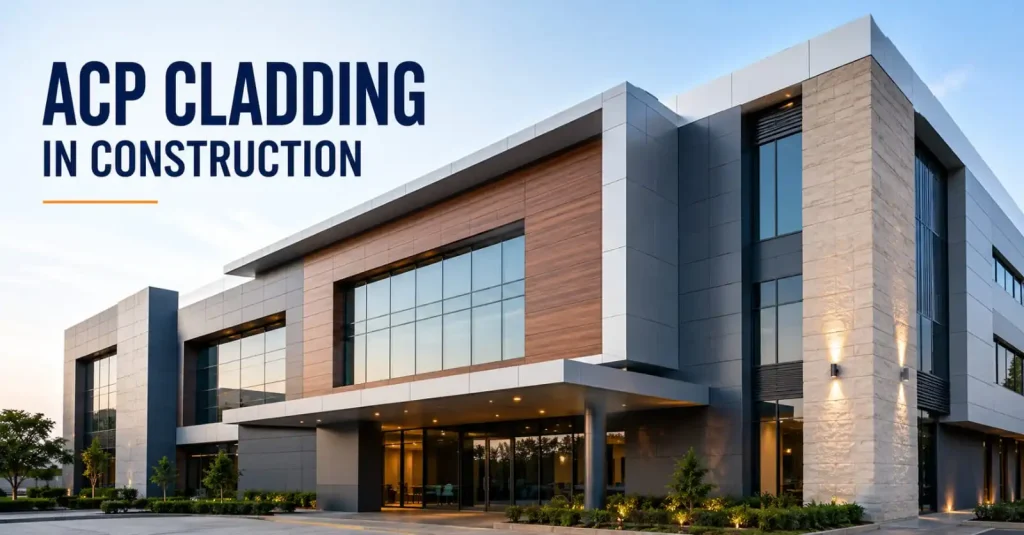
Many buildings have a clean exterior that looks both modern and durable. Isn’t it? ACP cladding is one of the most trending exterior finishing solutions in construction. Architects prefer it because of its flexibility and quick installation process. Property owners choose it due to its durability and cost. You find it everywhere at a construction site. However, you still look for answers to questions like, “What is the ACP cladding full form?” “Is it suitable for homes?” “Is it suitable for homes?”
Isn’t it? Read on this blog post to find the answers to all the questions.
What Is ACP Cladding?
ACP cladding refers to aluminum composite panel cladding. It is manufactured when two thin aluminum sheets bond with a non-aluminum core. This lightweight panel not only provides strength and flexibility but also attractive finishes.
The aluminum sheet forms the outer layers. What about the core? It makes the structure stable and thick. Its design makes it strong without weighing down the building. The architects use ACP cladding work in the following applications:
- Commercial
- Industrial
- Institutional
- Residential
- Infrastructure projects
Why? This is because ACP panels offer a clean and contemporary appearance.
What Are the Types of ACP Cladding?
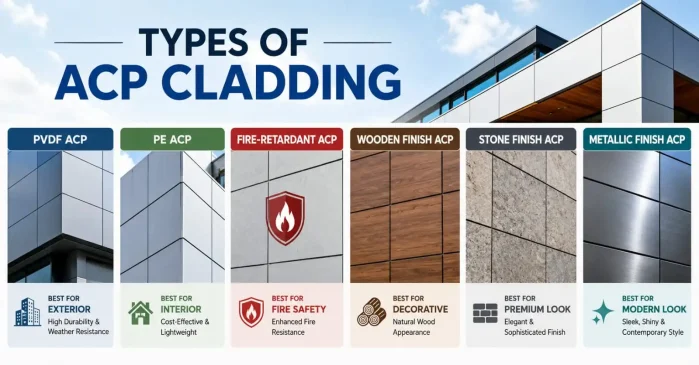
Each construction project has its own unique requirements. The manufacturer offers an ACP cladding panel as per the needs of the project. Given below are some common types of ACP cladding:
- PVDF ACP Cladding
Architects mostly prefer them for exterior applications of commercial buildings and public infrastructure. They resist environmental conditions like rain, sunlight, or pollution. The best part? PVDF ACP cladding maintains its color for years without fading.
- PE ACP Cladding
Polyester-coated panels are the ones that architects use indoors. Their application limits to areas without direct weather exposure. Some of the applications are:
- Office interiors
- Reception areas
- Ceiling panels
- Decorative walls
But why exactly is it ideal for interior ACP cladding work projects? It is because they provide excellent aesthetics at a low cost.
- Fire Retardant ACP
Safety has become a major priority in modern construction. The mineral-filled cores are available in these panels. This resists fire better in comparison to standard polyethylene cores. Many commercial buildings now specify these panels to comply with new fire safety regulations.
- Wooden Finish ACP
You instantly feel great when you visit villas and cafes. Isn’t it? Because there is a warmth of wood in them. Your space gets a natural appearance of wood. They are easy to maintain and prevent problems like termites and moisture absorption.
- Stone Finish ACP
Are you fond of premium appearances? If yes, stone textures are an ideal choice for you. They help you avoid the weight and other challenges of natural stone. Stone-finish ACP is lightweight, but it resembles granite, marble, and sandstone.
- Metallic Finish ACP
Architects mostly prefer metallic-finish ACP panels for corporate offices and commercial projects. The materials like copper and stainless steel create a modern industrial appearance. The professional architect knows ACP cladding details carefully. Hence, they match the performance of the material with project requirements.
What Is the Process to Install ACP Cladding?
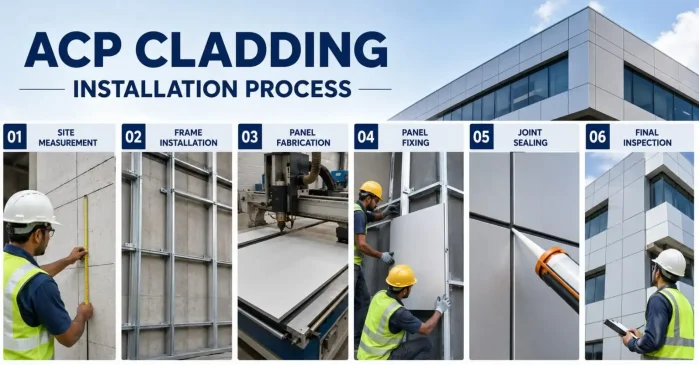
Given below is the step-by-step process to install ACP cladding panels:
- Site Measurement
The first step is to measure the site accurately. Engineers inspect the building surface to prepare fabrication drawings. This will not only help them determine the panel sizes but also the fixing locations. Even small measurement errors influence the alignment later.
- Frame Installation
The engineer install the supporting framework made from aluminum and galvanised steel sections. This frame acts like a skeleton for ACP panels. The flat and uniform facade is possible only when you align it properly.
- Panel Fabrication
The next step is to cut and shape the panels using CNC machinery as per the drawings. Smooth joints and clean edges result in accurate fabrication. The final appearance depends on the ACP cladding details.
- Fixing the Panels
Fabricated ACP panels fixes to the supporting frame using the following:
- Rivets
- Screws
- Hidden clips
- Cassette systems
This depends on the design and project needs of the building. The engineer leaves small gaps between the panels. This helps them expand and contract easily according to the temperature. What’s more? The cracks and damage reduce over time.
- Joint Sealing
The architect applies weather-resistant silicone sealants as per the requirements. It not only prevents moisture penetration but also maintains a neat finish.
- Inspection and Cleaning
The protective films are removed when the installation process is complete. The inspection of the facade is done before final handover. The ACP cladding work usually progresses more than conventional stone or brick facades. This is why it reduces the overall project timelines.
What Are the Benefits of ACP Cladding?
Given below are the benefits of ACP cladding work:
- Lightweight Yet Strong
ACP cladding panels are much lighter than stone or concrete. They not only reduce structural load but also simplify the transportation and installation processes.
- Attractive Appearance
Modern architecture often focuses on clean lines and elegant finishes. This is where ACP cladding works to save you. They support curve surfaces and sharp edges to beautify the visual appearance.
- Fast Installation
ACP cladding work is usually fast in comparison to traditional facade materials. Why? This is because it is fabricated in the factory to reduce the need for on-site labor.
- Low Maintenance
It is easy to maintain the appearance of ACP cladding in construction. All you need to do is clean it with water and mild detergent. Moreover, you need not repaint the ACP cladding surface frequently.
- Design Flexibility
Manufacturers offer hundreds of finishes. This allows architects to create unique building identities. ACP offers solutions for all types of design needs.
- Cost-Effective
The initial material cost for ACP cladding in construction varies as per the finish and thickness. The installation and maintenance reduces that offer long-term value.
- Improve Energy Efficiency
There are some ACP systems with insulation layers to reduce the transfer of heat. The insulated facade system in the buildings reduces the need for cooling equipment even in warmer climates.
How to Choose the Right ACP Cladding?
Given below are the points to keep in mind when choosing the ACP cladding in construction:
- Understand the Project Type
The performance of the ACP clapping depends on the type of building. The architect may use PVDF-coated panels for the exterior applications. However, PE-coated options are ideal for interior uses.
- Prioritize Fire Safety
It is advisable to check if the local building regulations require fire-retardant panels. This is one of the most important ACP cladding details for public buildings.
- Check Panel Thickness
Thick panels are rigid and durable for external applications. Thus, it is ideal to verify the manufacturer’s specifications thoroughly before making a purchase decision.
- Evaluate Warranty
The manufacturers provide warranties for the following:
- Color retention
- Coating quality
- Weather performance
So, ensure that you compare and choose the most appropriate manufacturer.
- Hire Professionals
Premium panels also fail to perform if the engineer executes ACP cladding work properly. The professional installers know about the steps to fabricate and seal it properly.
The Final Words
The ACP cladding full form is aluminum composite panel cladding. It highlights much more than a modern building material. The architects use it in the construction of both residential and commercial buildings. The most important part? ACP cladding offers a practical balance of performance and appearance. However, make sure that you hire a professional so that your ACP cladding work not only looks impressive but also performs better for decades.
FAQs
1. What is the ACP cladding full form?
ACP cladding stands for Aluminium Composite Panel Cladding. It is a lightweight building material made of two aluminium sheets bonded to a non-aluminium core. ACP cladding is widely used for exterior façades and interior applications because it is durable, weather-resistant, and available in various finishes.
2. Where is ACP cladding commonly used?
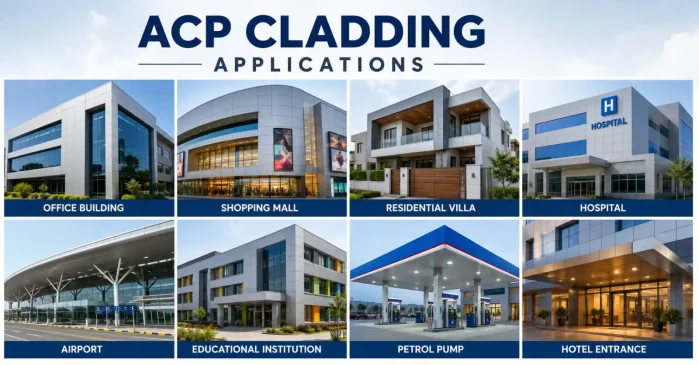
ACP cladding is commonly used in commercial buildings, offices, shopping malls, hospitals, hotels, airports, educational institutions, industrial facilities, and residential homes. It is suitable for exterior façades, balconies, entrance elevations, feature walls, ceilings, and signage due to its durability and modern appearance.
3. How long does ACP cladding last?
Quality ACP cladding typically lasts 20–30 years with proper installation and regular maintenance. Its lifespan depends on panel quality, coating type, weather conditions, and maintenance. PVDF-coated ACP panels generally offer better durability, UV resistance, and long-term colour retention than standard polyester-coated panels.
4. Is ACP cladding waterproof?
Yes, ACP cladding is water-resistant and helps protect buildings from rain and moisture when installed correctly. Proper sealing, drainage, and professional installation ensure effective weather protection, making ACP cladding a reliable exterior solution for various climatic conditions.
5. Is ACP cladding suitable for homes?
Yes, ACP cladding is an excellent choice for homes. It is commonly used for exterior walls, balconies, entrance façades, gates, and interior feature walls. Homeowners prefer ACP cladding because it offers a modern appearance, low maintenance, durability, and excellent weather resistance.
6. What are the important ACP cladding details to check before buying?
Before buying ACP cladding, check the panel thickness, aluminium skin thickness, core material, coating type, fire rating, surface finish, warranty, installation method, and manufacturer reputation. These factors determine the panel’s durability, safety, weather resistance, and overall performance.
7. Which type of ACP cladding is best for exterior walls?
PVDF-coated ACP cladding is the best choice for exterior walls. It offers excellent UV resistance, weather protection, colour retention, corrosion resistance, and long-term durability. It is widely recommended for commercial buildings, high-rise structures, and residential façades exposed to harsh weather conditions.