Anyone who has spent a summer afternoon on a concrete terrace knows how intense the heat can get. This is because the roof absorbs sunlight all day and slowly releases that heat into the rooms below. The result? Ceiling fans work harder. Air conditioners run longer. Indoor spaces remain uncomfortable even after sunset.
This is why homeowners want practical roof cooling solutions. The easy and effective option is to use cool roof paint. It reflects a portion of solar radiation and reduces heat absorption. Read this blog post to find out more about cool roof paint.
What Is Cool Roof Paint?
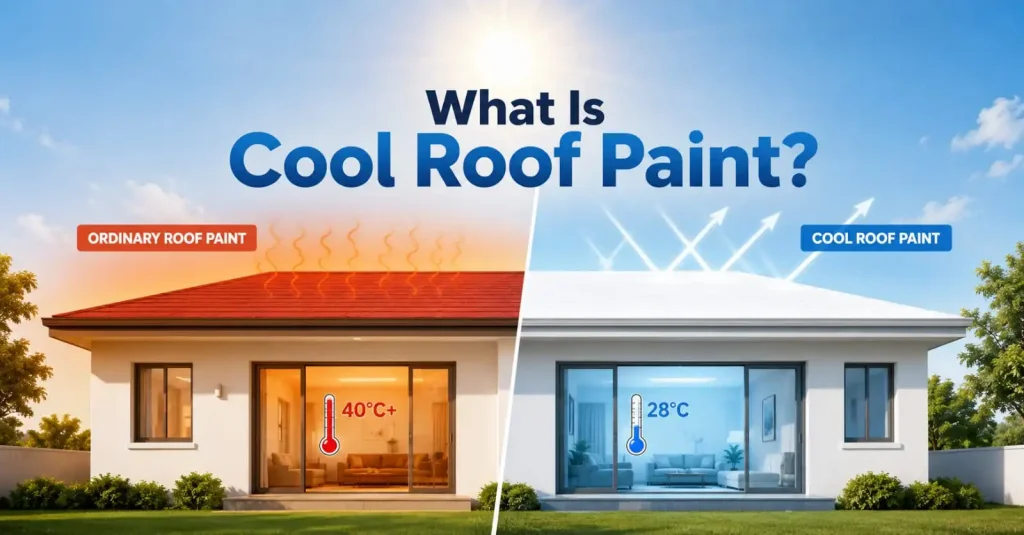
The engineering of cool roof paint with extra coating is to ensure that it reflects sunlight and emits heat. It works more efficiently than conventional roof paints.
Let’s understand it this way: A black t-shirt absorbs sunlight and heat under the sun. A white t-shirt reflects sunlight and is cool.
The principle behind the cool roof coating is the same. It contains reflective pigments and heat-resistant compounds that reduce solar heat gain. The roof reflects a large portion of sunlight back into the atmosphere. The roof cooling solutions mostly focus on two properties:
- Solar Reflectance: The ability to reflect sunlight.
- Thermal Emittance: The ability to release heat.
A high-quality cool roof paint combines both characteristics to reduce roof surface temperatures.
What Are the Benefits of Using Cool Roof Paint for Residential Buildings?
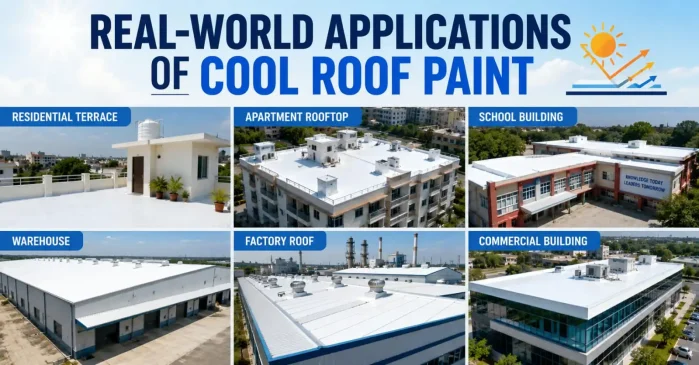
A cool roof paint is a reflective coating to keep a building cool. Given below are the benefits of using cool roof paint for residential buildings:
- Reduces Indoor Temperature
Cool roof paint reflects solar heat. It prevents the roof from becoming extremely hot. The result? The less heat enters your home. Thus, the spaces become more comfortable during summer.
- Lowers Electricity Bills
The need for an air conditioner is less when the house stays cool. This not only reduces the consumption of cooling energy but also lowers monthly electricity bills.
- Extends Roof Life
Excessive heat and regular expansion damage roof materials over time. Cool roof paint reduces thermal stress and helps the roof last longer. The best part? It also lowers the cost of maintenance.
- Enhances Indoor Comfort
Rooms directly below the room often become hot during the summer. The cool roof paint maintains a consistent indoor temperature.
What Are the Types of Cool Roof Paint and Heat-Reflective Roof Coatings?
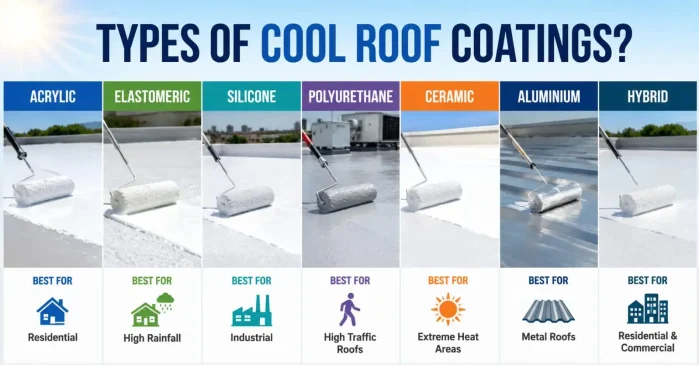
Given below are the types of cool roof paint and heat-reflective roof coatings:
- Acrylic Cool Roof Coatings
Acrylics are the common heat-reflective roof paints. They offer excellent solar reflectivity and weather protection. The best part? They are budget-friendly. The engineer mostly uses them for residential homes and commercial buildings.
- Elastomeric Roof Coatings
They form a flexible and seamless membrane that expands and contracts with temperature. They bridge small cracks and provide heat reflection. It also has waterproofing properties. The flat roofs and terraces with extreme weather conditions often require this coating.
- Silicone Roof Coatings
Silicone coatings provide outstanding resistance to moisture, ponding water, and UV rays. They maintain their reflective properties for years. Hence, they are ideal for humid and rainy regions. The buildings in areas with heavy rainfall and high humidity consider applying silicone roof coatings.
- Polyurethane Roof Coatings
Polyurethane coatings are highly durable and resistant to abrasion, chemicals, and foot traffic. The heat reflection varies. However, many premium formulations have reflective pigments that improve thermal performance.
- Ceramic-Based Cool Roof Coatings
These coatings contain ceramic microspheres that help reflect solar radiation and reduce heat transfer. They improve thermal insulation while enhancing the roof’s durability.
- Aluminium Reflective Roof Coatings
Made with aluminium pigments, these coatings reflect sunlight effectively and provide corrosion protection for metal surfaces. They are commonly used on industrial and metal roofing systems.
- Hybrid Heat-Reflective Coatings
Hybrid coatings combine two or more technologies, such as acrylic and silicone. This is to provide better heat reflection, weather resistance, flexibility, and durability. It is most suitable for buildings that require long-lasting performance and energy efficiency.
Cool Roof Paint vs. Traditional Roof Waterproofing Coatings
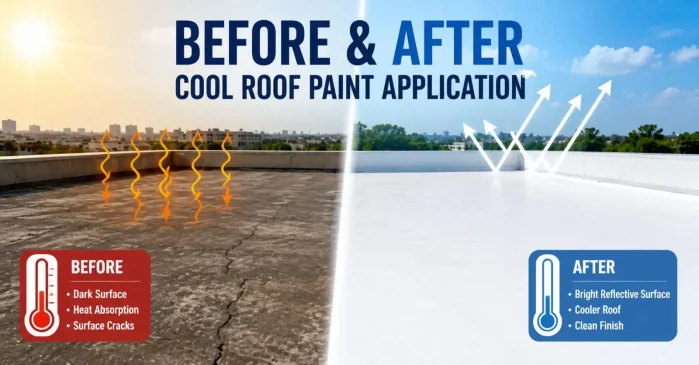
The table below highlights the differences between cool roof paint and traditional roof waterproofing coatings.
| Feature | Cool Roof Paint | Traditional Roof Waterproofing Coatings |
| Primary purpose | Reflects sunlight and reduces the roof temperature | Prevents water leakage and moisture penetration |
| Indoor Comfort | Excellent heat-reflective properties | Limited or no heat reflection unless specially formulated |
| Energy Savings | Keeps interiors cooler during hot weather | Does not significantly reduce cooling expenses |
| Best Use | Hot climates where reducing heat gain is the priority | Roofs prone to water seepage, cracks, and heavy rainfall |
| Roof temperature | Can lower roof surface temperature by 10–25°C, depending on conditions | Roof temperature remains relatively high |
| Maintenance | Requires periodic cleaning to maintain reflectivity | Requires periodic inspection for cracks or wear |
The Final Words
Cool roof paint is a practical and energy-efficient solution to make the indoor spaces cool. It reflects sunlight and releases heat to lower the roof temperatures. Most importantly, it reduces electricity bills. But make sure that you choose the right type of heat-reflective coating. It should align with your roof material and local weather conditions. This will ensure long-lasting performance.
FAQs
Does cool roof paint reduce electricity bills?
Yes. By lowering roof temperatures and reducing heat entering the building, cool roof paint decreases air conditioner usage, leading to noticeable savings on electricity bills, especially in hot climates.
Can cool roof paint be applied to all roof types?
Cool roof paint can be applied to concrete, metal, asbestos cement, galvanized steel, and some tiled roofs. Always choose a coating compatible with your roof material and follow the manufacturer’s surface preparation guidelines.
How long does cool roof paint last?
Most quality cool roof coatings last between 5 and 10 years, depending on the product quality, weather conditions, roof maintenance, and proper application.
What is the price of cool roof paint?
Cool roof paint prices vary by brand, coating type, and coverage area. In India, prices generally range from ₹200 to ₹700 per litre, while premium heat-reflective coatings may cost more.
Is cool roof paint waterproof?
Many cool roof coatings also provide waterproofing benefits, especially elastomeric and silicone-based products. However, not every reflective paint is fully waterproof, so check the product specifications before purchasing.
Is cool roof paint suitable for homes?
Yes. Cool roof paint is an excellent choice for homes because it reduces indoor heat, improves comfort, lowers cooling costs, and protects the roof from harsh sunlight and weather damage.
Can cool roof paint be used on terrace roofs?
Yes. Cool roof paint is widely used on concrete terraces and flat roofs to reduce surface temperatures, improve thermal comfort, and increase roof durability.
What is the difference between cool roof paint and regular roof paint?
Regular roof paint primarily provides colour and surface protection, while cool roof paint is specially designed to reflect sunlight, reduce heat absorption, and improve a building’s thermal performance.