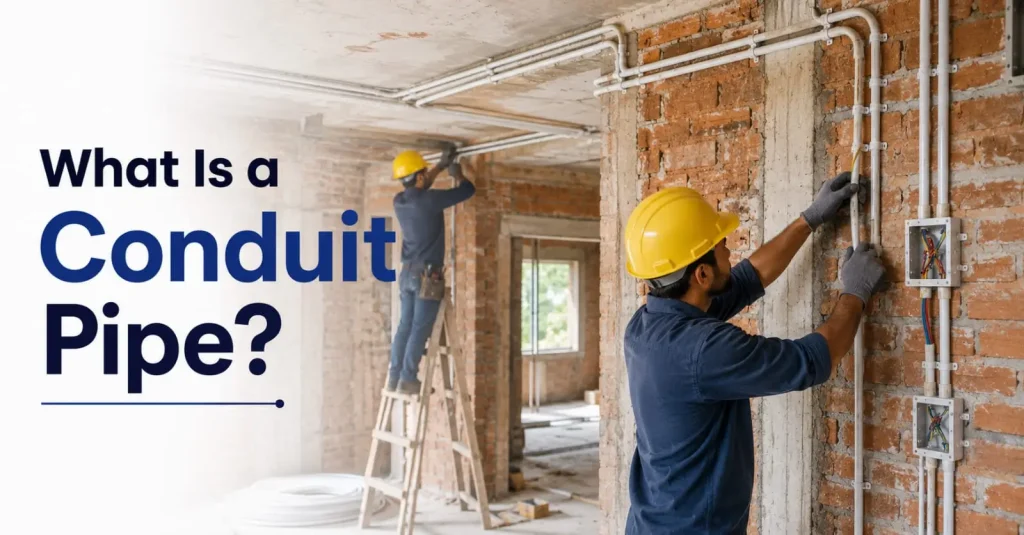
The wiring inside your home is invisible, but it powers everything. Whether it is basic equipment or large appliances, electrical wiring provides energy to all. Do you know what’s behind this safe electrical system? It’s a conduit pipe. What exactly does it mean? Well, it is a protective tube that houses electrical wires and cables. The wires route through these pipes to protect them from moisture and accidental damage. Every urban building relies on a conduit system to install a safe electrical system.
Read on to find out the types and process of installing a conduit pipe in this blog post.
What Are the Uses of Conduit Pipe?
A conduit pipe does much more than hide electrical wires. It protects the electrical system throughout the building’s life. What’s more? Given below are the common uses of conduit pipe:
- Protect electrical cables from physical damage during construction.
- Prevent moisture and corrosion in damp areas like bathrooms and basements.
- Keep the wires safe to reduce fire risks.
- Make the future maintenance easy. The electrician can replace the wire without breaking the walls.
What Are the Applications of Conduit Pipe?
Conduit pipes are almost everywhere. Given below are some common applications:
- Homes and apartments
- Schools and hospitals
- Office buildings
- Shopping malls
- Manufacturing plants
- Underground electrical networks
- Solar power installations
PVC conduit pipe is the most popular in many Indian construction projects. It is not only durable but also affordable for projects with budget constraints.
What Are the Different Types of Conduit Pipe?
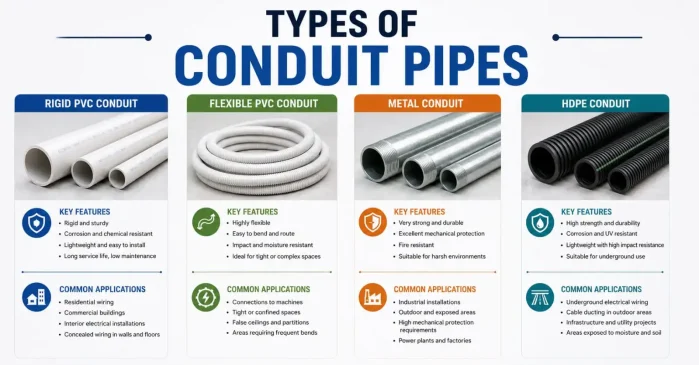
Given below are various types of conduit pipes:
Rigid PVC Conduit
It is the most common type of conduit pipe for residential construction. The key features of rigid PVC conduit are:
- Lightweight
- Rust-proof
- Non-conductive
- Easy to install
The electricians usually use it for concealed wiring inside walls and ceilings.
Flexible PVC Conduit
They bend easily around the corners and tight spaces without multiple fittings. The common uses for flexible PVC conduits are:
- False ceilings
- Modular furniture
- Air-conditioners
- Machinery connections
Note: They are much better than rigid PVC conduit because of their properties.
Metal Conduit
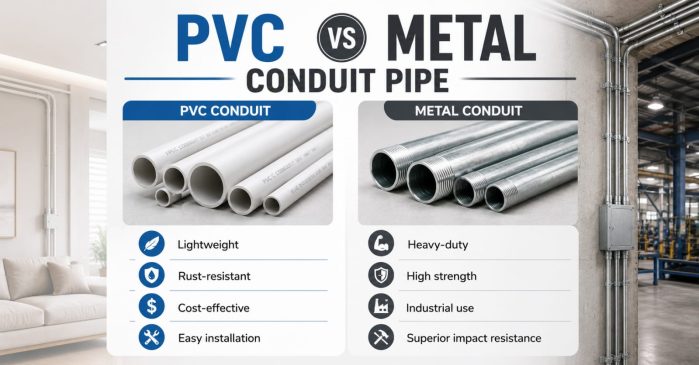
Steel or aluminum conduit pipes provide superior mechanical strength and extra protection. This is why electricians advise using it in the following:
- Factories
- Warehouses
- Commercial buildings
The metal conduit pipe price is often higher than PVC options.
HDPE Conduit
High-density polyethylene conduits are common for the below applications:
- Underground cable networks
- Telecommunications
- Utility infrastructure
They not only resist moisture and chemicals but also prevent soil movement.
What Are the Material Types for a Conduit Pipe?
The material determines the durability of a conduit pipe. Given below are the material types for conduit pipe:
Polyvinyl Chloride (PVC)
It is popular in residential and commercial buildings. The benefits of PVC conduit pipe are as follows:
- Resist rust
- Lightweight construction
- Easy to install
- Excellent electrical insulation
- Low maintenance
- Long service life
So many benefits, huh? One more advantage is that it doesn’t corrode. This is why it works well in humid regions and coastal areas.
Galvanised Steel
Steel conduit is known for exceptional strength and resistance. The electricians mostly use it for industrial spaces where pipes are exposed to heavy equipment and mechanical damage.
Aluminium
It is lighter than steel but still popular because of its durability. It resists corrosion naturally, which makes it suitable for outdoor applications.
What Is the Step-by-Step Guide to Installing Conduit Pipe?
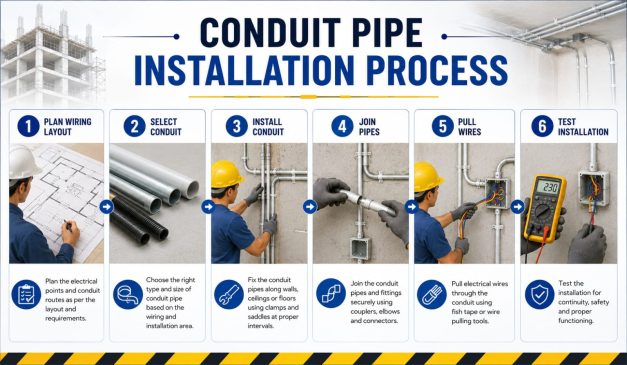
It is important to install a conduit pipe properly. A premium-quality conduit pipe material may not perform if the electrician doesn’t install it properly. Given below is a complete guide on how to install a conduit pipe:
Plan the Wiring Layout
The first step is to prepare a wiring layout that highlights the following:
- Switchboards
- Sockets
- Lighting points
- Distribution panels
This stage helps you plan properly to reduce unnecessary bends. What’s more? It makes it easy to maintain a conduit pipe system in the future.
Select the Right Conduit Pipe
The electrician chose the appropriate diameter and material based on:
- Number of wires
- Installation location
- Environmental conditions
- Building requirements
PVC conduit pipes offer the right balance of safety and durability for most residential construction projects.
Install the Conduit
Here comes an important stage: Secure the conduit with clips or supports. Remember, you avoid excessive bends. The sharp turns make pulling cables difficult. Professional electricians recommend limiting bends between pull boxes. This improves the overall process of installing cable.
Join the Pipes
A continuous conduit system created with the use of the following materials:
- Compatible connectors
- Couplers
- Elbows
- Junction boxes
The experts mostly use solvent cement to join PVC conduits. They make the connection strong and leak-resistant.
Pull the Electrical Wires
The above steps were to create the conduit network. Once they are complete, pull the electrical wires carefully using fish tape or draw wires. But be careful not to overload the conduit. It should be within the cable fill capacity.
Test the Installation
There should be no scope for mistakes. Hence, the electricians inspect the following before energizing the system:
- Cable continuity
- Insulation resistance
- Proper earthing
- Secure conduit joints
The proper installation of the conduit pipe system will ensure electrical safety.
The Final Words
A conduit pipe is the most important part of a building. It protects the everyday electrical wiring and reduces the risk of damage. Choosing the right PVC conduit pipe for your home or business makes the system more organized. The best part? The electrical wires remain safe for longer periods of time. It is advisable to compare the conduit pipe price from different suppliers and select the best quote accordingly.
FAQs
1. What is a conduit pipe used for?
A conduit pipe is used to protect electrical wires and cables from moisture, dust, corrosion, heat, and physical damage. It also improves electrical safety, simplifies maintenance, and helps organize wiring in residential, commercial, and industrial electrical installations.
2. Which conduit pipe is best for home wiring?
A PVC conduit pipe is the best choice for most home wiring projects because it is lightweight, corrosion-resistant, affordable, non-conductive, and easy to install. It provides reliable protection for electrical cables in walls, ceilings, and concealed wiring systems.
3. What factors affect conduit pipe price?
Conduit pipe price depends on the material (PVC, steel, or HDPE), pipe size, wall thickness, brand, quality certifications, durability, and application. Heavy-duty and industrial-grade conduit pipes generally cost more than standard residential options.
4. Can PVC conduit pipe be used outdoors?
Yes. A PVC conduit pipe is suitable for outdoor electrical installations because it resists moisture, rust, and corrosion. For areas with prolonged sunlight, choose UV-resistant PVC conduit or add protective coverings to improve long-term durability.
5. Is metal conduit better than PVC conduit?
Metal conduit provides superior strength, impact resistance, and fire protection, making it ideal for industrial and exposed wiring. PVC conduit pipe is better for most residential applications because it is lightweight, corrosion-resistant, cost-effective, and easier to install.
6. Can conduit pipes be installed underground?
Yes. HDPE conduit and heavy-duty PVC conduit pipes are widely used for underground electrical cable installations. They protect cables from moisture, soil pressure, and corrosion while ensuring long-lasting performance when installed according to local electrical codes.
7. Why is conduit installation important?
Proper conduit installation protects electrical wiring from damage, reduces fire and shock risks, improves cable organization, and makes future maintenance easier. It also extends the lifespan of electrical systems and ensures compliance with electrical safety standards.