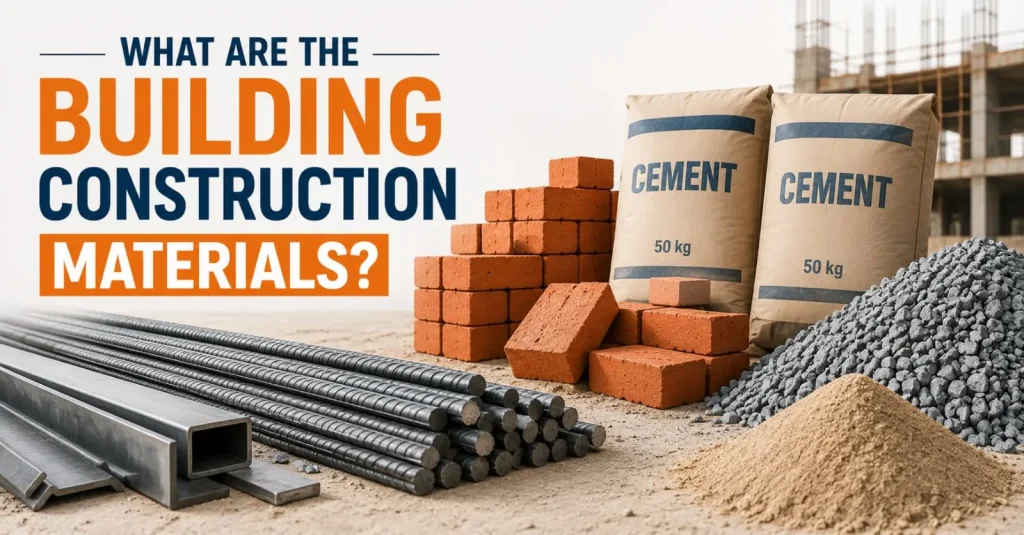
Building construction materials are the ingredients for strong structures. They are the first thing that contractors ask homeowners. The best architectural design may fail without good-quality construction materials. There are different types of construction materials that workers use on-site. Read on this blog post to find out a list of these construction and building materials.
What Are the Building Construction Materials?
Building and construction materials are the raw materials that builders use for construction. Some construction materials occur naturally. However, other materials are manufactured using technological advancements. Some of the common applications of building materials are:
- Residential buildings
- Commercial buildings
- Roads
- Bridges and dams
- Other structures
Why Is Choosing the Right Building Construction Materials Important?
Think about a situation where problems like cracks and dampness arise after a few monsoon rains. It’s painful, huh? This is why it is necessary to choose the right building construction materials. What’s more? Given below are several more advantages:
- Improves structural strength and safety
- Increases the building’s lifespan
- Reduces repair and maintenance costs
- Enhances energy efficiency
- Provides better resistance to weather conditions
- Improves overall property value
It is necessary to select suitable building construction materials in a country like India. A higher investment in quality materials at present can save you from expensive future maintenance costs.
What Are the Different Types of Building Construction Materials?
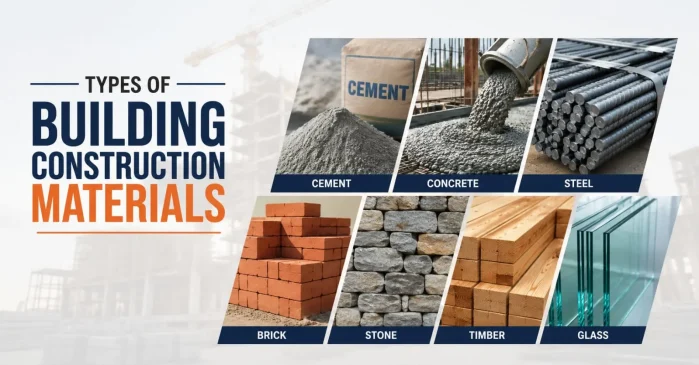
The table below highlights building construction material names and their uses.
| Building Construction Material Name | Meaning | Properties | Uses |
| Cement | Cement acts as the binding material that holds concrete and mortar together. | High compressive strengthExcellent binding abilityDurable and versatileSuitable for different weather conditions | FoundationsRCC structuresMasonry workPlasteringFlooring |
| Concrete | The workers mix ingredients like sand, cement, water, and aggregates to form concrete. | Excellent compressive strengthFire-resistantLong service lifeEasy to mold into various shapes | BeamsColumnsSlabsRoadsBridgesHigh-rise buildings |
| Steel | Steel provides the tensile strength that concrete alone cannot achieve. | High strength-to-weight ratioFlexible under loadEarthquake-resistantHighly durableRecyclable | Reinforcement barsStructural framesIndustrial buildingsRoof structuresBridges |
| Bricks | Bricks remain one of the oldest and most reliable construction materials used for residential construction. | Good compressive strengthThermal insulationFire resistanceAffordable and widely available | WallsBoundary wallsPartitionsSmall structures |
| Stone | Natural stone has been used in construction for centuries and continues to be valued for its strength and appearance. | Extremely durableWeather-resistantHigh load-bearing capacityAttractive natural finish | FoundationsFlooringCladdingRetaining wallsLandscaping |
| Timber | Timber continues to be one of the most versatile building construction materials, especially for interiors and finishing work. | LightweightEasy to shapeGood insulationAttractive appearance | DoorsWindowsFurnitureRoof trussesDecorative finishes |
| Glass | Modern architecture increasingly uses glass to maximise natural light while creating visually appealing spaces. | TransparentWeather-resistantSmooth finishAvailable in multiple performance grades | WindowsFacadesSkylightsPartitionsCurtain walls |
What Are the Tips to Keep in Mind When Choosing the Right Construction Materials?
Given below are the tips you should consider when selecting the building and construction materials:
- Understand the Project
Every project has its unique structural needs. This means that a house would require different materials from the warehouse or commercial building. Thus, hire an expert who guides you through the exact building and construction materials as per your project needs.
- Never Compromise on Quality
High-quality materials offer consistent strength and durability to the structures. It is advisable to check the certification before purchasing building construction materials.
- Consider the Local Climate
Climate directly influences the performance of construction and building materials. For example, regions with heavy rainfall need moisture-resistant products. So, make sure you carefully choose the products as per your local climatic conditions.
- Buy From Reliable Suppliers
Even premium construction materials lose quality if suppliers don’t store or transport them properly. This is why it is necessary to buy from reliable suppliers who handle it properly. The result? It not only reduces the risk of defects but also prevents waste of materials on-site.
The Final Words
Smart choices make your building sustainable. This is why it is important to be cautious when choosing the right building construction materials. Every material has its own properties. Hence, a qualified engineer can guide on the exact needs of different materials as per the project. After all, construction is about building something that stands strong for generations.
FAQs
1. Which building construction material is the strongest?
Steel has one of the highest tensile strengths, while concrete offers excellent compressive strength. When combined as reinforced concrete (RCC), they create one of the strongest and most durable construction and building materials used in modern construction.
2. How do I choose the right building construction materials?
Choose building construction materials based on the project’s purpose, structural requirements, local climate, durability, budget, and sustainability goals. Always select certified products and consult qualified architects or structural engineers before making final decisions.
3. Why is cement important in construction?
Cement is the binding material that holds concrete and mortar together. It provides strength, durability, and stability, making it one of the most essential construction materials for foundations, walls, slabs, plastering, and structural work.
4. What properties should good construction materials have?
Good construction materials should be strong, durable, weather-resistant, fire-resistant, cost-effective, and easy to maintain. They should also meet quality standards and perform well under the environmental conditions where the building is located.
5. Why is durability important in construction materials?
Durable building construction materials withstand weather, moisture, and regular wear for many years. They reduce maintenance costs, improve structural safety, and extend the overall lifespan of a building, making them a smart long-term investment.
6. Are sustainable construction materials better?
Yes. Sustainable construction and building materials, such as blended cement and recycled products, reduce environmental impact while maintaining structural performance. They conserve natural resources, lower carbon emissions, and support greener, more responsible construction practices.
7. What factors affect the performance of construction materials?
The performance of construction materials depends on their quality, proper storage, workmanship, climate conditions, design, and maintenance. Even premium materials can underperform if they are poorly handled or incorrectly installed.
8. Why should I buy construction materials from trusted manufacturers?
Trusted manufacturers provide certified building construction materials that meet industry standards for quality, consistency, and performance. Reliable products help ensure structural safety, reduce defects, minimize maintenance costs, and improve the long-term durability of your building.