
Think about a house during the first heavy shower of the monsoon.
If the roof has been designed properly, rainwater flows towards the outlets, the rooms stay dry, and the family carries on with its day. That is why builders need to plan the roof early rather than treat it as the last item on the construction checklist.
A roof also affects how much heat enters the building. In many parts of India, a concrete roof exposed to direct sunlight can make the rooms below uncomfortable, especially during summer.
Read on this blog post to find out all about roof meaning and its types in this blog post.
Quick Answer
A roof is the top that covers a building. It protects the room from different weather conditions. It not only covers the roof of the house but also influences the following:
- Indoor temperature
- Drainage
- Maintenance
- Overall appearance of the building
Roofs in the home are of different types. Some homes have flat RCC roofs. Others use sloping roofs with tiles or metal sheets. The right choice of the roof depends on various factors. Given below are some of these factors:
- Local climate
- Building design
- Budget
- Personal needs
What Are the Different Types of Roofs?
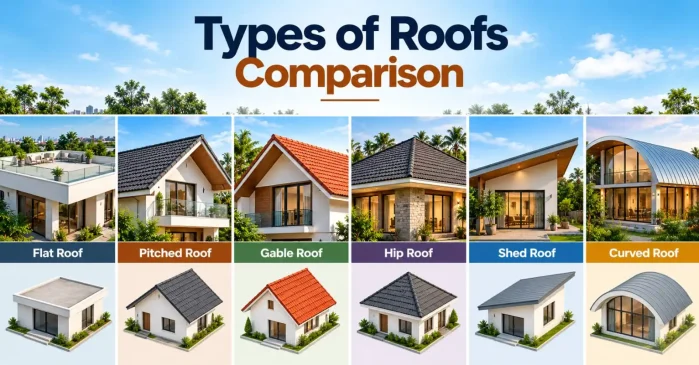
Given below are the different types of house roofs:
- Flat Roof
Flat roofs are common in Indian homes, apartment buildings, and commercial properties. It usually needs a slight slope so rainwater can reach the drainage outlets. Many homeowners prefer RCC flat roofs because they can serve as usable terrace space. The following are the common uses of flat roofs:
- Dry clothes
- Maintain solar panels
- Place water tanks
However, the main concern of flat roofs is water drainage.
- Pitched Roof
This type of house roof has one or more sloping surfaces. Rainwater runs down the slope. Hence, it doesn’t collect on the roof. This is why it is popular in areas that receive heavy rainfall. Builders often use tiles and metal sheets for pitched roofs.
- Gable Roof
A gable roof has two sloping sides that meet at the top to form a ridge. You can recognize this shape in many independent houses and traditional buildings. It is the most suitable design to drain rainwater. However, consider wind exposure and local weather conditions.
- Hip Roof
A hip roof slopes down on all four sides. This makes it suitable for homes that need a roof with a slope. The challenge? Engineers must carefully plan the design of a hip roof.
- Shed Roof
A shed roof has one sloping surface. Builders often use it for the following:
- Extensions
- Garages
- Workshops
- Smaller structures
Its simple shape can also work well in modern home designs.
- Curved Roof
This type of roof has a round or arch shape profile. It is mostly used in halls or public buildings where structures need a distinctive architectural appearance. Engineers carefully plan the design and construction of a curved house roof.
What Are the Main Components of a Roof?
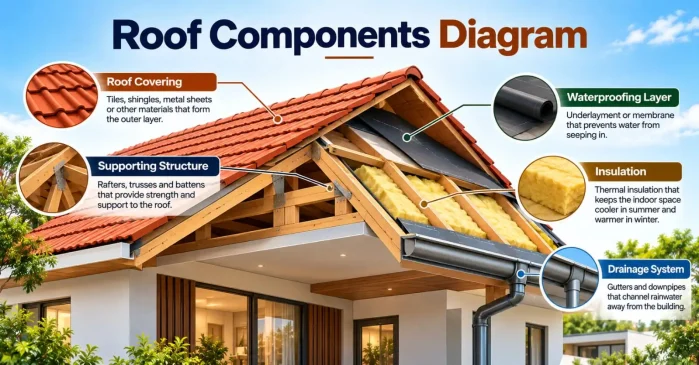
Given below are the main components of a roof in a building:
- Roof covering: An outer layer that protects the building
- Support structure: Structural members that carry the roof loads
- Roof deck or slab: The base that supports the roof layer
- Waterproofing layer: A system that helps prevent water from entering the building
- Insulation: A layer that reduces heat transfer
- Drainage system: Proper tools and equipment to carry away drainage water
- Flashing and joints: Details around edges and other openings
What Are the Common Materials Used for Roofing?
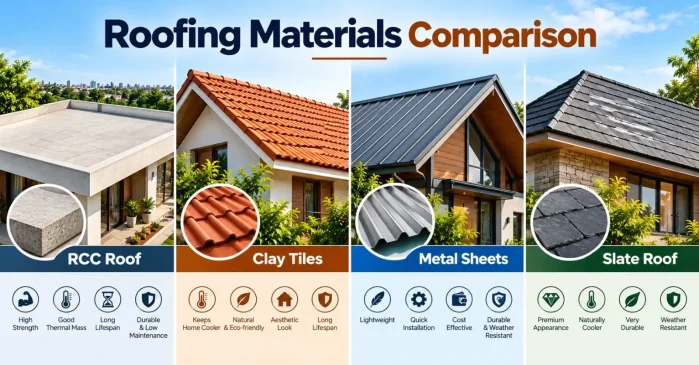
The following are the common materials used for roofing in buildings:
- RCC Concrete
Reinforced cement concrete is widely used for flat roofs in Indian residential buildings. It creates a solid slab that can support normal roof finishes and, when designed for the purpose, certain terrace uses.
- Clay and Concrete Tiles
Roof tiles suit many sloping roofs. They come in different shapes and finishes, and their appearance can complement traditional as well as contemporary homes. The roof structure must support their weight, and the installer needs to handle overlaps and fixing details properly.
- Metal Sheets
Metal sheets are common in sheds, warehouses, workshops, and some residential structures. They are relatively light. However, they can become hot under direct sunlight and may produce noticeable noise during heavy rain.
- Slate and Stone
Slate and stone roofing can offer a distinctive finish and long service life when the material and installation suit the project. It is advisable to be careful about weight and availability before a final purchase.
What Are the Applications of Roofs in Building Construction?
Given below are the common applications of roofs in building construction:
- Weather protection
- Temperature control
- Rainwater management
- Architectural appearance
- Protect building elements
- Use terrace space
The Final Words
A roof rarely gets much attention when everything works as it should. But the planning behind it shows up every summer and every monsoon. Get the slope, drainage, structural design, and waterproofing details right, and the roof has a much better chance of doing its job for years without becoming a recurring headache.
FAQs
1. What is the main purpose of a roof?
A roof protects a building from rain, sunlight, wind, and changing weather conditions. It also helps regulate indoor temperatures, protects ceilings and walls from moisture, and keeps the interior comfortable for everyday living.
2. What are the common types of roofs?
Common roof types include flat, pitched, gable, hip, shed, and curved roofs. Each design serves different needs, depending on the building’s architecture, local climate, drainage requirements, available budget, and intended use of the roof space.
3. Which roof is suitable for an Indian house?
An RCC flat roof suits many Indian homes because it offers usable terrace space. In regions with heavy rainfall, a sloping roof can help drain water efficiently. The final choice depends on climate, budget, and structural design.
4. Which materials do builders use for roofs?
Builders commonly use reinforced cement concrete (RCC), clay tiles, concrete tiles, metal sheets, slate, stone, and fibre cement sheets for roofing. The right material depends on the building’s design, structural capacity, local weather, installation cost, and maintenance needs.
5. Is a flat roof completely level?
A flat roof usually has a slight slope that directs rainwater towards drainage outlets. This gradient helps prevent water from collecting on the surface, reducing the risk of seepage, waterproofing damage, and recurring maintenance problems.
6. How can homeowners reduce roof leakage?
Homeowners can reduce roof leakage by keeping drainage outlets clear, inspecting cracks and joints, maintaining waterproofing, and repairing damaged areas promptly. Regular roof inspections before the monsoon can help identify potential problems before heavy rainfall makes them worse.