Drainage is what keeps water from turning a good building into a long-term problem.
When people ask, ‘What is drainage?’ the simple answer is this: it’s the way water is taken out of a building so it doesn’t stay and cause damage.
A proper drainage system ensures that rainwater, wastewater, and used water flow out smoothly.
If drainage works well, you rarely notice it. If it doesn’t, you notice it every single day.
On most construction sites, drainage is discussed quietly, usually towards the end. Foundations, columns and finishes get attention. But drainage is often rushed.
In new constructions, everything may look perfect until the first heavy rain. Within weeks, damp patches appeared near the skirting. Bathrooms started smelling. The problem wasn’t the cement or the tiles. It was poor drainage planning.
Drainage doesn’t add beauty. But it decides whether a building ages well or starts falling apart early.
Once you really understand what drainage is, and why every drainage pipe and drainage system matters, you stop treating it as “just plumbing work”.
What is Drainage?
Drainage is the way water is guided out of a building and its surroundings so it doesn’t collect where it shouldn’t. This includes rainwater from roofs, wastewater from bathrooms and kitchens, and surface water around the building.
In buildings, drainage does the same job:
- Keeps walls dry.
- Keeps floors usable.
- Keeps foundations safe.
A proper drainage system controls water movement instead of letting water decide its own path. And water, left uncontrolled, always finds the weakest point. This explains- what is drainage in building construction.
Drainage Pipe: Small Item, Big Responsibility
The drainage pipe is the backbone of any drainage system. It may look simple, but its job is critical.
A drainage pipe carries water from one point to another using gravity. Sounds easy. But on-site, this is where most mistakes happen.
Common drainage pipe materials include:
- PVC and UPVC pipes for homes.
- Cast iron pipes for vertical stacks.
- Concrete pipes for external drains.
But the real success of a drainage pipe depends on:
- Correct slope
- Proper jointing
- Right pipe size
- Easy access for cleaning
Even the most expensive pipes fail because the slope is wrong. Water slows down, waste settles, and blockages follow. A drainage pipe must always allow water to flow freely. If water hesitates, problems begin.
Drainage System in Building Construction
A drainage system is not one pipe. It’s a network. In a typical building, the drainage system handles three main things:
- Rainwater
- Wastewater from daily use
- Toilet waste
Each one behaves differently and needs to be handled carefully.
A good drainage system follows three simple rules:
- Water should move naturally without force.
- The bad smell should never come back inside.
- Maintenance should be possible without breaking the floors.
If a drainage system ignores any one of these, repairs become messy and expensive.
Understanding what is drainage at the planning stage saves years of trouble later.
Types of Drainage Systems Used in Buildings
Different sites need different drainage system approaches.
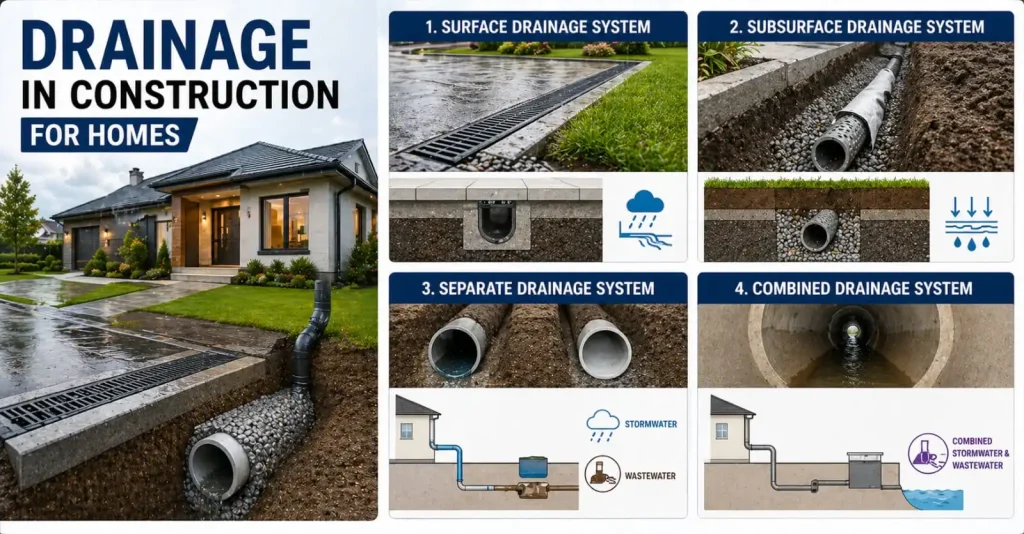
1. Surface Drainage System
This deals with rainwater, plain and simple. Whatever falls on the roof or terrace needs a clear way out.
It usually covers:
- Roof outlets
- Terrace drains
- Balcony pipes
- Open surface channels
If surface drainage isn’t done properly, rainwater starts sitting on slabs. Give it time, and that water finds its way into walls.
2. Subsurface Drainage System
This one works below ground. Its job is to manage groundwater around the foundation, especially in problem areas.
Mostly used in:
- Basements
- Low-lying plots
- Places where the water table is high
Without subsurface drainage, the foundation stays damp all year. You may not see it early, but damage builds up slowly.
3. Separate Drainage System
Here, rainwater and sewage run through different pipes. This keeps things cleaner, avoids overload, and is safer overall.
For residential buildings, this makes the most sense and causes fewer issues later.
4. Combined Drainage System
In this system, rainwater and wastewater share the same pipe.
It costs less to install, but it needs careful planning. During heavy rains, a poorly designed combined system can back up fast.
Choosing the right drainage system isn’t about saving a few rupees.
It depends on soil conditions, rainfall, and how the building will be used.
Why Drainage Matters More Than People Think
Most water-related building problems start with bad drainage.
When drainage is done right:
- Damp patches don’t appear.
- Foundations stay strong.
- Cracks reduce.
- Bad smells stay out.
- Living spaces feel cleaner and healthier.
You can use the best cement and finishes available, but if drainage fails, everything else slowly starts failing with it. Having said that, a good quality cement can act as a protective barrier. In construction in India, JK Cement is preferred for its strength and durability.
That’s why experienced site engineers insist drainage should be planned early – not adjusted at the end.
Practical Drainage Lessons from the Site
These are things you only learn on site:
- Always test the drainage system with water before handover.
- Never compromise on the drainage pipe slope.
- Provide inspection chambers for future cleaning.
- Keep rainwater drainage separate wherever possible.
- Don’t reduce pipe sizes to save cost.
These small decisions decide whether the drainage works for decades or fails in the first monsoon.
Drainage is invisible when done right – and that’s a good thing.
The real answer to – what is drainage – is simple: it’s the system that protects a building from water damage every day, quietly and consistently. A well-planned drainage system, supported by properly laid drainage pipes, keeps walls dry, floors safe, and foundations strong.
If you’re building or renovating, don’t leave drainage for last. Plan it properly. Execute it carefully, because once drainage is buried, fixing it is never easy.
FAQs
1. What is drainage in building construction?
Drainage is the method used to remove rainwater and wastewater from a building safely.
2. Why is drainage important in buildings?
Proper drainage prevents dampness, seepage, and long-term structural damage.
3. What does a drainage pipe do?
A drainage pipe creates a smooth flow of water away from the building.
4. What does a drainage system consist of?
A drainage system consists of pipes, slopes, and outlets that carry water away.
5. What happens if the drainage slope is built incorrectly?
Water flow will cause blockages and bad odours.
6. Can the same drainage system be used for rainwater and sewage?
No. Rainwater and sewage should be carried through separate systems for safety and hygiene.