If you’ve ever walked into a house on a peak May afternoon and felt instant relief, or noticed how some homes stay warm in January without blasting heaters all day, insulation is doing its quiet job. In simple words, insulation controls heat, sound, and comfort inside a building.
On Indian construction sites, insulation is often discussed last – after structure, cement, walls, and finishes. Sometimes it’s skipped altogether.
Some homes in hot locations have thick walls built perfectly, but no insulation has been added. Come summer, the AC runs all day.
While some homes with proper insulation planning, where even ceiling fans feel cool enough most evenings.
That’s the difference.
Insulation isn’t about making homes fancy. It’s about making them liveable.
It affects electricity bills, indoor comfort, noise levels, and even how long your building materials last.
Before getting into technical details, let’s first understand the real meaning of insulation in everyday language – and why builders, homeowners, and engineers should care.
What is Insulation?
In construction terms, insulation is a material or system that resists the flow of heat, sound, or electricity.
In buildings, we mostly talk about thermal and acoustic insulation.
The meaning of insulation in construction is all about slowing down heat transfer – keeping unwanted heat out in summer and precious warmth in during winter.
Once you understand the types of insulation available today, you realise it’s not a luxury add-on, but a basic building essential.
That’s the core meaning of insulation.
In homes and buildings, insulation is usually added to:
- Walls
- Roofs and terraces
- Ceilings
- Floors
Good insulation works silently in the background. You don’t see it. You don’t touch it.
But you feel the comfort every single day.
Types of Insulation Used in Buildings
There are many types of insulation, and no single option fits every building. Climate, budget, and usage all matter.
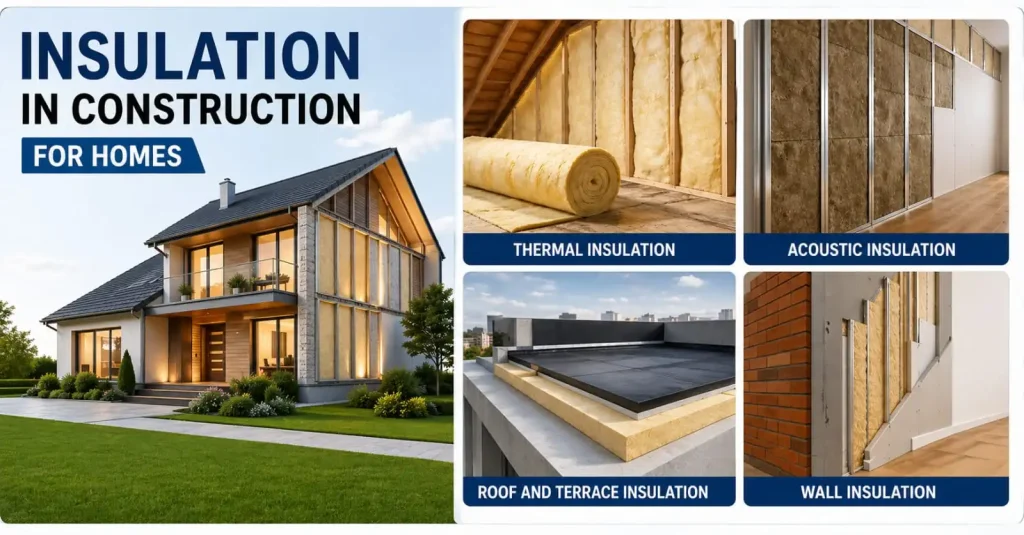
1. Thermal Insulation
This is the most widely used insulation in construction in India. It:
- Slows down heat transfer
- Helps maintain indoor temperature.
- Glass wool, Rock wool, EPS and XPS boards and Foam insulation are common materials used.
- Useful for top floors, villas, and buildings with large terraces.
- In hot regions, it can reduce indoor temperatures by several degrees.
Understanding these types of insulation helps avoid overspending on unnecessary materials.
2. Acoustic Insulation
Noise is a real problem in cities now. This type:
- Reduces sound travel between rooms and from outside sources.
- It’s commonly used in Bedrooms, Offices, Conference rooms and Hospitals
- Uses materials like mineral wool and acoustic panels.
- Is effective and practical.
3. Roof and Terrace Insulation
In Indian conditions, roofs take the maximum heat load. Roof insulation may involve:
- Insulation boards below the waterproofing
- Heat-reflective coatings
- Screed layers with insulating properties
Among all types of insulation, roof insulation gives the fastest comfort improvement.
4. Wall Insulation
Wall insulation works best when planned during construction. It:
- Reduces heat gain.
- Protects structural walls.
- Improves long-term durability.
Again, choosing the right types of insulation depends on the building’s exposure to the sun and weather.
Benefits of Insulation in Buildings
People often ask if insulation is really worth the cost. From what is seen on sites, the answer is – yes.
Here’s why insulation matters:
1. Lowers power bills
ACs and heaters work less when insulation is done right.
2. Indoor temperature remains stable
Rooms don’t heat up suddenly or cool down too fast.
3. Sound is controlled
Outside noise stays outside.
4. Long-lasting structural strength.
Reduced thermal stress means fewer cracks and repairs.
5. Offers more comfort.
The house simply feels calmer and easier to live in.
When insulation works along with quality construction materials and proper execution, the building performs better over time. That’s something no decorative finish can fix later.
How is Insulation Done?
Insulation works best when it’s planned, not patched. Here’s a step-by-step insight into how insulation works:
1. Problem areas are identified
Roofs, external walls, and noisy zones first.
2. Suitable insulation is selected
Based on climate, budget, and building use.
3. Insulation is installed
Roof insulation before waterproofing.
Wall insulation before plaster or cladding.
4. Joints are sealed properly
Small gaps can ruin insulation performance.
5. Insulation layers are protected with
Cement screeds, plaster, or boards – to safeguard insulation.
Many insulation failures happen not because of bad material, but because the execution was rushed. Good planning makes all the difference.
Insulation is not aesthetic. It doesn’t add colour or design. But it decides how a building feels every day. The real meaning of insulation is comfort without effort. With the right types of insulation, buildings stay cooler, quieter, and more efficient – without depending too much on machines.
If you’re building today, don’t treat insulation as optional. Plan it early, execute it properly, and pair it with solid construction materials.
Years later, when your home still feels comfortable while others struggle, you’ll know it was worth it.
Insulation: Meaning, Types, and Importance in BuildingsFAQs
1. What is insulation in simple language?
Insulation is a layer or material that slows down heat and sound inside a building.
2. What is the meaning of insulation in construction?
In construction, insulation means protecting buildings from heat, cold, and noise using specific materials.
3. Which insulation is best for Indian weather?
Thermal insulation for roofs and external walls works best in most Indian climates.
4. What are the common types of insulation used in homes?
Thermal insulation, acoustic insulation, roof insulation, and wall insulation are the most common types of insulation.
5. Does insulation really reduce AC usage?
Absolutely. Insulation reduces heat gain from the outdoors. This lowers the usage of ACs.
6. Can insulation be added after construction?
Yes, it can, but it would cost a lot more to tear down walls and roofs to install insulation. It’s more effective and economical during construction.
7. Is insulation necessary for small houses?
Yes. Insulation is comfort and energy saving, which even small homes require.