When you walk into a house and notice a staircase that feels solid, safe, and quietly stylish, chances are the baluster is doing more work than you realise.
Most people don’t stop to ask about baluster meaning when climbing stairs.
But once you start building or renovating, the baluster suddenly becomes important.
So let’s talk about it in simple terms.
No textbook language.
Just how things work on real sites.
What is a baluster?
A baluster is a vertical post that supports a railing. When multiple balusters are grouped together to hold a handrail, this whole assembly is known as a baluster railing.
Think of it like this.
The handrail is your grip.
The balusters are the legs holding that grip firmly in place.
On staircases, balconies, and even terraces, the baluster in staircase plays two roles at once.
Safety first.
Looks second.
But both matter.
Staircases where the steps were perfect, but cheap balusters made everything feel weak.
Simple stairs look premium just because the baluster railing was well thought out.
Why balusters matter more than people think
On paper, a baluster may look like a small detail.
On site, it’s not.
A staircase is used every day.
Kids run on it.
Elders hold the railing.
During festivals like Diwali, when the house is full, everyone leans on it.
That’s why the baluster in the staircase must be strong, properly spaced, and fixed well into concrete or stone.
From a safety point of view:
* It prevents falls
* It gives stability to the handrail
* It meets building safety norms
From a visual point of view:
* It defines the style of the staircase
* It connects floors visually
* It adds rhythm and balance
That’s why architects spend time choosing the right baluster railing, even if homeowners don’t notice it immediately.
Common types of balusters you’ll see on Indian sites
Over the years, almost every kind of baluster is being used.
Some work beautifully.
Some look good only in catalogues.
Here are the most common types you’ll come across when discussing baluster meaning and options.
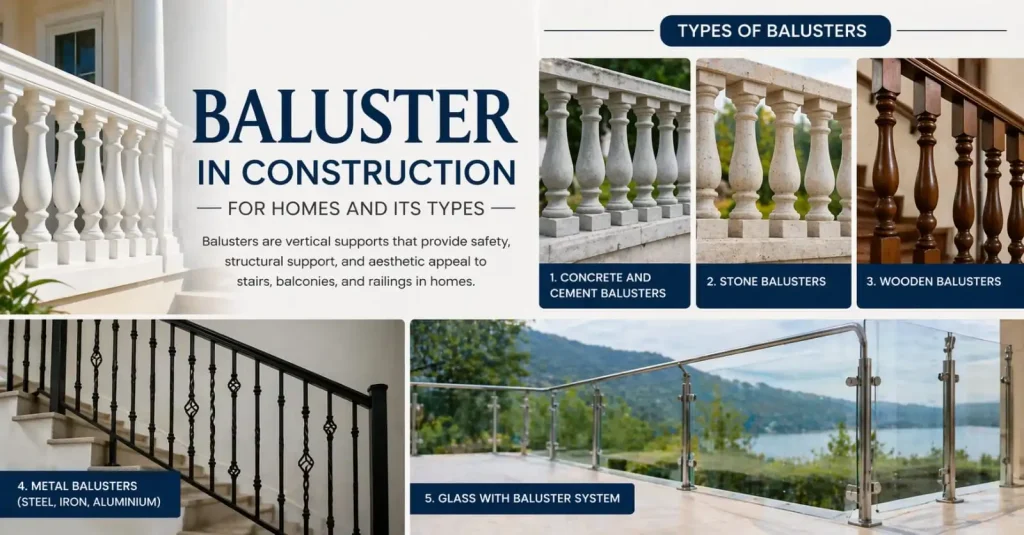
1. Concrete and cement balusters
These are old-school.
And still reliable.
Concrete balusters are often seen in independent houses, staircases with granite steps, and traditional balconies.
Here’s why people pick them:
* They are strong and last a long time.
* They look good with concrete steps.
* They don’t cost a lot.
* They are simple to cover with plaster and paint.
A lot of houses use balusters made right there with cement because how long they last is more important than how fancy they look.
2. Stone balusters
Stone balusters feel premium.
You’ll see them in bungalows, villas, or heritage-style homes.
They’re usually made from:
* Marble
* Sandstone
* Granite
The baluster railing here becomes a design feature, not just a safety element.
But one thing to remember.
Stone is heavy.
The fixing must be done properly, or cracks can appear over time.
3. Wooden balusters
Wooden balusters bring warmth.
They’re common in duplex homes and internal staircases.
People like them because:
* They feel comfortable to touch
* They suit classic and modern interiors
* They look good with wooden handrails
However, for a baluster in staircase, wood needs care.
If moisture, termites, and poor polishing are not taken care of, they can shorten the life of an object.
4. Metal balusters (steel, iron, aluminium)
These are very popular today.
Mild steel and wrought iron balusters are common in urban homes.
Aluminium is used where rust is a concern.
Why metal works:
* Slim profiles
* Modern look
* High strength with less bulk
In apartments, the baluster railing is often metal because it’s easier to maintain and meets safety norms easily.
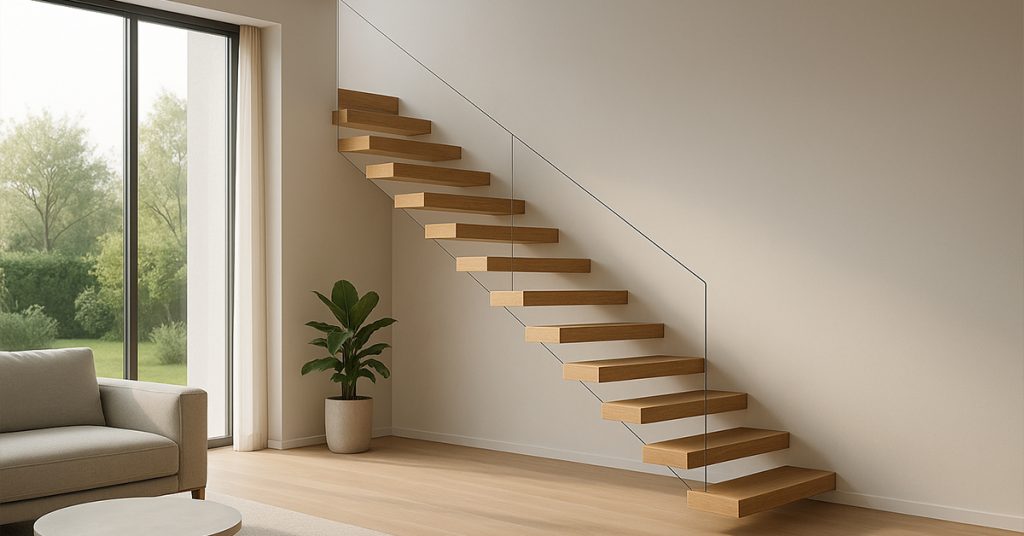
5. Glass with baluster systems
Glass itself is not a baluster.
But it’s often supported by metal balusters or posts.
This setup is used in:
* Modern villas
* Commercial spaces
* Luxury apartments
The baluster in staircase here is minimal, letting the glass shine.
It looks clean but needs precise installation.
How spacing and height affect safety
This is something many people overlook.
The baluster meaning is incomplete without talking about spacing.
Too much gap between balusters is dangerous, especially for children.
On most residential staircases:
* Gaps should be small enough to prevent a child’s head from passing
* Height should align with local building codes
* Fixing into steps or slab must be solid
A good baluster railing doesn’t shake when you apply pressure.
If it does, something is wrong in the installation, not material.
Baluster design vs real-life use
I always tell homeowners one thing.
Don’t select a baluster only because it looks good online.
Ask yourself:
* Will it be easy to clean?
* Will it collect dust?
* Will it survive daily use?
A fancy baluster in staircase with sharp edges may look stylish, but it’s not practical for families.
Good design balances beauty and use.
That’s the real baluster meaning in construction.
Where balusters are used beyond staircases
People usually associate balusters only with stairs.
But that’s not true.
You’ll find baluster railing in:
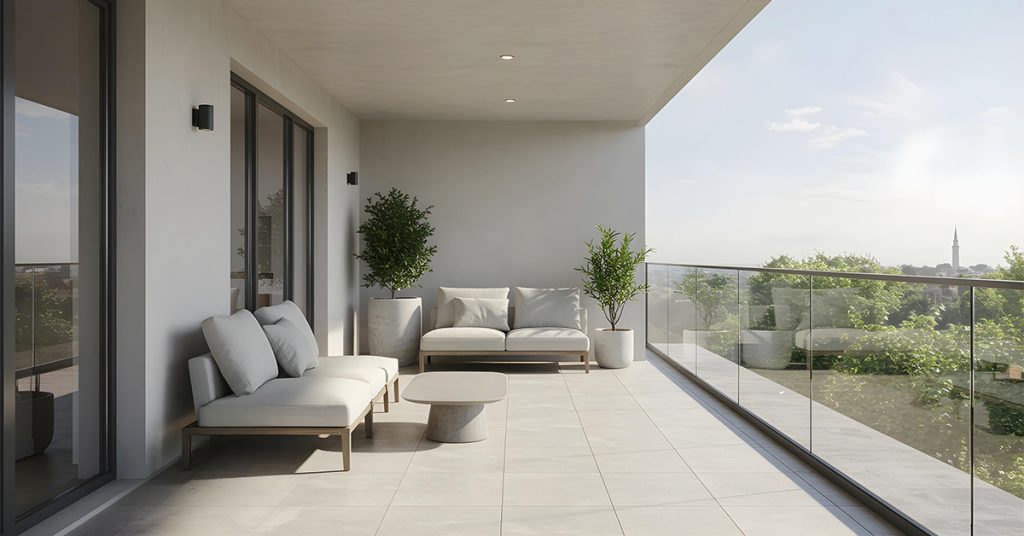
* Balcony railings
* Terrace edges
* Verandahs
* Internal double-height spaces
Anywhere there is a drop, the baluster quietly steps in as a protector.
A small site insight
This is a more frequent issue than many acknowledge. To trim expenses, fewer balusters were installed in a staircase. After a few months, the railing felt unsteady. The danger became clear when children leaned against it.
The solution was straightforward: re-establish the correct spacing and strengthen the balusters with good materials and solid cement. With dependable materials, like those from JK Cement, the staircase regained its needed strength. It quietly shows that in construction, minor details often bear the greatest importance.
FAQs
1. What is a baluster in a staircase?
A baluster is a vertical support or spindle placed between the handrail and the base of a staircase. It provides safety by preventing falls and also enhances the overall design of the railing.
2. What are the different types of balusters?
Common types of balusters include wooden balusters, metal (iron or steel) balusters, glass balusters, stone balusters, and concrete balusters. Each type varies in durability, style, and maintenance requirements.
3. What is the difference between a baluster and a banister?
A baluster is the individual vertical post, while a banister (or handrail) is the top horizontal rail supported by balusters. Together, they form a complete staircase railing system.
4. Why are balusters important in staircase design?
Balusters are important for both safety and aesthetics. They prevent accidental falls, provide structural support to the railing, and contribute to the visual appeal of the staircase.
5. Which material is best for balusters in modern homes?
Glass and metal balusters are popular in modern homes due to their sleek appearance and durability, while wooden balusters remain a classic choice for traditional interiors.
If there’s one takeaway, it’s this.
A baluster may look like a small detail.
But in real homes, it quietly carries responsibility every single day.
And in construction, that’s what truly matters.