Key Takeaways
- Greywater comes from showers, sinks, and laundry, but not from toilets or kitchens.
- It is easy to reuse the greywater recycling system in toilets, gardens, and cleaning.
- The freshwater consumption reduces to 35-70% in buildings.
- They are affordable and sustainable in modern homes and offices.
- It cuts down the waste and conserves resources to ensure sustainable water management.
What is a Greywater Recycling System?
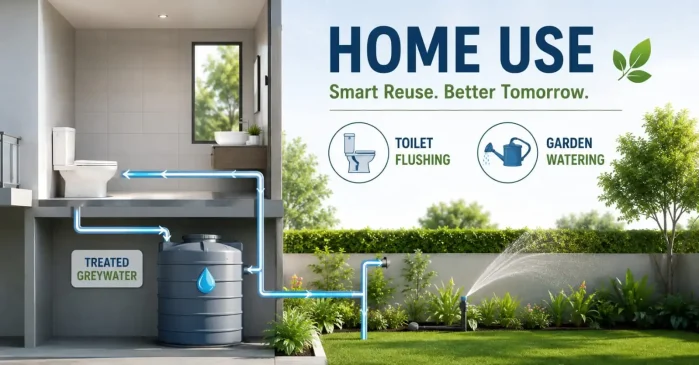
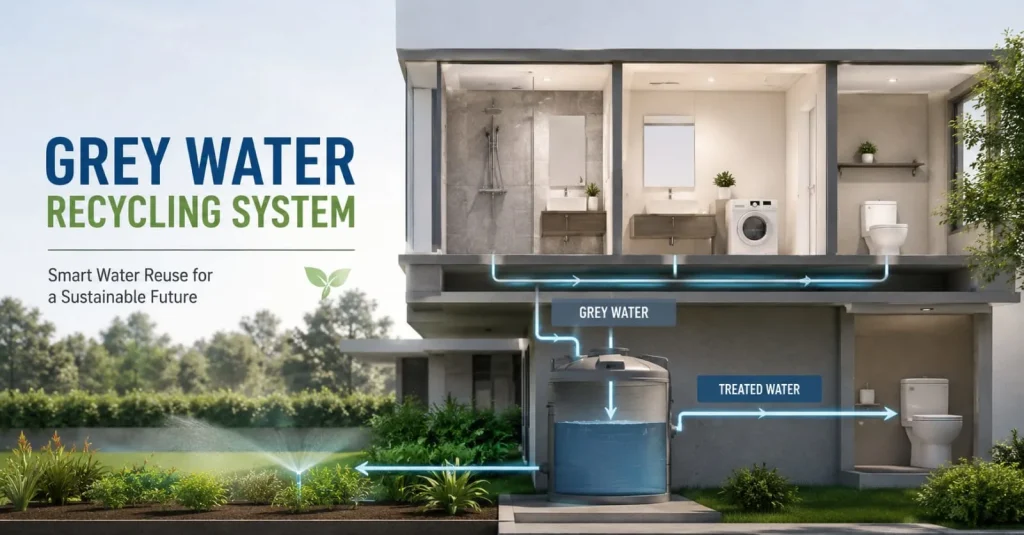
A greywater recycling system is a water-treating facility available on-site. This setup collects wastewater from different areas of the home. These can be showers or bathroom sinks. This system filters and treats the water instead of sending the water straight into the sewer. The water becomes safe to reuse for the following purposes:
- Toilet flushing
- Landscape irrigation
- Cooling tower operations
Water is the most valuable resource in modern construction. The rise in water shortage in the cities is common. This is why builders and homeowners now look for smart ways to use every drop of water efficiently. Hence, a greywater recycling system is popular across residential and commercial projects.
Why is Greywater Recycling Important in Modern Buildings?
Water crises are becoming a concern nowadays. Water resources not only supply households, but they also help in agriculture and industries. This results in a long-term water shortage. That’s it? There are more reasons due to which greywater recycling is now important in modern buildings. Given below are some of them:
- Rapid Urbanization
Water is a basic necessity for every living being. The use of water increases as the cities grow. This creates the extra pressure on existing water supply systems. Greywater management reuses the water to meet the demand without expansion in supply networks.
- Growing Water Demand
The water consumption also depends on your standard of living. The higher living standards often require more water. Greywater management systems maintain this rising demand without providing strain on local water resources and municipal supply systems.
- Declining Groundwater Levels
Groundwater is also depleting. Tickling, huh? This is why modern buildings need greywater recycling systems. It filters water that you can use for non-drinking purposes. The result? The need for fresh groundwater also decreases.
- Impact of Climate Change
You often see unpredictable rainfall patterns nowadays. This is due to climate change. This pattern reduces the supply of fresh water. Greywater treatment is a dependable source for on-site water for modern buildings. You can use the fresh water for toilet flushing or landscape irrigation.
What Are the Common Applications of Greywater Recycling Systems?
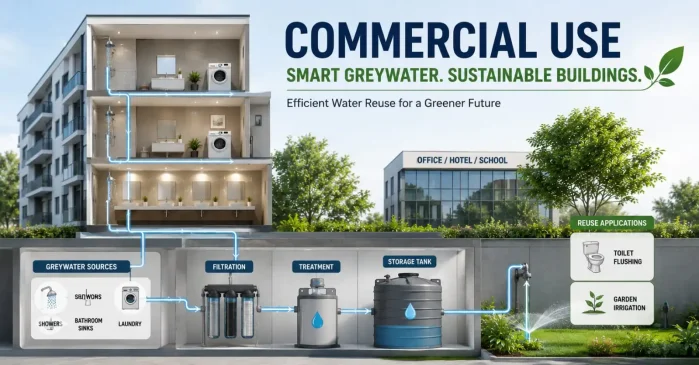
Given below are the common applications of greywater recycling systems:
- Residential buildings
- Apartment complexes
- Commercial buildings
- Hotels and resorts
- Educational institutions
- Hospitals
- Industrial facilities
What is the Process of Greywater Recycling System?
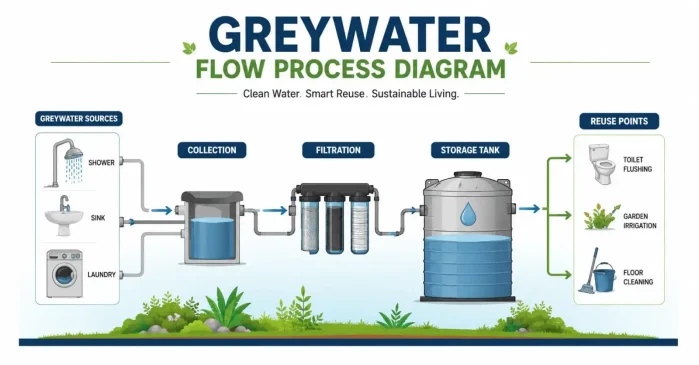
A greywater recycling process is not as technical as the name suggests. It is simple, as we discuss below.
- Collect Greywater
The greywater management system collects wastewater from different sources. These includes:
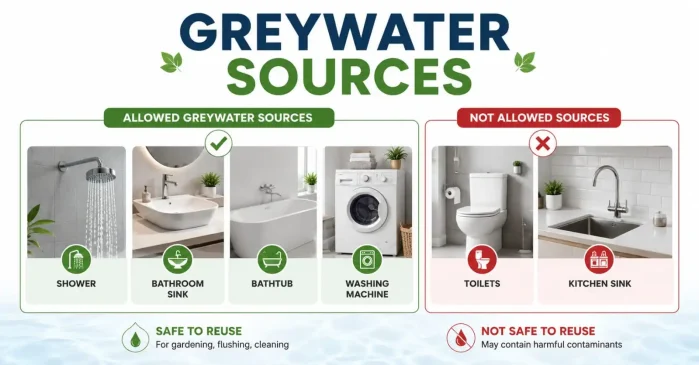
- Showers
- Bathroom
- Sinks
- Bathtubs
- Washing Machines
This water separates from black water coming from toilets and has a high level of contamination.
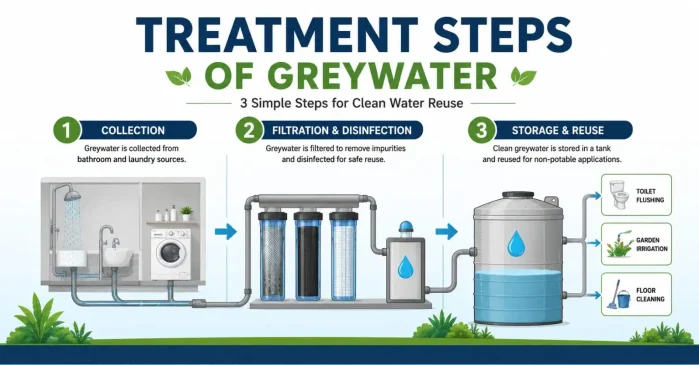
- Water Treatment
The greywater goes through a treatment process when it collects after the separation. It removes different particles like dirt, soap, residue, and other impurities. The 2 steps in the process of greywater treatment are:
- Filtration: Larger particles and debris removed from the water.
- Disinfecting: It adds UV light or chlorine that reduces the harmful bacteria from the water.
Note: The greywater management systems also use microorganisms to break organic matter and improve the quality of water.
- Storing and Reusing the Water
The clean water is stored in a specific tank after the treatment. This is where it began to pump for non-potable purposes like toilet flushing or landscape irrigation. You can reuse this water without compromising your lifestyle.
What Are the Types of Greywater Recycling Systems?
The greywater recycling systems vary from one another. The homeowner has an option to select from different sizes and complexities as per their needs. Given below are a few types of greywater recycling systems:
- Simple (Direct-Reuse) Systems
It is an ideal type of greywater management system if you want greywater to filter immediately. People often use it for garden irrigation. The best part? It doesn’t require heavy tanks to store the water.
- Centralized (Stored) Systems
These systems collect greywater from multiple sources. What’s next? Treat it thoroughly. Collect it in a tank and distribute it for different purposes. The most common applications for centralized greywater systems are apartments and offices.
- Biological Treatment Systems
Bacteria or plants break down organic matter in this type of grey water recycling system. The most intriguing part is that they are eco-friendly. However, careful monitoring is still necessary for them.
- Membrane Filtration Systems
The advanced filters like microfiltration or ultrafiltration help in purifying the water in these high-tech systems. The engineers mostly install it in large buildings. This is because it is more expensive than other greywater recycling systems.
What Are the Benefits of the Greywater Recycling System?
Given below are the benefits of installing a greywater recycling system in modern buildings:
- Saves a Significant Amount of Water
A greywater management setup allows you to reuse water from showers and washing machines. This means that these systems help you reuse 30-50% of household water. The result? The daily consumption of water reduces by 20-40%.
- Reduces Water Bills
There is less need for fresh water if you use the greywater for toilet flushing and garden irrigation. Thus, the consumption of water is so low that it reduces water and sewage bills monthly.
- Reduces the Burden on Municipal Water Supplies
Homes and buildings depend on the filtered water when they use the greywater recycling system. This reduces the demand on municipal systems. It is mostly important in the areas that face water scarcity.
- Decreases Sewage Discharge
A portion of wastewater is not sent directly to the sewer. But it recycles through greywater management systems. Thus, it generates less sewage and decreases the load on wastewater treatment plants.
- Improves Water Security
A greywater recycling solution provides a reliable alternative water source for non-drinking purposes. It is really useful in the areas where water scarcity and droughts are common. It makes the households and buildings become more resilient during water shortages.
What Are the Challenges and Their Solutions in Installing the Greywater Recycling Systems?
Given below are the common challenges homeowners face when they install the greywater recycling systems:
- High Initial Installation Cost
The best way to overcome this challenge is to start with a basic greywater diversion system. It expands later as per the need. What’s more? Remember that you explore the government incentives or rebates to consider the long-term savings on water bills.
- Regular Maintenance Needs
It is advisable to choose systems with automatic cleaning features. This provides easy access for routine maintenance. The simple maintenance routine keeps the system working properly for a long time period.
- Water Quality Monitoring
Blind trust is dangerous. So, use basic monitoring tools to check the quality of the water. Make sure you schedule the periodic testing feature. Important tip? Select the greywater management system that sends alerts if it detects any issues in the water.
- Adhering Local Regulations
It is necessary to adhere to the law when you are installing the greywater recycling tool. Read the local plumbing and water reuse guidelines carefully before the installation. Remember that you hire a professional for the installation to avoid any consequences.
How Does a Greywater Recycling System Support Sustainable Management?
The greywater recycling system supports sustainable management in the following ways:
- Reduces the Need for Fresh Water
Greywater recycling reduces the need for clean water for potable activities like toilet flushing. Greywater recycling filters the wastewater that you can use without any second thoughts. This results in less consumption of water and also helps preserve valuable freshwater resources.
- Supports a Circular Water Use System
Water often flows to the sewer after the homeowners use it. A greywater recycling solution changes this approach. How? It recycles the water for a second use. It not only circulates water for a longer period but also reduces waste.
- Helps Conserve Groundwater Resources
Groundwater from wells and aquifers is still popular among some communities. The groundwater levels get low and create long-term water shortages due to excessive extraction. Greywater systems also protect the reserves for future generations.
- Improves Water Security During Droughts
The scarcity of water is becoming a new normal in many parts of the world. Greywater recycling acts like an additional source of water for non-drinking purposes. The buildings and homes are less dependent on municipal water supplies. This extra water source adds value during droughts and supply disruptions.
The Final Words
Greywater recycling offers a practical way to use water efficiently. It treats the water and makes it compatible for reuse for various purposes. What’s more? It helps you save on water bills and reduces the amount of wastewater sent to municipal treatment plants. These benefits make it important to invest in greywater recycling systems when building a home. It is a sustainable water management system for modern buildings.
FAQs
Is Greywater Safe to Reuse?
Yes, greywater is safe to reuse when it has been properly treated. After filtration and treatment, it can be used for non-drinking purposes such as toilet flushing, garden irrigation, and landscaping. Reusing treated greywater helps reduce freshwater consumption while supporting more sustainable water management.
What Water Can Be Classified as Greywater?
Greywater is the wastewater that comes from showers, bathtubs, bathroom sinks, and washing machines. While it may contain soap, dirt, and small amounts of organic matter, it does not contain toilet waste. Because it is less contaminated than sewage, greywater can often be treated and reused safely.
Can Greywater Be Used for Drinking Purposes?
No, greywater should not be used for drinking. Even after basic treatment, it may still contain contaminants that make it unsafe for human consumption. Greywater is generally reused for non-potable applications such as irrigation and toilet flushing, while drinking water requires much higher treatment standards.
How Much Water Can a Greywater Recycling System Save?
A greywater recycling system can reduce a building’s freshwater demand by around 30% to 50%. The exact savings depend on factors such as occupancy, water usage habits, and the size of the system. In residential and commercial buildings, greywater reuse can significantly lower overall water consumption and utility costs.
Is Greywater Recycling Suitable for Residential Homes?
Yes, greywater recycling is suitable for both residential and commercial properties. Homeowners can use treated greywater for gardening, landscaping, and toilet flushing, helping to conserve water and reduce monthly water bills. Modern systems are available in a range of sizes to suit different household needs.
What Maintenance Does a Greywater System Require?
A greywater recycling system requires regular maintenance to keep it operating efficiently. This typically includes cleaning filters, inspecting pumps and pipes, checking storage tanks, and monitoring water quality. Routine maintenance helps ensure the system remains safe, reliable, and effective over the long term.
What Is the Difference Between Greywater Recycling and Wastewater Treatment?
Greywater recycling focuses on treating and reusing water from sources such as showers, sinks, and washing machines. Wastewater treatment, on the other hand, handles all sewage streams, including blackwater from toilets. The main goal of greywater recycling is to reduce freshwater use, while wastewater treatment is designed to safely treat and dispose of sewage.
Is Greywater Recycling Mandatory in Green Buildings?
Greywater recycling is not always mandatory, but it is strongly encouraged in many green building projects. Sustainable building certification systems often reward water-saving measures, including greywater reuse. In areas facing water scarcity, local regulations may also require water recycling solutions as part of building design.