Key Takeaways
- A cool roof reflects sunlight and absorbs less heat in comparison to a regular roof.
- It usually keeps the buildings cool up to 50°F (28°C).
- There are five popular types of cool roof materials available.
- It reduces electricity bills in hot climate areas like Delhi.
- The best material for a cool roof depends on various factors, such as the local climate and insulation in buildings.
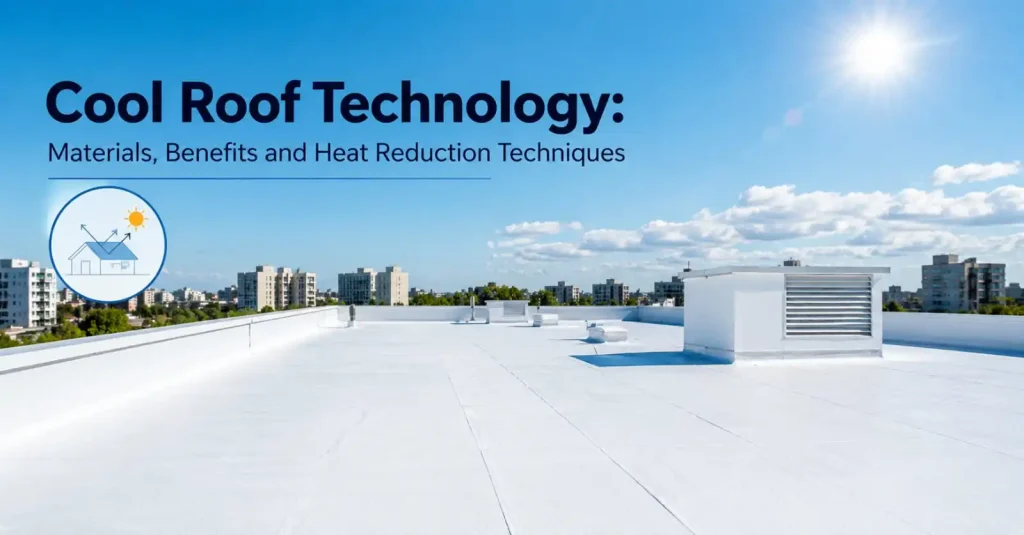
It is indeed true that it’s difficult to walk across the rooftop in peak summer. The blasting sun makes the surface feel like it could fry an egg. Why? This is because conventional roofs often reach 150°F in the summer. But what if I tell you that the same roof can feel much cooler? Wondering if it’s possible? The answer is yes. It is possible if you apply cool roof technology. It is an affordable technique to help homeowners and businesses enjoy comfort.
Read on this blog post to find all about cool roof methods in detail.
What Is Cool Roof Technology?
A cool roof reflects more sunlight and absorbs less heat in comparison to a regular roof.
Let’s understand it this way:
You wear a white shirt instead of a black shirt on a hot sunny day. Why? This is because the sunlight reflects off when you wear white. It keeps you cool in the excessive heat. But a black shirt absorbs heat and makes you feel warm. The principle for cool roofs is the same.
Cool roofs are made using special materials. These materials reflect sunlight away from the building. What’s the result? The heat releases more quickly than before. You feel comfortable in indoor spaces. Modern cool roof techniques are also popular in construction because they improve energy efficiency.
Which Cities in India Initiated Cool Roof Technology?

Some Indian cities are already using cool roof technology to beat the heat. Given below are some of the initiatives using the cool roof technique:
| City / Region | What was it? |
| Ahmedabad | First major city-level cool roof program under the Heat Action Plan |
| Hyderabad | Became a leader in cool roof adoption through the Telangana Cool Roof Policy. |
| Amravati | Introduction of mandatory cool roof bylaws for new buildings and incentives for existing structures. |
| Chennai | Cool roofs in government schools to reduce classroom temperatures. |
| Bhopal | Exploring city-wide reflective roof strategies as part of smart surface and urban cooling programs. |
How Cool Roof Technology Reduces Heat in Buildings?
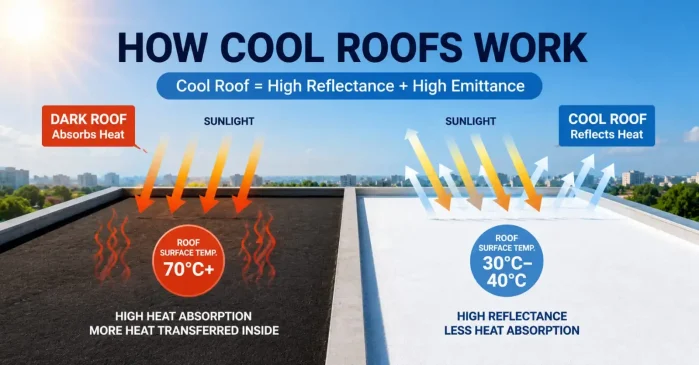
You must be wondering about the science behind cool roofs. Well, it’s quite simple! The regular roof absorbs the sunlight as heat. This heat moves through the building structure and warms up the indoor spaces. The result is that you consume air conditioners and energy bills increase.
The cool roof technique is different. It reflects a large portion of sunlight back into the atmosphere. What’s more? It releases the heat more quickly. This keeps the roof surface cool throughout the day. It is mostly fruitful in hot cities because concrete buildings and roads trap heat quickly.
What Are the Types of Cool Roof Systems Used in Construction Buildings?
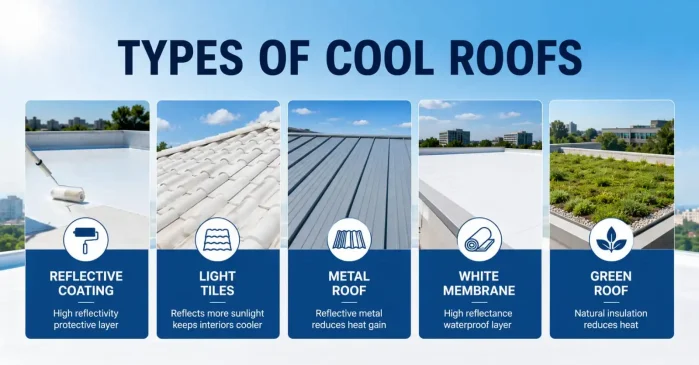
There are different types of cool roof technologies in the market. Given below are some of the most common cool roof solutions:
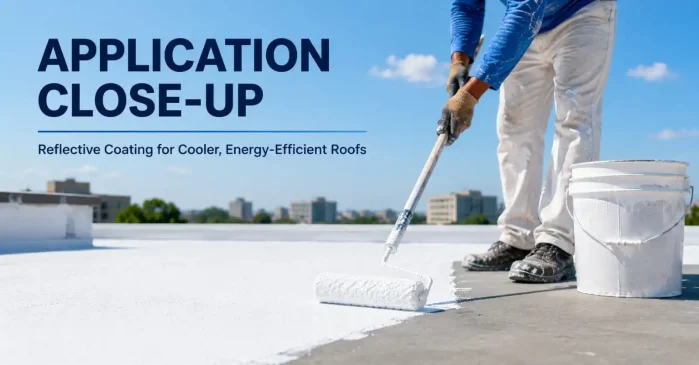
- Reflective Roof Coatings
They are special roof paints that reflect sunlight. It is an affordable method that absorbs less heat. How to apply it? The engineer simply applies it to existing roofs. This roof can be made of concrete or tiles.
- Reflective Tiles and Shingles
This cool roof method reflects more sunlight than regular roofing materials. They are available in different colors and styles. The engineers mostly use them in homes where roofs are made of concrete or clay tiles.
- Metal Roofs
This is an ideal choice if you want to reflect a good amount of sunlight naturally. The best part? They are more effective when they combine with reflective coatings. The best applications of metal roofs are warehouses and factories.
- Membrane Roofs
They are the thin sheets that engineers use for the roofs of commercial buildings. They reflect high heat in the atmosphere. The result is obvious. The heat does not absorb in the building.
- Green Roofs
Green roofs are an eco-friendly and sustainable cool roofing technique. It uses plants and soils instead of reflective materials. The plants provide shade to the building and keep it cool.
What Are the Benefits of Cool Roof Technology for Heat Reduction?
Cool roof technology offers much more than a roof cooler. Given below are some common benefits of cool roof techniques in modern construction:
- Lower Energy Bills
Building stays cool during hot weather if you use cool roof methods. This reduces the need for air conditioners. The result is clearly visible in your electricity bills. You actually save on your bills.
- Better Indoor Comfort
The buildings are cool when less heat enters them. You feel more comfortable in the rooms even during peak summer months. It automatically uplifts your mood.
- Longer Roof Lifespan
The roofs are also the victim of heat. They crack and deteriorate over time due to high temperatures. This is where cool roof technology becomes a savior. It keeps the roof cool so that roofing materials last longer.
- Environmental Benefits
Cities become cool when more buildings use cool roof technology. How does it help? The urban heat island effect and the demand for energy decrease. Most importantly, it decreases the greenhouse gas emissions from power generation.
- Support Climate Change Mitigation
Cool roof techniques reflect more sunlight back into the atmosphere. It reduces the overall consumption of energy. Cool roofs play a small but meaningful role in reducing the impact of climate change.
How to Choose the Cool Roof Technology for Your Building?
The best cool roof methods for your buildings depend on various factors. The goal is to find a solution that suits the buildings and aligns with your budget. Given below are some points you should keep in mind when choosing a cool roof technique for your home:
- Consider Your Local Climate
There are some areas where the hot weather is all year round. This is why it is advisable to choose materials with reflectivity for these areas. They reflect more sunlight to keep the building cool.
- Look at Your Roof Type
Different roofs require different cool roof solutions. Reflective membranes or coatings are an ideal choice for flat roofs. However, sloped roofs are much better for reflective tiles or shingles.
- Set a Realistic Budget
The cost of cool roof technology must not exceed your budget. Reflective roof coatings are an affordable option that you can easily apply to existing roofs. However, it is advisable to choose reflective tiles or metal roofing if you are planning a new roof. This may be expensive, but it will offer longer benefits.
- Check the Insulation of the Roof
A cool roof works best when you combine it with good insulation. The buildings with poor insulation may also have a cool roof. But the performance of a cool roof method improves when you upgrade the insulation.
- Get Professional Advice
A professional inspect your building before installing a cool roof technology. They select the most suitable cool roof solution according to certain factors like condition, budget, and local climate.
The Final Words
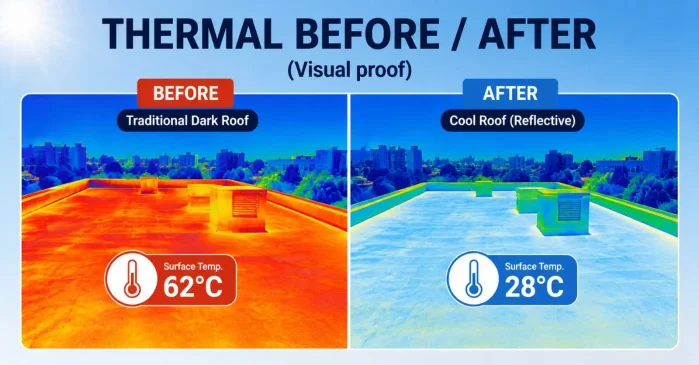
Cool roof technology is an easy way to cool down your house. It not only reduces your electricity bills but also reduces heat in cities. This technique absorbs less heat as it reflects more sunlight. Cool roofs stay up to 50°F (28°C) cooler than traditional roofs. But make sure that you choose the cool roof method that aligns well with your budget.
FAQs
1. What is a cool roof?
A cool roof is a roofing system designed to reflect more sunlight and absorb less heat than a conventional roof. Using reflective cool roof materials such as coatings, tiles, membranes, or specialized paints, it helps keep roof surfaces and indoor spaces cooler. Cool roof technology is widely used to improve energy efficiency, reduce cooling costs, and enhance indoor comfort, especially in hot climates.
2. How does cool roof technology work?
Cool roof technology works by increasing solar reflectance and thermal emittance. In simple terms, it reflects a larger portion of the sun’s rays and releases absorbed heat more quickly than traditional roofing materials. These roof cooling methods reduce roof surface temperatures, limit heat transfer into the building, and help maintain cooler indoor conditions during hot weather.
3. Can a cool roof reduce electricity bills?
Yes, a cool roof can help reduce electricity bills by lowering the amount of heat entering a building. Since indoor spaces stay cooler, air-conditioning systems do not need to work as hard to maintain comfortable temperatures. Depending on the climate, building type, and roof material, cool roof technology can lead to noticeable energy savings and lower cooling costs throughout the year.
4. Which cool roof material is best for homes?
The best cool roof material depends on your climate, roof design, and budget. Popular residential options include reflective roof coatings, cool roof paints, white ceramic tiles, reflective metal roofing, and specialized cool shingles. These materials are designed to improve roof reflectivity, reduce heat absorption, and enhance overall energy efficiency, making them effective roof cooling solutions for homes.
5. How much cooler can a cool roof make a building?
A cool roof can significantly reduce roof surface temperatures and improve indoor comfort. In many cases, cool roof technology can lower indoor temperatures by 2°C to 5°C while reducing roof surface temperatures by as much as 20°C to 30°C compared to conventional roofs. Actual results vary based on weather conditions, building design, insulation levels, and the type of cool roof material used.
6. Is cool roof technology suitable for existing buildings?
Yes, cool roof technology can be easily implemented on many existing buildings. Roof cooling techniques such as reflective coatings, cool roof paints, and retrofit membranes can often be applied without replacing the entire roof. This makes cool roof upgrades a cost-effective way to improve energy efficiency, reduce heat gain, and enhance thermal comfort in older buildings.
7. What is the difference between a cool roof and a green roof?
The main difference is how they reduce heat. A cool roof uses reflective materials and coatings to reflect sunlight and minimize heat absorption, while a green roof uses vegetation and soil layers to provide natural insulation and cooling. Both solutions help improve building performance and reduce urban heat, but cool roof technology typically requires less maintenance and lower installation costs than green roof systems.