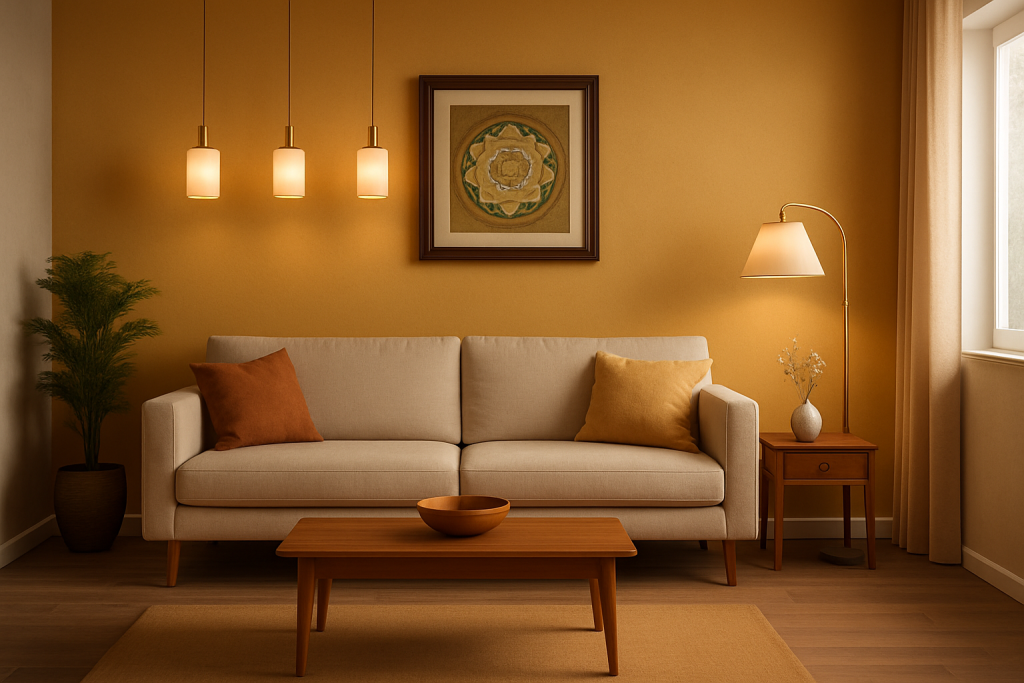
When you walk into a home or a building, haven’t you always felt the vibe or the mood of the space the moment you enter? The first thing that comes to mind is the ambience, the way a space makes you feel. That ambience is created by many elements put together, like the furniture and the wall texture, but two very significant elements can be attributed to the majority of the mood: colours and lighting.
In Indian homes, especially when we talk about Vastu interior tips, colours and lighting aren’t just about style and interiors- they can lift or bring down the entire energy of the space. In Vastu Shastra, the ancient Indian science of architecture, these two elements play a crucial role in the way your home feels, bringing together common sense, cultural wisdom and a little bit of psychology.
This blog intends to provide insights into the importance of colours and lighting in Vastu for interior spaces.
Why Vastu Gives Importance to Colours & Lighting
In Vastu Shastra, every direction in a home is linked to some or the other element or energy. Colours can optimise or minimise those energies, while lighting, both natural and artificial, can make a space feel vibrant, comfortable, and balanced.
How does a bright, well-lit room feel on a gloomy, rainy day? How does the warm yellow light of the corner floor lamp make the room look? Cosy and inviting. That’s the essence of Vastu lighting colours, using both light and shade to set the right mood for each part of the house.
Matching Colours to Directions
In Vastu, each direction is connected or linked with an element, and every element brings a certain energy through colours. That’s where colour recommendations come from. Here’s how it works:
- East is the direction of air & sunrise energy. Colours like soft blues, light greens, or white align with the direction to bring freshness and a sense of space. Hence, they are recommended for living rooms and study areas.
- The West is connected with the water element. Warm shades like peach, cream, or light yellow are recommended for this direction to add calmness and balance.
- North is considered the wealth direction. Shades of light greens, off-whites, or cream allow prosperity to flow in and keep this area light and open- in other words, these colours in the west direction invite prosperity.
- South is linked to the fire element. Hence, stronger colours like red or deep orange can be used, but mindfully. It is advisable to use these colours in accents to energise the space, rather than overdoing it with entire walls.
Vastu Interior Tips for Colour
- Living Room
Use earthy neutrals such as beige, cream and light yellow, so the space feels welcoming. If your living room faces east or north, adding green plants or blue cushions can help keep the energy fresh. - Bedroom
Soft pastels work best here. Light pink, lavender, or sky blue create a restful mood. Avoid overly bright reds, as they can be too stimulating. - Kitchen
The kitchen is linked to the fire element, so colours like yellow, orange, or light red work well. But balance them with neutral shades of tiles or cabinets so it doesn’t feel overwhelming. - Bathroom
Light blue, white, or soft grey keeps the bathroom feeling clean and airy.
Lighting – The Hero of Vastu
Vastu Colours set the tone of the space, but lighting decides how those colours appear. A powerful colour like yellow can look dull if the lighting in the room isn’t effective enough.
Vastu encourages balanced lighting- a mix of natural light during the day and warm, pleasant artificial lighting at night.
Natural Light:
- East-facing windows are a blessing. Morning sunlight here boosts positive energy.
- Skylights in central areas can brighten the home without artificial lights.
Artificial Light:
- Warm white LED bulbs for living areas create a cosy vibe.
- Cool white lighting works for study areas and kitchens where focus is needed.
- Avoid harsh, direct overhead lighting in bedrooms, as it can be disturbing; instead, use soft lamps or wall lights.
How to Layer Light for Comfort & Energy
Vastu isn’t specifically about lighting to create an ambience, but more about creating or inviting a certain energy with the lighting. Different types of lighting are required for different purposes-
- Ambient Lighting: This is typically used for general illumination of a space and must be kept warm and inviting, such as ceiling lights.
- Task Lighting: These are focused lights for reading, cooking, or working. These can be brighter and more functional.
- Accent Lighting: Used to highlight décor, art, or architectural features, and also highlight sacred spaces like a pooja room. These should neither be too bright nor too dim.
Vastu Interior Tips for Modern Interiors
Modern homes often use bold focus walls, recessed lighting, and sleek monochrome palettes. While these look great and classy, a small shift can make them Vastu-friendly without compromising on style.
- Pair a dark accent wall with lighter colours on the other sides.
- Use adjustable lighting to change brightness levels for different times of the day.
- Add reflective surfaces like mirrors or glass to bring light into darker corners.
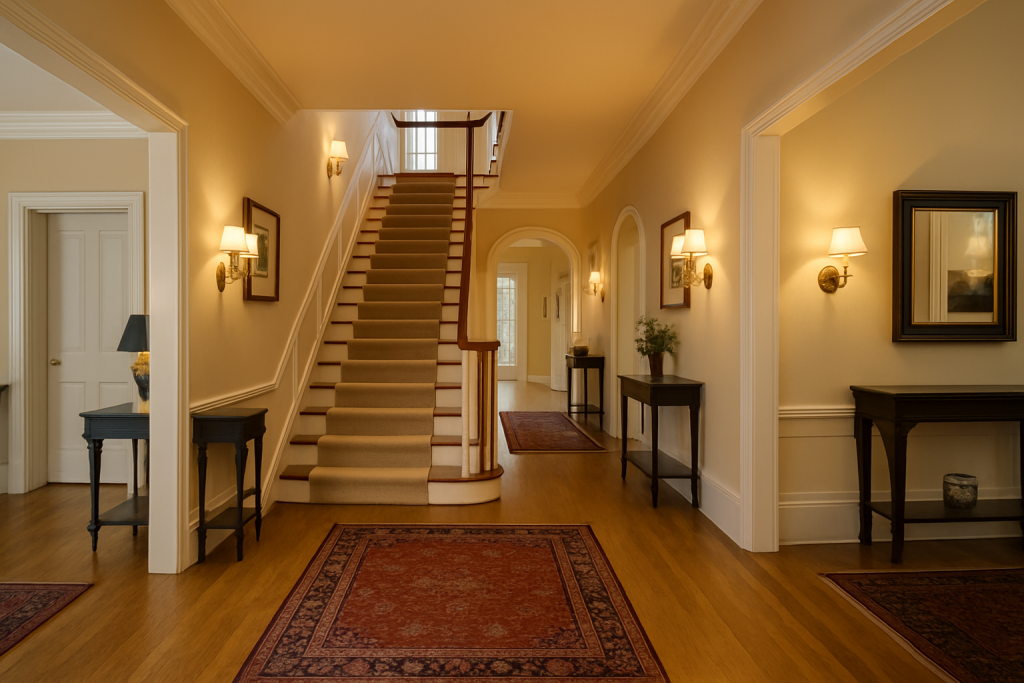
- Corners, like under the staircase or the walk-in wardrobe area, must have a source of light, as they can feel stagnant and dull if left unlit.
- Entrances should be bright and well-lit to welcome energy in.
- The pooja room, even if small, should have a soft, constant source of light.
Common Mistakes to Avoid
- Overusing dark shades in small rooms can make the space feel heavy.
- Relying only on overhead lights can create shadows and uneven lighting.
- Ignoring the direction of the room when choosing colours- a shade that looks beautiful in a showroom can feel “off” once painted if it clashes with the natural light direction.
Think of colours as the clothes your home wears, and lighting as the way those clothes are shown off. When both work together, they not only make your space beautiful but also create an environment where you feel energised and at peace.
Vastu offers a framework, but your comfort matters most. If a colour recommended by Vastu doesn’t feel right, choose a softer version or use it in accents. If bright lighting feels harsh, go for warmer tones. Your home’s energy comes from how you use it. Vastu lighting colours are just tools to support that atmosphere.
Following Vastu interior tips for colours and lighting isn’t about following rigid rules, but about tuning your space so it supports your life, day after day. And in the end, whether it’s the golden morning sunlight in your kitchen or the warm glow of a lamp in your bedroom, it’s these little touches that turn a house into a home.
FAQs
1. Does one need to repaint the whole house to follow Vastu lighting colours?
Not. You can add Vastu-friendly colours by incorporating furnishings like cushions, curtains and rugs in those colours in the direction recommended..
2. Any Vastu interior tips for a bedroom with no natural light?
Use soft, warm lighting paired with pastel wall colours like light peach or sky blue to make the space feel airy. Mirrors can also help reflect whatever little natural light you get.
3. Can I mix modern décor with Vastu lighting colours?
Yes. A sleek, modern living room can still follow colour guidelines, like a neutral base with bits of Vastu-friendly colours. Lighting can be stylish too; just keep the lighting colours warm and welcoming.
4. Which direction needs the most attention for lighting?
In Vastu, the northeast direction is linked to clarity and positivity. This area must be kept bright and clutter-free. If it doesn’t receive natural sunlight, make sure you have steady, soft lighting there.
5. Is it okay to use dark colours if I prefer them?
Yes, but not too much. Deep colours like maroon or navy work as accent walls or décor pieces, but avoid using them in an entire small room as they may feel heavy. Pairing them with lighter tones and good lighting keeps the balance.
6. What’s the biggest lighting mistake people make according to Vastu?
Leaving corners dim or unlit. In Vastu, dark corners are believed to block positive energy. Even a small wall light or floor lamp is enough to keep the energy flowing.
7. Can Vastu interior tips be applied if I live in an apartment with fixed lighting?
Yes. You can add table lamps, floor lamps, or LED strips to create the right lighting. Colours can be included through paint, fabrics, and decor.