Every building has its own story and emotions to tell. What begins with a foundation converts into a beautiful place that creates memories. The process of building construction has one important step. That step is plaster. Modern homeowners often prefer plaster on walls when they build a home. Why? This is because the walls look clean and smooth when the plaster is done. Read on this blog post to understand plaster meaning and the types of plaster in building construction.
What Is Plaster?
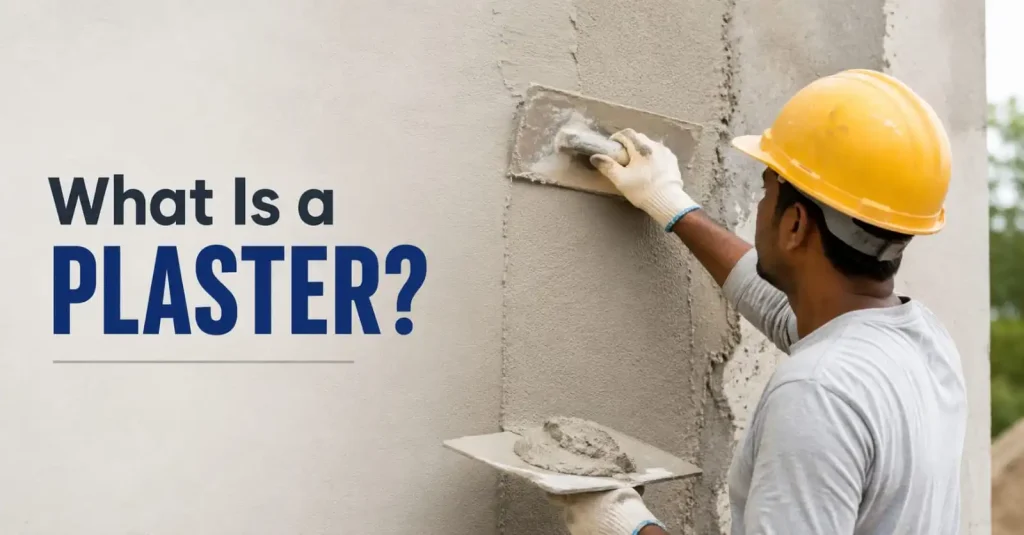
Plaster is a protective coating that workers apply over walls and ceilings. You will often find it in modern home construction sites. The painting of the walls follows when the plaster work is complete on the walls. The workers bind the different materials together to form a plaster. Some of the common materials are
This mixture is spread over masonry or concrete surfaces. Plaster creates a uniform layer. Given below are the advantages of this layer:
- Protects walls from weather damage
- Covers uneven brickwork
- Improves durability
- Create a clean surface for paint and decorative finishes
Plaster is similar to the skin of a building. Just as skin protects the body, plaster protects the structure. Modern construction uses different types of plaster depending on various factors. Let’s take a look at plaster types in the next section!
What Are the Types of Plaster in Building Construction?
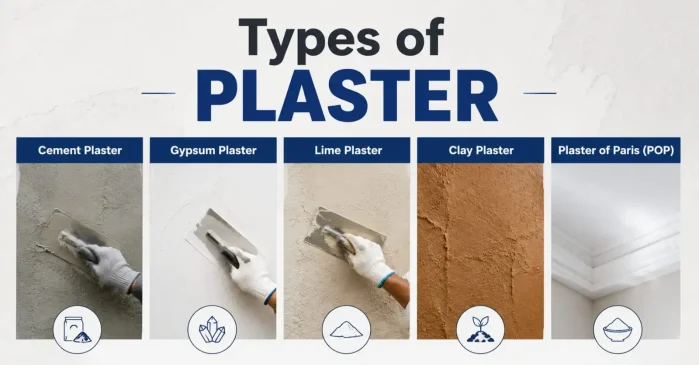
Given below are the various types of plaster used in the construction of modern buildings:
- Cement Plaster
It is the most common type of plaster that workers use in residential and commercial construction. It forms when you mix cement, sand, and water in suitable proportions. The applications of cement plaster are:
- External walls
- Internal walls
- Bathrooms
- Kitchens
- Commercial buildings
It not only provides excellent strength but also resists moisture. Thus, it is suitable for areas with varying weather conditions.
- Gypsum Plaster
The workers mostly prefer gypsum plaster for interior walls. This is because it provides a smooth finish without the need for extensive curing. It forms when gypsum powder is mixed with water. The advantages of gypsum plaster:
- Fast application
- Smooth surface
- Fewer shrinks
- Reduce construction time
You will find modern apartments using gypsum plaster for interior finishing. The reason behind its popularity is its convenience and consistent finish.
- Lime Plaster
Lime plaster is a traditional construction technique, even before cement. This type of plaster is still popular for heritage building projects. They allow the walls to breathe. The best part? Their flexibility reduces cracks in old masonry structures.
- Clay Plaster
Clay plaster is popular in sustainable construction. It is not only environmentally friendly but also regulates indoor humidity. It forms using the following materials:
- Clay
- Sand
- Fibres
Contractors mostly prefer clay plaster for eco-friendly homes and green building projects.
- Plaster of Paris (POP)
The wall designs and decorations that you see in residential and commercial buildings are made using Plaster of Paris. It sets quickly and allows intricate detailing. The common applications of POP are:
- False ceilings
- Cornices
- Decorative mouldings
- Interior designs
There are different types of plaster for different purposes. Make sure you select the right one as per your project needs.
Why Is Plaster Important in Building Construction?
Many people assume that plaster is only for appearance. But its role is much more than making walls look smooth. Given below are the benefits of using plaster in building construction:
- Protects the structure
A plaster layer on the walls protects from various external elements. These include moisture, dust, minor cracks, and weather exposure. The result? The life of masonry surfaces increases.
- Create a Smooth Finish
You will see joints and slight variations in the brickwork at a construction site. Plaster fills these gaps to create an even surface. The workers use this smooth surface to apply paint or wallpaper.
- Improve Durability
Good-quality plaster reduces deterioration from the surface. Hence, the walls manage daily wear and tear easily. This benefit makes it popular in busy homes and commercial buildings.
- Better Hygiene
Smooth plaster walls collect less dust than rough masonry surfaces. This makes it easy to clean the plaster surface and maintain hygiene.
The Final Words
Plastering is one of the important processes in building construction. Different types of plaster perform different functions. Thus, it is advisable to choose the right material for the right application. This will not only ensure durability but also reduce maintenance costs. Plaster meaning is simple. It is a solution that makes your walls remain beautiful for years.
FAQs
1. What is plaster in construction?
Plaster in construction is a mixture of cement, gypsum, or lime with sand and water, applied to walls and ceilings. It creates a smooth, durable surface while protecting masonry and concrete from moisture, weather, and everyday wear. It also prepares surfaces for painting and decorative finishes.
2. What is the meaning of plaster?
Plaster is a protective finishing layer applied over brick, concrete, or block surfaces. It improves the appearance of walls and ceilings, increases durability, prevents moisture damage, and provides a smooth base for paint, wallpaper, or other decorative finishes.
3. What are the main types of plaster?
The main types of plaster are cement plaster, gypsum plaster, lime plaster, clay plaster, and Plaster of Paris (POP). Each type offers different benefits, such as durability, smooth finishes, weather resistance, or decorative applications, depending on the construction requirement.
4. Which plaster is best for interior walls?
Gypsum plaster is considered the best plaster for interior walls because it provides a smooth finish, requires no water curing, and speeds up construction. It is also crack-resistant and creates an ideal surface for painting and other interior decorative finishes.
5. Which plaster is suitable for exterior walls?
Cement plaster is the best choice for exterior walls because it offers excellent strength, durability, and weather resistance. It protects buildings from rain, moisture, and harsh environmental conditions, helping maintain the structure and reduce long-term maintenance.
6. Does plaster improve the life of a building?
Yes, plaster improves a building’s lifespan by protecting walls from moisture, weather damage, and surface deterioration. It also reduces maintenance needs, prevents minor cracks, and helps preserve the strength, durability, and appearance of masonry and concrete surfaces.
7. Can plaster be applied directly on concrete?
Yes, plaster can be applied directly to concrete after proper surface preparation. The surface should be clean and roughened or treated with a bonding agent to ensure strong adhesion. Proper application creates a durable, smooth, and long-lasting finish.