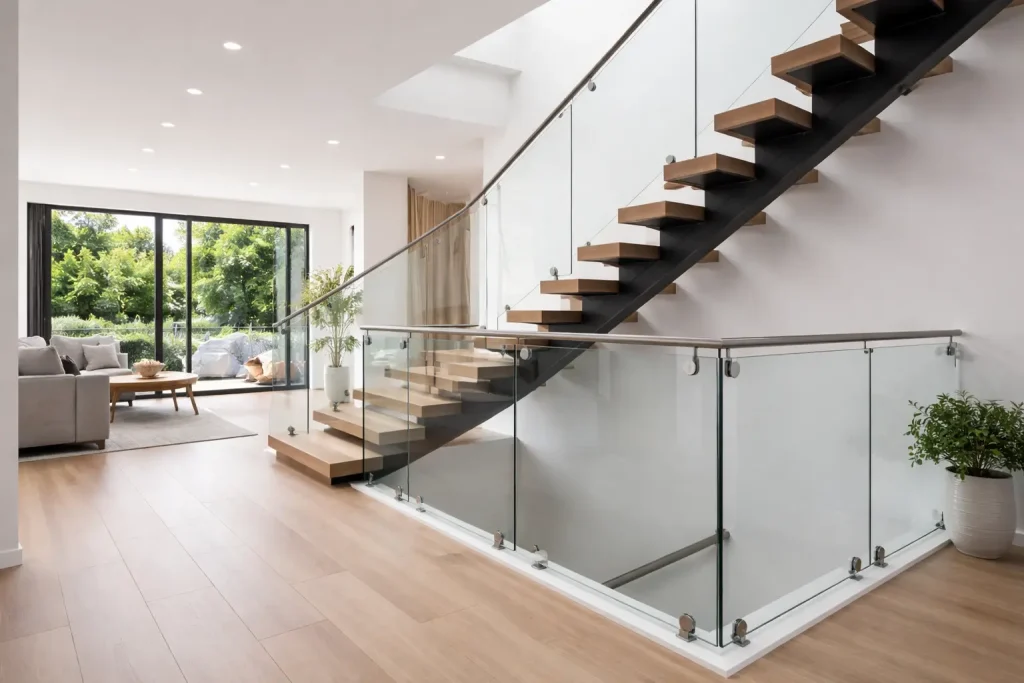
Whether you’re building a home or renovating, if you want a floor that lasts decades without drama, concrete floors deserve a serious look. They’re no longer limited to garages or factories. Today, a concrete floor can look warm, stylish, and surprisingly homely. From polished finishes to micro layers that sit on existing tiles, concrete flooring has quietly entered modern Indian homes.
This blog breaks it all down — what a concrete floor really is, the good and bad, design ideas that actually work, and practical tips most people overlook.
What Is a Concrete Floor?
At its core, a concrete floor is exactly what it sounds like — a finished surface made using cement, sand, aggregates, and water. The difference lies in how it’s mixed, laid, finished, and protected.
Earlier, concrete was just the base below tiles or marble. Now, that base itself becomes the final floor. With the right concrete floor mix ratio, finishing technique, and curing, the surface becomes smooth, strong, and visually appealing.
In many homes today, micro concrete flooring is used over existing floors, avoiding demolition and dust. Same idea. Smarter execution.
Why Homeowners Are Choosing Concrete Floors
There’s a reason architects and homeowners are warming up to concrete floors. A concrete floor:
- Doesn’t chip easily
- Handles heavy furniture well
- Doesn’t mind pets, kids, or spills
- Looks better as it ages
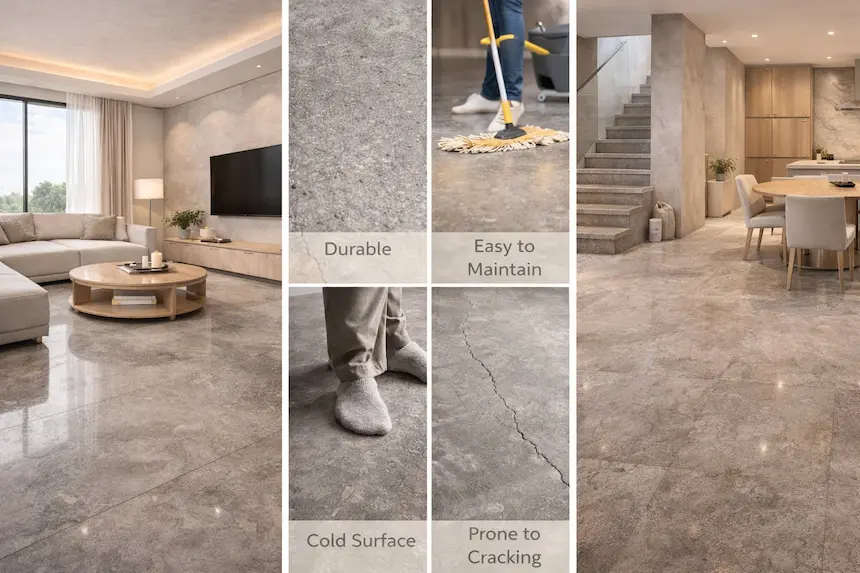
Unlike tiles that crack or wooden floors that swell, polished concrete floors are low-maintenance and forgiving. In hot Indian climates, they also stay cooler underfoot — a small but noticeable comfort.
Materials Required for Concrete Flooring
A good-looking concrete floor isn’t about shortcuts. Typical materials include:
- Cement (quality matters a lot here)
- Fine aggregates and sand
- Admixtures (for strength and finish)
- Water (measured, not guessed)
The concrete floor mix ratio is crucial. Too much water weakens the surface; too little makes it hard to finish. This balance decides whether your floor lasts 5 years or 30.
Types of Concrete Flooring You’ll See in Homes
Polished Concrete Floors
Mechanically ground and polished till it develops a smooth sheen. Common in modern homes, studios, and offices. Reflects light well and feels premium without being flashy.
Stained Concrete
Colour is added using chemical or water-based stains. The finish is natural, earthy, and aesthetic. Ideal for adding colour without tiles or floor paint.
Stamped Concrete
Textured to mimic stone, brick, or wood. More common outdoors, but works well for patios and verandas.
Epoxy-Coated Concrete
An epoxy layer is added for extra protection and shine. Mostly used in garages, but also in utility areas at home.
Exposed Aggregate Concrete
The top layer is removed to reveal stones beneath. Extremely practical for outdoor walkways and pathways.
Microtopping / Micro Concrete Flooring
A thin cement-based layer applied over existing flooring. Popular for renovations where breaking tiles isn’t an option.
Concrete Floor Design Ideas That Actually Work
- Matte polished concrete with warm lighting
- Area rugs to soften bedrooms and living spaces
- Wooden furniture against grey concrete floors
- Neutral walls to let the floor breathe
In smaller homes, polished concrete floors make spaces feel larger because there are no grout lines breaking the visual flow.
Pros of Concrete Floors
- Extremely long lifespan
- Minimal maintenance
- No joints, no grout cleaning
- Resistant to moisture and pests
- Works well with floor heating
With the right concrete floor mix ratio and curing, concrete floors outlast most surface finishes.
Cons of Concrete Floors
- Hard on the feet — use rugs for comfort
- Cold in winter
- Can develop cracks if improperly applied
- Repairs can be tedious and complicated
Concrete forms the core of a structure — foundations, slabs, columns, beams, floors, or ceilings. Hence, quality cannot be compromised. For durable, long-lasting floors, JK Super Cement is ideal.
When Does Concrete Floor Paint Make Sense?
Concrete floor paint is budget-friendly and effective for utility rooms, garages, and temporary finishes. But it tends to peel over time and requires reapplication. Best for short-term solutions, not permanent ones.
Where Concrete Floors Work Best in Homes
- Living rooms
- Kitchens
- Hallways
- Courtyards
- Balconies
- Bedrooms — especially with micro concrete flooring and soft furnishings
Installation Tips For A Strong Concrete Floor
- Finish samples are a must
- Expansion joints should not be ignored
- Proper curing time is non-negotiable
- The concrete floor mix ratio must be site-controlled
- Rushing a concrete floor is the fastest way to regret it
Concrete Floors vs Tiles vs Wood
Each material contributes differently, which is why many homes mix them:
- Concrete in common areas — durable and low-maintenance
- Wood or laminate in bedrooms — warm and cozy
- Tiles — aesthetic variety
Is a Concrete Floor Right for Your Home?
If you want long-term value, minimal fuss, and modern aesthetics, a concrete floor is worth considering. It grows with your home, handles real life, and doesn’t demand constant attention.
FAQs
1. Is a concrete floor suitable for homes?
Yes. With proper finishing, it works very well in residential spaces.
2. What is micro concrete flooring?
It’s a thin cement layer applied over existing floors for a fresh concrete look.
3. Are polished concrete floors slippery?
No. They have a good grip when finished correctly.
4. Can concrete floor paint replace polishing?
Only temporarily. Paint doesn’t last as long.
5. What cement mix ratio works best for cement floors?
Typically, M15 (1:2:4) is best for strong floors, and M20 (1:1.5:3) for higher load-bearing.
6. How reliable are concrete floors?
Extremely, if laid and cured properly using quality materials.
7. Are concrete floors expensive?
Initial cost may be higher, but you save more on maintenance over time.