
Have you ever seen a parent moving a baby stroller? Or a wheelchair user entering a public space? You see a sloping surface that runs between two points. This slope is known as a ramp. It changes the level of the surface to offer seamless movement of mobility devices. A good ramp design also ensures people’s safety. But do you know there are different types of ramps? Moreover, what are its main components? Read on this blog post to find out!
Quick Answer
A ramp refers to a sloping surface that connects two different levels. It provides a gradual route between the lower and higher levels. The builders use various materials to create a ramp. This means it can either be made of concrete or other structural materials. A slope is highly important for good ramp construction. The experts recommend a gentler gradient for a ramp if required. The 2021 guidelines specify that the maximum horizontal run length of a ramp depends on gradient.
What Is a Ramp?
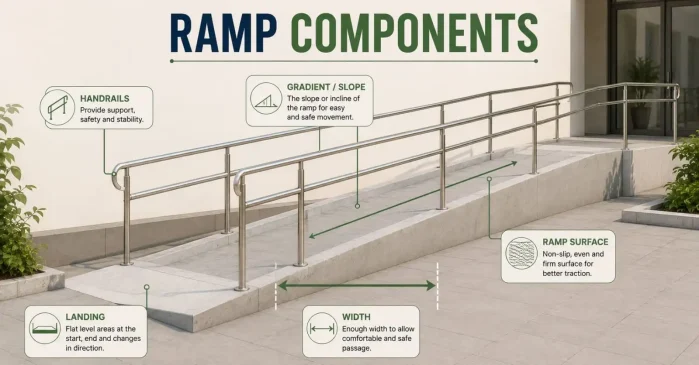
The simple meaning of a ramp is an inclined walkway that allows vehicles and equipment to move from one level to another. It has similar properties to a bridge. The only difference is that you cross a difference in elevation on a ramp. Many people confuse a ramp design with a slope. But many other factors also play an important role in the construction of a ramp. Some of these factors are as follows:
- Gradient
- Surface
- Width
- Landings and handrails
What Are the Benefits of a Ramp?
Given below are the benefits of a ramp in homes and public spaces:
- Make Spaces More Accessible
A ramp makes movement easy for people who use wheelchairs and other mobility aids. Moreover, it allows people to enter homes and public-space buildings without stairs.
- Make Everyday Movement Easy
Ramps are also useful for people without mobility problems. It helps parents push baby strollers. Moreover, you can move shopping carts or pull luggage easily. This is why it makes a building more convenient for a wide range of users.
- Provides Safe Movement Between Levels
A gradual slope is easier to walk than a flight of stairs. This is highly important for elderly people or anyone carrying a load. Hence, it ensures safe movement if the workers design it properly. It is necessary to focus on certain factors like gradient and width during the construction of a ramp.
- Creates More Inclusive Spaces
A ramp allows more people to use the same space easily. This means that accessibility becomes part of the design if you install the ramps carefully in the spaces. That’s it? Indeed, not! A good ramp design makes your space feel calmer and more welcoming.
What Are the Different Types of Ramps?
The following are the different types of ramps in buildings and public spaces:
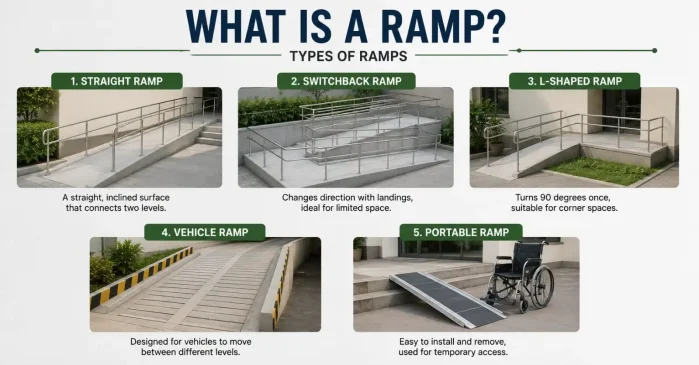
- Straight Ramp
This is one of the common types of ramps in buildings. It runs directly from the lower level to the higher level. The best part? It performs well in areas with enough horizontal space.
- Switchback Ramp
The route can turn back on itself if there isn’t enough space for one long straight ramp. This is where the intermediate landings connect the different runs. A switchback ramp is ideal for a building with limited available space.
- L-Shaped Ramp
The ramp changes direction by roughly 90 degrees in this type of ramp. Engineers often provide a ramp landing at the turn.
- Vehicle Ramp
These types of ramps are commonly used for vehicles. This is why they are available for use in basements and parking lots.
- Portable Ramp
Portable ramps are popular for temporary use. The most interesting part is that they are lightweight. Hence, you can use them for small steps and temporary events.
What Are the Common Applications of a Ramp?
Given below are the common applications of a ramp:
- Homes and residential buildings
- Educational institutions
- Healthcare centers
- Commercial buildings
- Parking areas
- Warehouses and factories
- Public spaces and transport facilities
The Final Words
A ramp is a simple element in a building. It connects levels to remove the dependency on stairs. Moreover, it allows people to move wheelchairs and other mobility devices efficiently. A good ramp design can make your building feel inclusive if your goal is accessibility. It is advisable to consider all the factors when you create a ramp for homes and public spaces.
FAQs
1. What is the standard slope of a ramp?
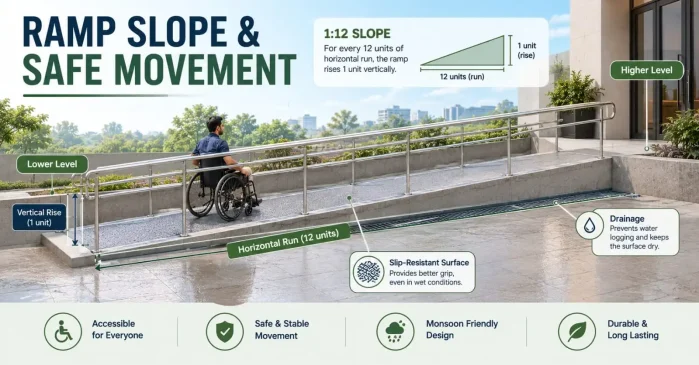
There is no single standard slope for every ramp. It depends on its purpose, location and applicable guidelines. For accessible ramps, 1:12 is a commonly referenced maximum gradient, while gentler slopes such as 1:15 or 1:20 can provide easier movement.
2. How is ramp slope calculated?
Ramp slope is calculated by comparing the vertical rise with the horizontal run. For example, a 1:12 ramp rises 1 metre for every 12 metres of horizontal distance. A gentler slope requires more horizontal space but can make the ramp easier to use.
3. What materials are used to build ramps?
Common ramp materials include concrete, steel, aluminium and wood. Concrete is widely used for permanent ramps, while steel and aluminium can suit lightweight or temporary structures. The material should be selected based on the ramp’s purpose, expected load, location, durability and maintenance requirements.
4. Why are landings needed on a ramp?
Landings provide flat, level areas where users can rest, turn or change direction safely. They are particularly important on longer ramps and at changes in direction. Properly planned landings can make a ramp easier to navigate, especially for wheelchair users and people with limited mobility.
5. Should a ramp have a handrail?
Yes, handrails should be provided where required by applicable accessibility and building standards. They offer additional support and stability, particularly on longer or steeper ramps. Handrails can make movement safer for wheelchair users, elderly people and anyone who may need extra balance while using the ramp.
6. What makes a ramp safe during the monsoon?
A safe outdoor ramp needs proper drainage and a slip-resistant surface. Rainwater should not collect on the ramp because standing water can make the surface slippery. Adequate slope, drainage channels and suitable surface finishes are particularly important for ramps exposed to India’s heavy monsoon rainfall.
7. Are ramps only meant for wheelchair users?
No. Ramps benefit many different users, including people using walkers, parents pushing strollers, travellers carrying luggage, and workers moving trolleys or equipment. They provide a convenient route between different levels and can make homes, workplaces, and public spaces more accessible and easier to navigate.