Building a new home isn’t just about walls, tiles, and fancy fixtures anymore. Families want homes that are clever, efficient, and ready for long-term savings. That’s why conversations during construction increasingly drift toward solar panels for homes, especially in places where power cuts and rising bills have become a yearly routine. Many homeowners also begin learning how solar panels work early in the planning stage, simply to understand how they can save energy over the long term.
Across India, architects and contractors are quietly seeing a shift. Homeowners now focus on choices that reduce running costs from day one. Most households built today want systems that don’t need constant attention. Solar panels in homes check this box easily. That’s why homeowners research the best solar panel system for houses in India right at the blueprint stage, along with understanding the types of solar panels suitable for Indian weather conditions.
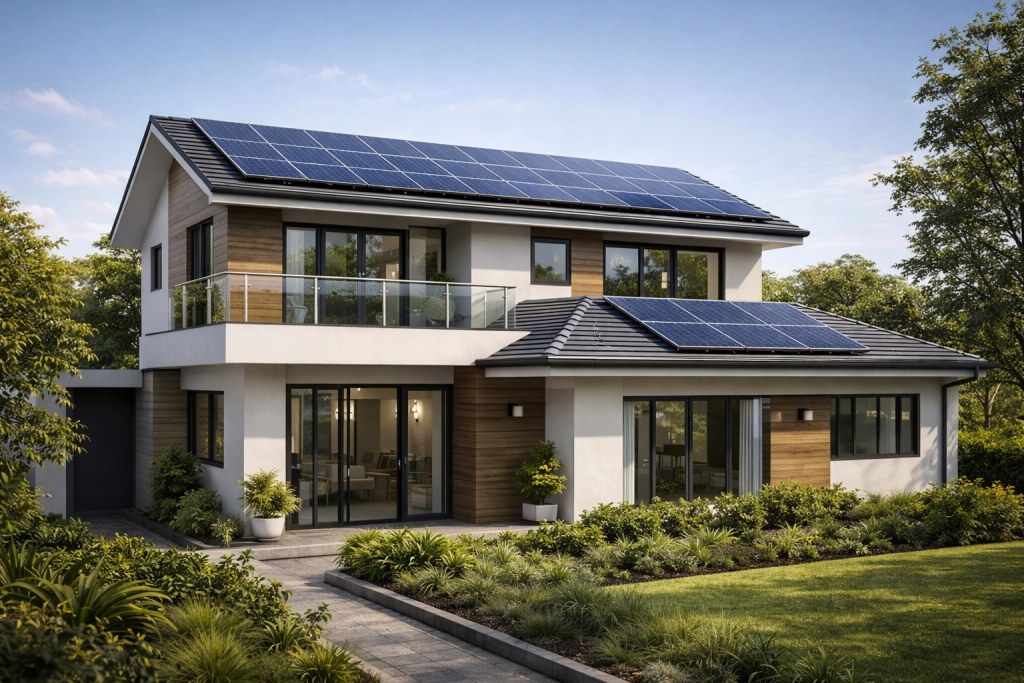
Some contractors also point out that roofs designed with durable materials like JK Super Cement handle the load of solar mounting hardware better over the long run. A strong slab gives peace of mind when panels sit on a solar panel roof, facing heavy monsoon winds or extreme summer heat.
Solar Panel Cost Becomes Simpler When Planned Early
A big question homeowners raise is about budgeting. The good news is that the solar panel cost for a new house becomes far more manageable when solar panel installation is coordinated with ongoing construction. Wiring routes stay short, panel mounts are integrated into the slab, and the need for post-construction modifications drops drastically, helping homeowners save energy without extra effort.
Add to this the government solar panel scheme available in many states, and solar quickly becomes one of the smartest investments during home building for families considering solar panels for homes as a long-term solution.
Understanding Roof Planning for Solar Power Systems
Learning how to plan a rooftop solar panel system for homes isn’t complicated, especially when homeowners understand how solar panels work before construction begins.
- A south-facing or south-west-facing roof section is ideal.
- The area should be open, with no shade from nearby buildings or trees.
- Most homes go for 2kW–5kW setups, depending on usage. Fans, lights, laptops, refrigerators, TVs, and the AC consumption are included here when planning solar panel installation.
Planning in the early stages of construction helps in deciding the right spot for installation of the battery and inverter. A dedicated space for it keeps things safe and organised, particularly when multiple types of solar panels are being evaluated.
Modern Homes – Long-Term Efficiency
Many cities, such as Pune, Jaipur, Kochi, and Indore, have already started installing solar panel systems for homes as a permanent feature. Homeowners are now becoming more aware and resolute in adopting sustainable power generation to save energy and bring down electricity tariffs.
Solar panels for homes offer consistency even during power cuts, making them a practical choice for modern living.
Homes that are planned with solar from the start also tend to hold their value better. Buyers today look for houses that are already future-ready, with a functional solar panel roof, not ones that need fresh drilling, rewiring, or extra work a few years down the line. A home with solar in place feels like a sensible buy, not a project waiting to happen.
Installing a Solar Panel System For Homes During Construction: A Smarter Move
When a house is still under construction, everything is open and easy to work with.
- Electrical lines aren’t hidden yet, slabs are still being cast, and utility areas can be planned properly. This makes it the ideal time to think about solar panel installation.
- Wiring for panels can be laid neatly, mounts can be planned into the roof structure, and space for the inverter and batteries can be set aside without adjusting anything later. It’s no different from planning beams, columns, or plumbing lines early – you do it once, and you do it right, while also understanding how solar panels work within the home.
- Labour costs stay lower, there’s no need to break finished surfaces, and the system fits cleanly into the house instead of looking like an afterthought.
- Homes constructed with solar panels during construction face lower power bills and consistently save energy without dealing with the stress of tearing tiles or drilling into finished roofs.
- The advantage of installing solar panels during construction gains added benefits when matched with quality building materials- JK Super Cement offers a wide range of cement – JK Super OPC, JK Super PPC and JK Super PSC- providing high strength, waterproofing, resistance to alkaline and chloride for stronger foundations and roofing that support solar panel roofs.
Choosing the Best Solar Panel System for Homes
Homeowners today are far more informed than they used to be. Most compare panel brands, efficiency ratings, warranties, and types of solar panels before deciding.
With so many options in the market these days, picking the best solar panel systems for homes seems far less daunting than it was earlier, especially with guidance under the government solar panel scheme.
- Homes where roof space is limited, high-efficiency monocrystalline panels are an excellent option.
- Half-cut and bifacial panels offer high power generation while keeping the carbon footprint very low.
- For homes with a reliable grid supply, a grid-tied system usually makes sense.
- In areas where power cuts are frequent, a hybrid system offers more peace of mind and helps save energy consistently.
The key is matching the system to how the household actually uses electricity—not just what looks good on paper.
Cleaner Power with Less Effort
Overall, the shift toward solar is driven by practicality. Rising temperatures mean increased AC usage, which means heavier electricity bills. Families exploring energy-efficient home building ideas prefer locking in solar panels for homes from the start, so the home remains economical for decades.
Once installed, panels need minimal upkeep – mostly cleaning off dust or leaves – making them the perfect low-effort, high-return feature of any rooftop solar panel system for homes.
A Smarter Home From the Very First Day
Solar panel systems for homes are more than just “going green.” They are primarily about financial and functional ease. A well-planned solar panel installation allows essential appliances to run smoothly while helping homeowners understand how solar panels work in daily life.
They supply power even during outages, help save energy, keep electricity bills low, and maintain high efficiency throughout the year.
When combined with thoughtful construction choices and support from the government solar panel scheme, a home becomes easier and cheaper to run for decades.
FAQs
1. How much power does a typical rooftop solar system generate?
Typically, 2–5 kW, depending on their electricity usage.
2. Can ACs operate with solar panels?
Yes. A good-sized solar panel system with the right inverter can support AC usage without disruption.
3. Do solar panels work on cloudy days?
They do – at reduced efficiency. Modern panels still produce meaningful power.
4. How long do solar panels last?
Most panels come with 20–25-year performance warranties.
5. What is the maintenance requirement?
Very low. Occasional cleaning and an annual inspection are usually enough.
6. Is the system upgradeable later?
Yes. Panels, inverters, and battery systems can be expanded as needed.
7. Is installing solar during construction actually cheaper?
Absolutely. During construction, you get time to allocate the correct space for the solar panel, plan the electrical works, and placement of the inverter and battery effectively. You also save on rework, labour, and extra wiring.