
Overview
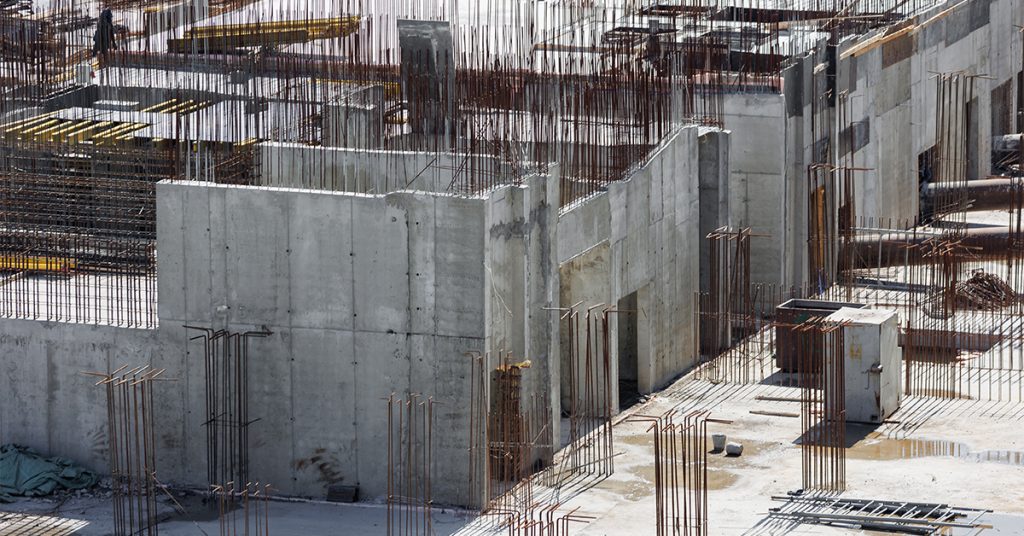
Before concrete becomes a slab, beam, or column—it’s just liquid.
And that liquid needs control.
That’s what formwork does.
On site, you’ll often hear it called shuttering. But it’s not just about “holding” concrete. It decides shape, finish, alignment—and in many cases, even how fast the project moves.
A poorly aligned formwork setup can throw off an entire floor. A weak one can fail during pouring. And a well-executed system? You barely notice it—but everything comes out right.
From basic timber setups on small sites to full aluminium systems in high-rise projects, formwork is one of those things that quietly controls the quality of the entire structure.
What Formwork Actually Means on Site
Formwork is essentially a mould.
It’s the temporary (sometimes permanent) system that holds fresh concrete in place until it gains enough strength to stand on its own.
But in reality, it’s not just panels.
It’s a full system:
- surface panels (plywood, steel, aluminium)
- supports (props, scaffolding, staging)
- alignment controls
Everything working together to make sure the concrete sets exactly where it should.
Why Formwork Matters More Than People Think
On drawings, formwork doesn’t get much attention.
On site, it decides everything.
If formwork is off:
- columns go out of plumb
- slabs become uneven
- finishes become difficult
And here’s the part many miss—
Concrete takes the shape you give it. It doesn’t correct mistakes.
So once it sets, you’re not fixing formwork errors. You’re managing them.
What Good Formwork Should Do
This sounds basic, but most site issues come from ignoring these:
- hold wet concrete safely without bending
- maintain exact dimensions
- prevent leakage of slurry
- stay stable during vibration
- allow removal without damaging edges
You’d think these are standard. But honestly, this is where quality differences show between sites.
Types of Formwork (What You’ll Actually See on Site)
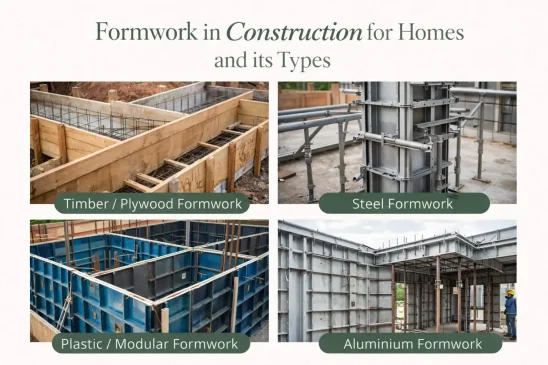
Instead of over-classifying, let’s look at what really gets used.
Timber / Plywood Formwork
This is still the most common system on small and mid-scale projects.
Flexible, easy to cut, easy to adjust.
But:
- depends heavily on carpenter skill
- wear and tear is high
- consistency is hard to maintain
You’ll see this everywhere—from independent homes to mid-rise buildings.
Steel Formwork
More durable. More consistent.
Used where repetition is higher.
Gives:
- better finish
- stronger panels
- longer life
But heavier and less flexible than timber.
Plastic / Modular Formwork
Used in specific applications.
Lightweight. Reusable. Clean finish.
But not as widely used in India for structural elements—more common in repetitive housing or small components.
Aluminium Formwork — Where Speed Meets Precision
Now this is where construction starts changing.
Aluminium formwork systems (like MIVAN) are used in high-rise and mass housing projects.
Instead of building formwork every time, you assemble panels like a system.
How It Works (In Reality)
- Pre-designed panels for walls, slabs, beams
- Entire floor cast in one go (monolithic construction)
- Panels removed and reused floor after floor
No constant cutting, no improvisation.
Why Developers Prefer It
Because it speeds things up.
- Faster construction cycles (one floor in days)
- Uniform quality
- Minimal plaster required
Also reduces dependency on highly skilled carpenters.
Where It Falls Short
This is where expectations need to be realistic.
- High initial cost
- Requires precise planning
- Changes on site are difficult
And one thing many homeowners notice—
Walls feel thinner acoustically compared to traditional masonry.
Slip Formwork — Continuous Construction
This is a completely different approach.
Instead of stopping and restarting, slip formwork moves continuously.
Concrete is poured, and the formwork slowly rises upward.
Where You’ll See It
- high-rise cores
- silos
- chimneys
- lift shafts
Anywhere vertical construction is repetitive and continuous.
How It Actually Works
- Formwork is mounted on hydraulic jacks
- Concrete is poured continuously
- System slowly moves upward
No stopping at each level.
This requires:
- constant monitoring
- continuous concrete supply
- precise timing
Because once you start—you don’t stop.
Choosing the Right Formwork (Where Most Decisions Go Wrong)
This isn’t just about material.
It’s about matching system to project.
Go with Timber / Conventional When
- project is small or custom
- design changes are expected
- budget is tight
Choose Aluminium Formwork When
- project is repetitive (apartments, townships)
- speed is critical
- design is frozen
Use Slip Formwork When
- structure is vertical and repetitive
- project scale justifies setup cost
- execution team is experienced
What Actually Goes Wrong on Site
Formwork failures are rarely about material.
They’re about execution.
Common issues:
- improper support → sagging slabs
- weak joints → slurry leakage
- poor alignment → uneven structure
- early removal → cracks or deformation
And one classic mistake—
Rushing stripping time.
Concrete may look hard on the surface, but internal strength takes time.
Practical Site Insight (Most Important Part)
If there’s one thing that defines a good structure early on—it’s formwork quality.
You can fix plaster.
You can adjust finishes.
But if formwork is off:
- alignment issues stay
- thickness variations stay
- structural geometry gets compromised
And then everything downstream becomes adjustment work.
If This Was My Own Project
I’d decide based on scale.
- Independent house → good quality plywood formwork with strict supervision
- Large project → aluminium system
- Vertical core → slip formwork
But regardless of system, I’d focus on:
- alignment checks
- proper support
- controlled stripping
Because the system doesn’t fail.
Execution does.
FAQs
What is formwork in construction?
Formwork is a temporary or permanent mould used to hold fresh concrete in shape until it hardens. It ensures the structure forms correctly in terms of size, alignment, and finish.
What are the main types of formwork?
Common types include timber formwork, steel formwork, aluminium formwork, plastic formwork, and specialised systems like slip formwork used for vertical structures.
What is aluminium formwork and why is it used?
Aluminium formwork is a modular system of panels used for fast and repetitive construction. It improves speed, accuracy, and finish quality, especially in high-rise projects.
What is slip formwork?
Slip formwork is a system where formwork moves continuously upward while concrete is poured. It is used for tall vertical structures like cores, silos, and chimneys.
Which formwork is best for small projects?
Timber or plywood formwork is usually best for small projects because it is flexible, cost-effective, and easy to adjust on site.
Is aluminium formwork expensive?
Yes, the initial cost is high, but it becomes economical for large projects due to reuse and faster construction speed.
What are common formwork mistakes?
Common mistakes include poor support, misalignment, leakage of slurry, and removing formwork too early before concrete gains strength.
Can formwork affect structural quality?
Yes, directly. Incorrect formwork leads to misalignment, uneven surfaces, and long-term structural and finishing issues.
How long should formwork remain before removal?
It depends on the element and concrete strength, but premature removal can lead to cracks or deformation.
Is formwork reusable?
Yes, most systems like timber, steel, and aluminium formwork can be reused multiple times, depending on material and handling.