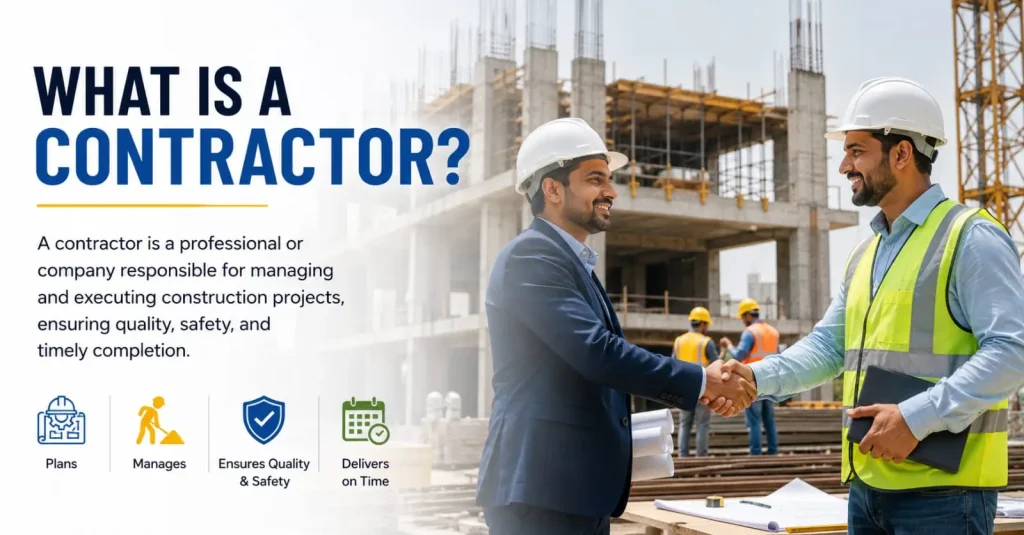
Every successful project has one thing in common. There is a person who ensures the seamless construction of the projects. Any guesses on who this person is? Yeah, this person is the contractor. They are the ones responsible for turning construction plans into reality. They coordinate with the following:
- People
- Materials
- Equipments
- Timelines
The construction industry in India contributes nearly 9% to the country’s GDP. There are thousands of construction projects underway every year. Hence, the role of the contractor in construction has become more important in construction. Want to know more about the roles and responsibilities of contractors? Read on this blog post to find out!
What Are the Roles and Responsibilities of a Contractor?
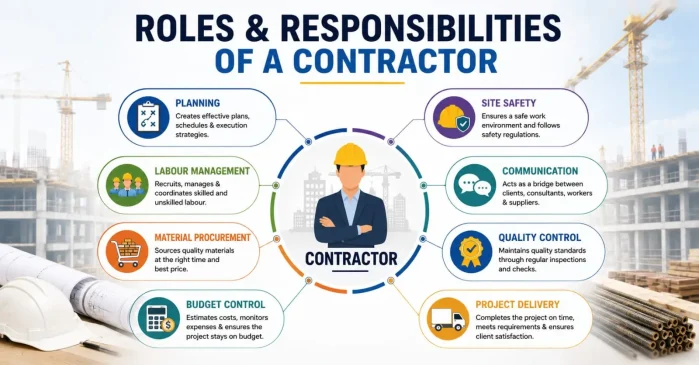
Given below are the primary roles and responsibilities of a contractor in construction:
Planning and Coordinating Project
The contractor prepares a blueprint before the construction. They prepare schedules and allocate resources to the workers. The proper plan not only avoids unnecessary delays but also ensures that work progresses smoothly.
Manage Labor and Resources
The role of a contractor in construction is similar to that of managers in the corporate offices. Their day revolves around completing the following tasks:
- Hire skilled workers
- Assign daily tasks to workers
- Ensure adequate manpower is available
The contractor also arranges machinery and equipment for construction at different stages.
Material Procurement
The quality of construction depends on the materials. Hence, a reliable building contractor ensures that the following materials meet the quality standards:
- Cement
- Aggregates
- Brick
- Steel
- Finishing materials
They are also responsible for the continuous arrival of materials and maintaining the flow of the project.
Budget and Cost Control
Most people hire contractors to get their projects completed within a specific budget. Contractors monitor and optimize the expenses while maintaining the quality standards.
Safety Management
You will often see heavy machinery at the construction sites. Contractors implement safety practices for workers to use them safely. The reports highlight that construction is one of the most high-risk industries. Proper site management reduces the risk of critical accidents.
Communication
A contractor serves as the first point of contact among the following:
- Client
- Architects
- Consultants
- Suppliers
- Subcontractors
Regular updates align everyone on the project’s needs. The result? The issues resolve before they become major problems.
How Many Types of Contractors Are There in Construction?
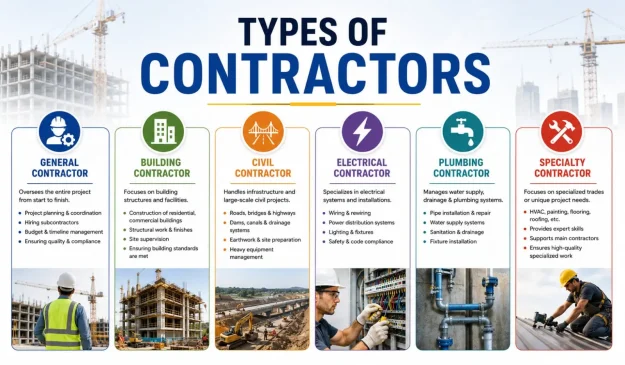
Construction projects involve multiple contractors. Given below are the major types of contractors for construction:
General Contractors
They manage the entire construction project. The primary responsibilities include:
- Oversee planning
- Schedule labor
- Procure materials
- Manage subcontractors
- Execute the overall project
General contractors are the important building contractors that clients work with.
Building Contractor
A building contractor focuses on the construction of buildings. Their core job areas are:
- Structural construction
- Masonry
- Roofing
- Plastering
- Flooring
- Finishing activities
People hire these contractors for residential and commercial projects.
Civil Contractor
These types of contractors specialize in infrastructure projects like:
- Roads
- Bridges
- Drainage systems
- Airports
- Dams
- Highways
These projects require large-scale equipment and engineering experts. This is why civil contractors earn more than other contractors.
Electrical Contractors
Electrical contractors are responsible for a safe and secure wiring system in the building. They ensure that all the electrical wiring aligns with the approved electrical standards. It is advisable to hire a professional electrical contractor. This is because any weak wiring may result in serious accidents in the future.
Plumbing Contractor
The water that flows in your bathroom and kitchen is the job of plumbing contractors. They handle the water supply systems to ensure a continuous flow of water in the building.
Speciality Contractors
These contractors handle specific tasks like the following:
- Waterproofing
- False ceilings
- Facade installation
- Painting
- Interior finishes
A general contractor coordinates with other contractors to ensure every stage progresses without conflict.
The Final Words
Every building is a vision of someone. But it takes careful planning and execution to bring that vision to life. This is where a contractor steps in. They transform construction plans into complete structures. The role of a contractor in construction extends far beyond supervision. They coordinate every stage of the project while ensuring the safety of the workers. Thus, it is wise to choose the most skilled and experienced contractor for your dream construction project.
FAQs
1. What is a contractor in construction?
A contractor is an individual or company responsible for executing a construction project according to approved plans, budget, and timeline. They manage labor, materials, equipment, and subcontractors to ensure the project is completed safely and efficiently.
2. How do you define a contractor?
A contractor is a person or organization hired under a legal agreement to carry out construction work. Contractors oversee day-to-day site operations and ensure the project meets quality, safety, and contractual requirements.
3. What is the role of the contractor in construction?
The role of a contractor in construction includes planning work, hiring labor, procuring materials, supervising site activities, maintaining quality, managing costs, and ensuring timely project completion while following safety and building regulations.
4. What does a building contractor do?
A building contractor manages the complete construction of residential or commercial buildings. They coordinate workers, purchase materials, supervise construction activities, and ensure the project is completed according to approved designs and specifications.
5. What are the different types of contractors in construction?
The main types of contractors include general contractors, building contractors, civil contractors, electrical contractors, plumbing contractors, mechanical contractors, and specialty contractors who handle specific works like waterproofing, interiors, or landscaping.
6. Why is hiring an experienced contractor important?
An experienced contractor helps prevent construction delays, controls costs, maintains quality, ensures worker safety, and coordinates every stage of the project efficiently, reducing the risk of costly mistakes.
7. What is the difference between a contractor and a subcontractor?
A contractor manages the entire construction project and coordinates all activities. A subcontractor is hired by the contractor to perform specialized work such as electrical, plumbing, painting, or flooring.
8. How does a contractor ensure construction quality?
Contractors maintain quality by using approved materials, supervising workmanship, conducting regular inspections, following engineering standards, and correcting issues before they affect the project’s durability or safety.
9. What qualities should you look for in a building contractor?
Choose a building contractor with relevant experience, valid licenses, strong project management skills, transparent pricing, good communication, positive client reviews, and a proven record of delivering projects on time.
10. Can one contractor manage an entire construction project?
Yes. A general or building contractor can manage an entire project by coordinating architects, engineers, suppliers, labor, and specialized subcontractors, ensuring smooth execution from foundation to final handover.