
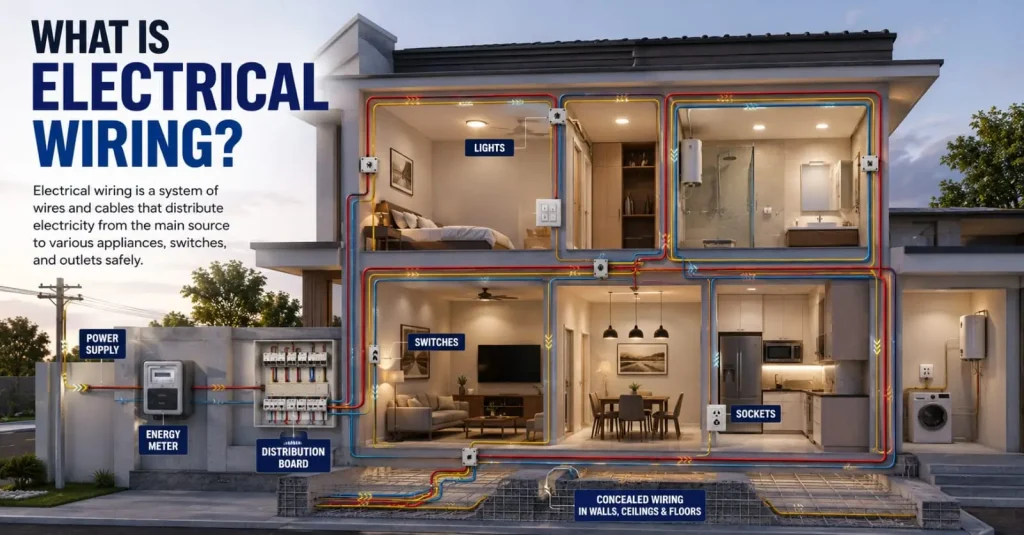
Let’s be honest: We usually picture strong walls and stylish interiors when we think about building a home. Isn’t it? But one aspect that we should focus on is electrical wiring. It is similar to the nervous system of your house. The nerves carry signals throughout the human body. However, electrical wires carry power from your main supply to different appliances. Poor wiring may result in safety risks and power failures. Even the reports highlight that electrical faults are the major cause of residential fires worldwide. Read on this blog post to understand the meaning and types of electrical wiring.
What Is Electrical Wiring?
Electrical wiring is a network of different materials that distribute power throughout the building. What are these materials? They are:
- Insulated wires
- Cables
- Switches
- Sockets
- Protective devices
The main distribution board allows electricity to enter the home. Further, it travels through circuits to different rooms and appliances. Every switch you press or socket you use depends on this hidden network.
What Is the Role of a Proper Wiring System?
A proper wiring system should do the following:
- Carry electrical current safely
- Prevent overheating
- Protect against short circuits
- Support the electrical load of modern appliances
- Easy to maintain
Hence, it is advisable to invest in good-quality wiring for your home.
What Are the Types of Electrical Wiring in a House?
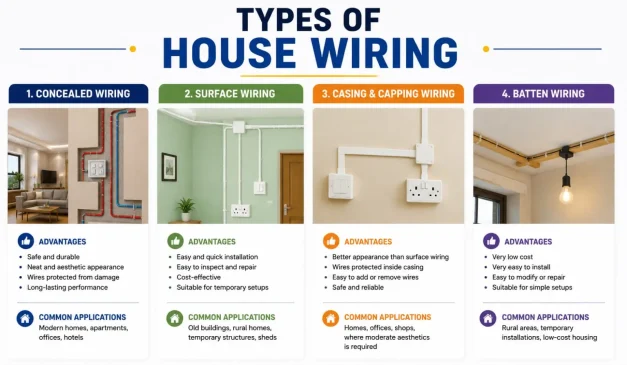
Electricians use different types of electrical wiring in residential buildings. Given below are some common types of electrical wiring:
Concealed Wiring
It is the most common wiring method for modern homes. They hide the wire inside PVC conduits and embed it within walls before plastering. The interiors feel clean and comfortable with concealed wiring.
Surface Wiring
The electrician fixes the wires running through conduits directly on walls. You will often find the electrician using it in the following:
- Workshops
- Garages
- Commercial spaces
- Renovation projects
Why? Because the above areas provide less flexibility to break walls.
Casing and Capping Wiring
It is a traditional wiring method in which wires run inside wooden or PVC casings. The engineer covers them with protective caps. It is a budget-friendly type of electrical wiring for houses. However, experts advise using the concealed wiring systems, as they offer better durability and safety.
Batten Wiring
This type of electrical wiring system is mostly suitable for temporary electrical installations. The electrician clips the insulated cables onto wooden battens. It is affordable and easy to install in residential buildings.
What Are the Different Types of Electric Wires?
The table below highlights the electrical wire types chart with their applications:
| Electrical Wire Type | Common Uses |
|---|---|
| PVC Insulated Wire | Household lighting and power circuits |
| Flame-Resistant Wire | Homes that require better fire safety |
| FRLS Wire | Produce less smoke during fire emergencies. |
| Flexible Wire | Appliances and extension cords |
| XLPE Wire | High-temperature and industrial applications |
| Copper Wire | Popular in residential homes due to excellent conductivity |
| Aluminium Wire | Projects where large power distribution at lower cost is necessary |
Which is the best electrical wire among all of them? The electricians advise copper wires for houses because they not only offer conductivity but also ensure durability and low maintenance. The choice of the right wire depends on several factors. Some points to keep in mind when choosing the wires for residential projects are the following:
- Current capacity to carry loads
- Insulation quality
- ISI certification
- Voltage rating
- Fire resistance
The right wire that you select today can help you avoid costly repairs in the future.
What Is a House Wiring Diagram?
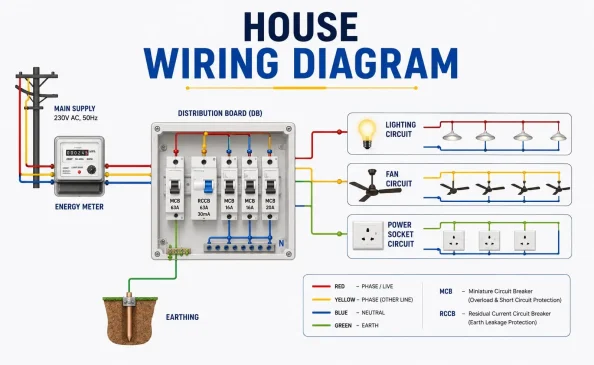
An electrical wiring diagram for a house is a blueprint for the electricity flow through the home. Electricians follow this diagram to install circuits safely and systematically. Given below are the components of a house electrical wiring diagram:
- Main power supply
- Energy meter
- Distribution board (DB)
- MCBs and RCCBs
- Lighting circuits
- Fan circuits
- Power socket circuits
- Earthing connections
A house diagram for electrical wiring ensures that electricity reaches safely to every room. Modern homes usually separate lighting and heavy-load circuits to prevent overload. What’s more? Proper planning makes future maintenance safe and easy.
The Final Words
Each one of us depends on good electrical wiring in our everyday lives. Thus, it is necessary to choose the right type of electrical wiring for your home. It is advisable to hire a qualified electrician who will prepare an electrical wiring diagram house for safety and efficiency. The best part? It will improve the lifespan of the electrical system of your home. To conclude, electrical wiring is not an afterthought. But it’s one investment that continues to protect your family for decades.
FAQs
1. What is electrical wiring?
Electrical wiring is a system of wires, cables, switches, and protective devices that safely distributes electricity throughout a home, office, or building. Proper electrical wiring ensures reliable power, supports electrical appliances, and reduces the risk of electrical faults and fire hazards.
2. Which type of electrical wiring is best for homes?
Concealed conduit wiring is the best choice for modern homes because it offers excellent safety, durability, and protection against moisture, dust, and physical damage. It also provides a clean appearance and requires less maintenance than exposed wiring systems.
3. What is an electrical wire type chart?
An electrical wire types chart is a reference guide that lists different electrical wire types, insulation materials, sizes, color codes, and their recommended applications. It helps homeowners and electricians choose the right wire for safe and efficient electrical installations.
4. Why is a house wiring diagram important?
A house wiring diagram shows how electrical circuits, switches, outlets, and distribution boards are connected. It helps electricians install wiring correctly, improves safety, reduces installation errors, and makes future maintenance and troubleshooting much easier.
5. Which wire is better, copper or aluminum?
Copper wire is generally better than aluminum for residential electrical wiring because it offers higher electrical conductivity, greater durability, better corrosion resistance, and lower maintenance. Aluminum wire is lighter and more affordable but is commonly used for larger power distribution applications.
6. How often should house wiring be replaced?
House wiring typically lasts 25–40 years, depending on installation quality, electrical load, and maintenance. Homes with old, damaged, or outdated wiring should be inspected by a qualified electrician to determine whether replacement is necessary for safety and compliance.