If you’ve ever stood inside a house during peak summer and felt it stay surprisingly cool, chances are the walls had something to do with it. That “something” is often a cavity wall.
In simple terms, a cavity wall is designed to stop heat, moisture, and even noise from entering your home too easily.
That’s the straightforward answer to – what a cavity wall is and why it matters in everyday construction.
What Is a Cavity Wall?
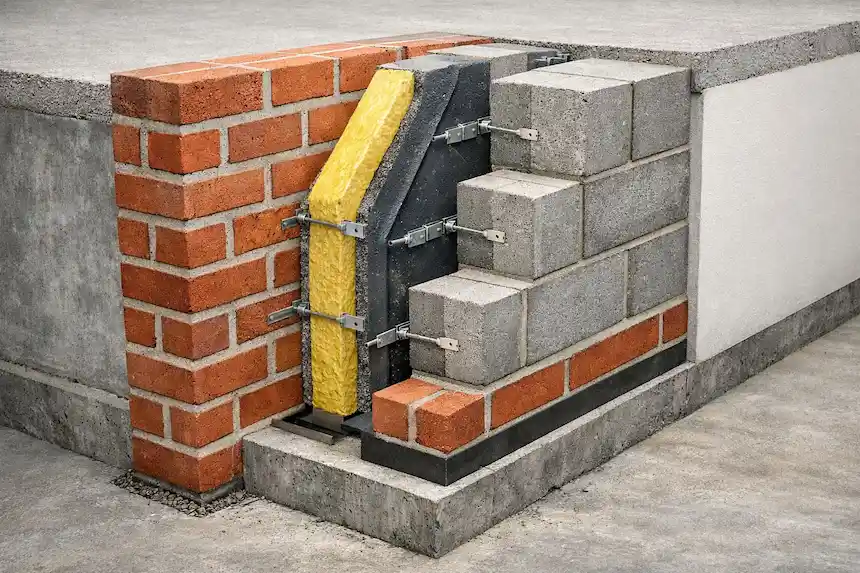
It’s a wall made of two separate layers or skins with a small gap, called a cavity, between them.
Think of it like wearing two shirts with an air gap in between. That trapped air acts as a buffer.
In a cavity wall in construction, this gap helps control heat transfer and moisture movement.
Typically, the outer layer is exposed to weather and rain. The inner layer faces your living space. Between them sits the cavity, sometimes left empty, sometimes filled with insulation. A brick cavity wall is the most common version you’ll see in homes today.
Why Builders Prefer Cavity Walls in Construction
In earlier days, solid brick walls were enough. But climates have changed, cities have heated up, and expectations for homes are higher.
That’s why a cavity wall in construction has become more common, especially for new residential buildings. The reasons are obvious and practical:
- Better thermal comfort
- Reduced dampness
- Lower long-term maintenance
A cavity wall simply performs better than a single solid wall in most conditions.
How a Brick Cavity Wall Is Built – Step by Step
To understand it better, let’s walk through how a brick cavity wall actually comes together on site.
- The outer brick layer is constructed first
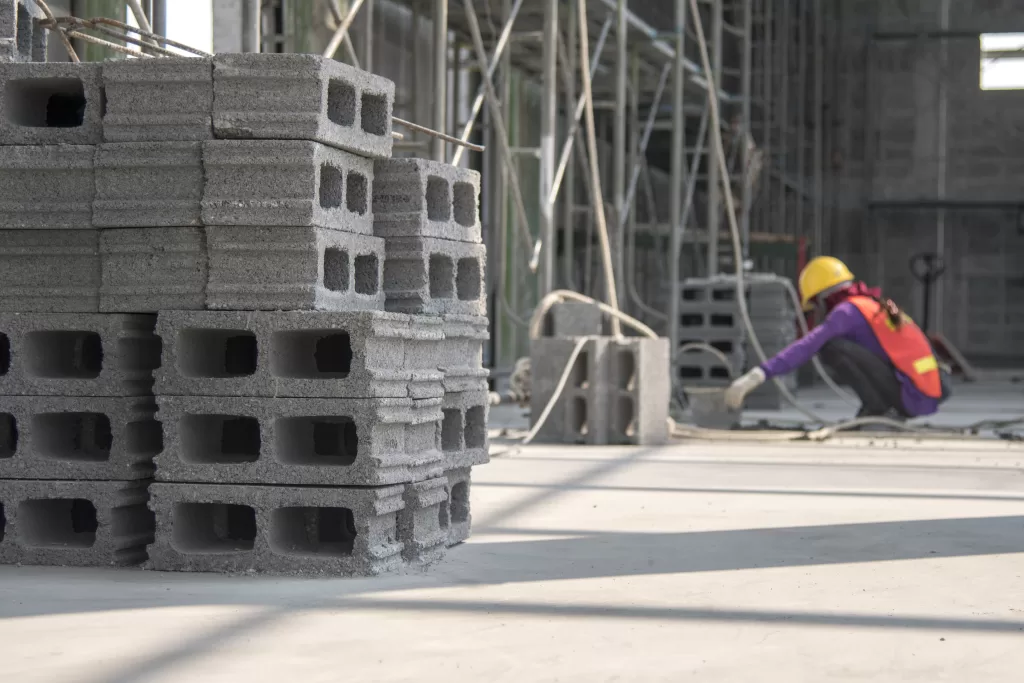
- An inner brick or block layer is built parallel to it
- A gap of 50–100 mm is maintained between the two
- Wall ties connect both layers for strength
- An optional insulation material is placed inside the cavity
That’s the basic process of a cavity wall in construction – it is smart layering.
Types of Cavity Walls You’ll See on Site
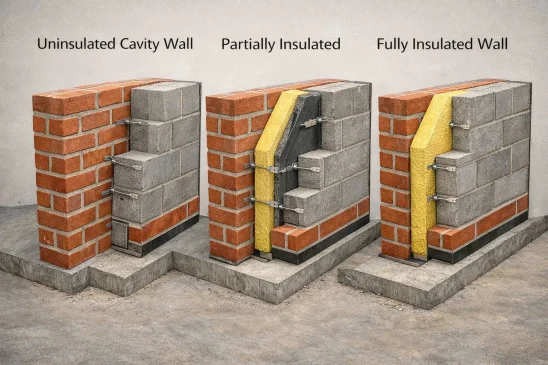
Not all cavity walls are the same. Based on design and usage, there are a few common types.
Uninsulated Cavity Wall
This is the simplest form of cavity wall. Here, the cavity is left empty. Though this cavity wall does reduce moisture and heat, it is not as effective as an insulated one.
Insulated Cavity Wall
Here, insulation boards or materials are placed inside the cavity. This type of brick cavity wall is common in modern homes where energy efficiency is a priority.
Partial Cavity Wall
Used in areas where full cavity construction isn’t possible due to space or cost constraints. Still better than a solid wall in most cases.
Advantages of a Cavity Wall
Better Temperature Control
A cavity wall slows down heat transfer. Homes stay cooler in summer and warmer in winter. This is one of the biggest reasons cavity wall in construction is preferred today.
Protection Against Dampness
Rainwater hitting the outer wall doesn’t easily reach the inner wall. That air gap acts like a shield. This is especially useful in coastal and high-rainfall areas.
Energy Savings Over Time
A brick cavity wall acts as a temperature controller. It creates an air gap between the layers of the wall, making penetration of heat during summer and cold weather slow. Hence, the use of ACs and heaters is reduced drastically.
Improved Sound Insulation
The cavity helps reduce outside noise like traffic, neighbours, and street sounds. It’s a quieter way to live.
Where Is a Cavity Wall Most Useful?
Not every structure needs it, but in many cases, it makes sense.
Cavity walls are commonly used and extremely efficient when installed at:
- The openings of doors and windows
- On the roof
- In the parapet
Especially in hot and humid regions, what is a cavity wall becomes less of a question and more of a necessity.
Cavity Wall vs Solid Wall: A Simple Comparison
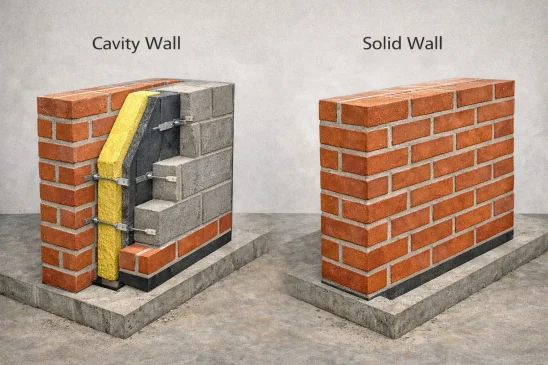
Solid Wall: A single-layer wall, seen mostly in older homes. They tend to be cheaper upfront, but they offer poor insulation and are prone to moisture seepage.
Cavity Wall: Built as two layers with a space or cavity in between. They provide excellent temperature control properties when filled with insulated materials. Though a little pricier upfront, they last longer, provide more comfort, and are energy efficient.
Mistakes to Avoid in Cavity Wall Construction
A cavity wall is efficient only as much efficiency it is built with. One mistake by the builder can take away the potential of the cavity wall.
- Using unsuitable insulation in damp or high-moisture areas
- Inadequate cavity filling causing cold spots and mould
- Blocking ventilation leading to condensation and corrosion
- Installing cavity walls without repairing existing cracks or seepage
- Carelessly installed wall ties allowing moisture transfer
- Using poor-quality cement to cut costs
JK Super Cement is recommended by professionals for undoubted strength, durability, and long-lasting effectiveness.
Is a Cavity Wall Always Necessary?
The answer is not always.
For small internal walls or temporary structures, a cavity wall may not be required. But for external walls, especially in permanent homes, a brick cavity wall is often the smarter choice.
When people ask, “What is a cavity wall? Should I use it?” the answer usually depends on climate, building type, and long-term expectations.
A cavity wall isn’t about over-engineering. It’s about building smart walls, understanding environmental changes, and working with the climate, not against it.
If you’re planning a new home or renovating, it is important to understand what a cavity wall is, its advantages, and where it makes sense to build one. A correctly built cavity wall can significantly improve comfort, durability, and energy efficiency.
FAQs
1. What is a cavity wall in simple terms?
It’s a wall with two layers and a gap in between that helps reduce heat and moisture.
2. Is cavity wall construction expensive?
Slightly more than solid walls, but it saves money over time through energy efficiency.
3. Can cavity walls be used in Indian homes?
Yes. A cavity wall in construction is very effective in hot and humid climates.
4. What materials does a brick cavity wall require?
Bricks or blocks for both layers, wall ties, and sometimes insulation material.
5. Does a cavity wall need insulation?
It works without insulation, but insulation improves performance significantly.
6. Can old buildings be converted into cavity walls?
It’s difficult and expensive. Cavity walls are best planned during construction.
7. Where should cavity walls not be used?
They’re not ideal for internal partition walls or very small structures.