What Is Self-Healing Concrete? – Explained
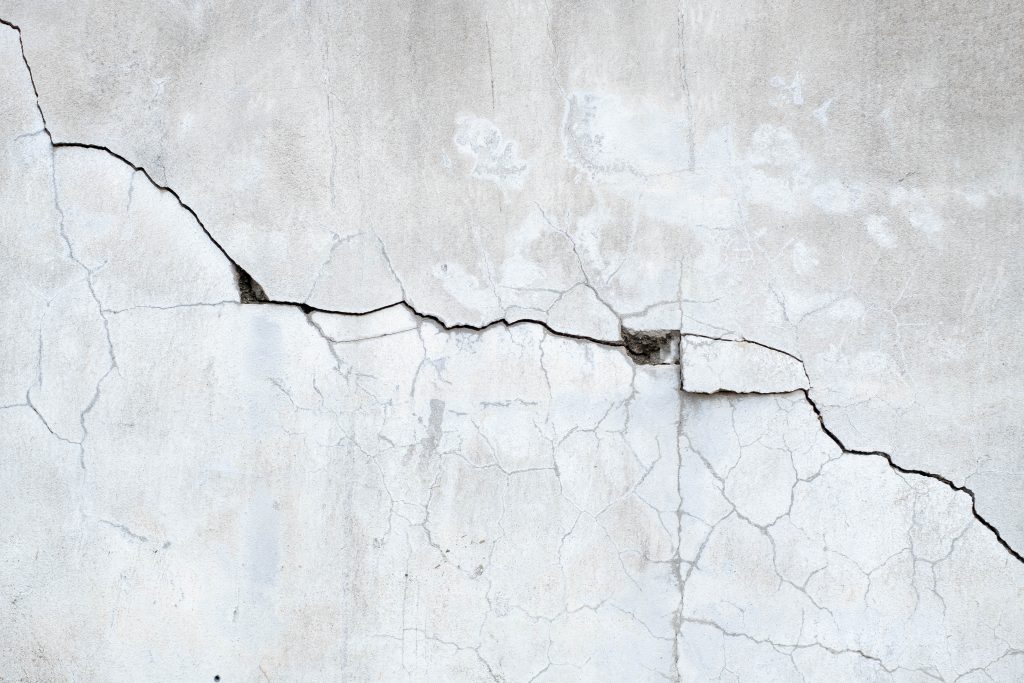
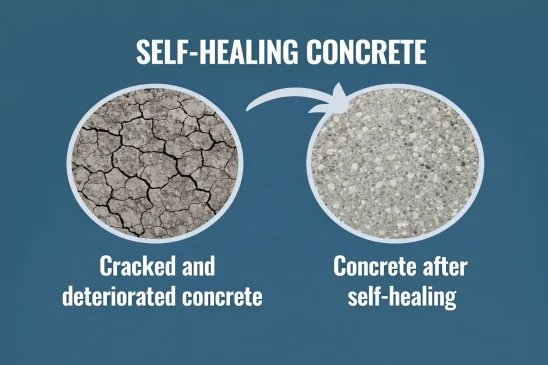
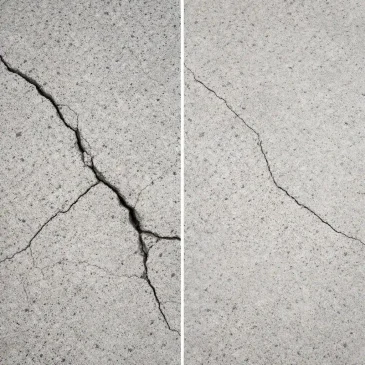
Simply put, it’s a type of concrete designed to seal small cracks on its own, without external repair work. Concrete cracks because of:
- Shrinkage
- Temperature changes
- Load stress
- Weather exposure
Normal concrete ignores those cracks. Self-healing concrete reacts to them.
In Indian conditions, heat, humidity, and monsoon cycles make a real difference to durability. That’s why self-healing concrete is slowly moving from labs to actual construction sites.
Small Cracks – Big Headaches
Even the tiniest crack can lead to water seepage tomorrow, rusted reinforcement next year, and structural repair five years down the line. This is exactly where self-healing concrete technology helps. It seals cracks early, before water reaches steel.
Think of it like a small cut on your hand. If it closes quickly, it’s a good sign, but if it stays open, it turns into something worse. That’s how self-healing concrete bacteria and other healing systems work – quietly stopping damage early.
Autogenous Healing: Concrete Helping Itself
The most basic form of self-healing concrete is autogenous healing. This happens naturally when:
- Unused cement particles react with water
- Calcium compounds form inside cracks
It works for very fine cracks, usually under 0.2 mm.
Stimulated Autogenous Healing
Engineers improve this natural process by including:
- Mineral additions
- Crystalline admixtures
- Superabsorbent polymers
These materials hold moisture inside cracks and encourage healing. It’s still simple self-healing concrete, just made more reliable.
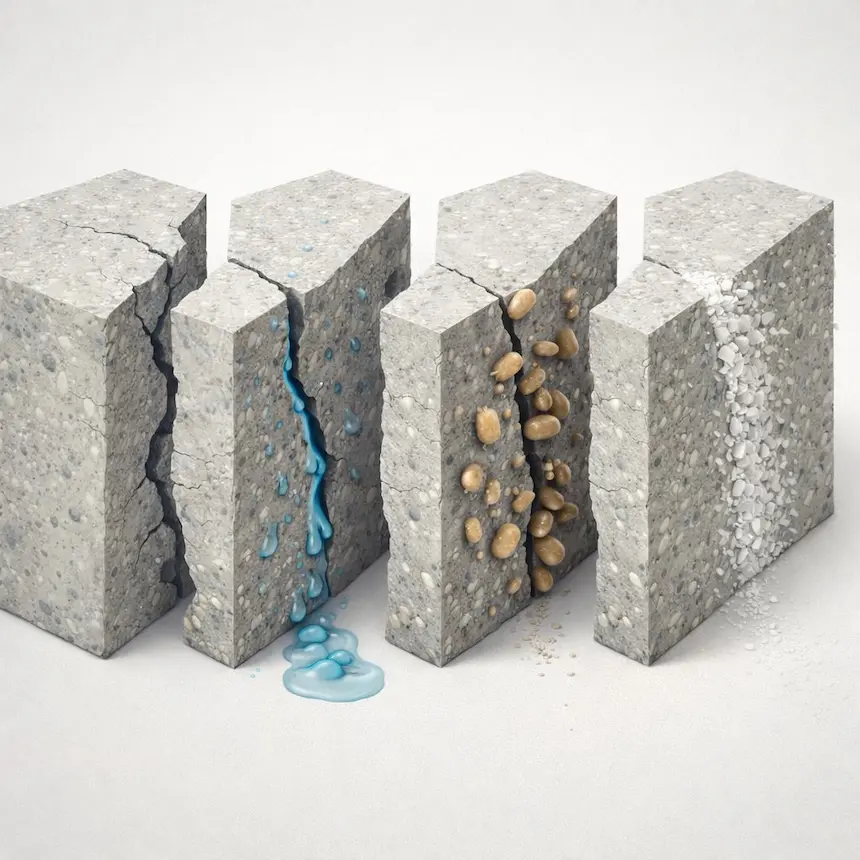
Autonomous Self-Healing: Built-In Repair Systems
Autonomous self-healing concrete doesn’t wait for chance – it comes prepared. There are three main systems:
Microencapsulation
Healing agent-mixed capsules are added to concrete. When a crack forms, the capsules break and release a self-healing agent to seal the gap.
Macroencapsulation
Similar to microencapsulation, but with larger capsules to heal wider cracks. Ideal for heavy-duty construction like bridges and tunnels.
Vascular Healing
Works like blood vessels. Small channels carry healing liquids that flow into cracks when required. All these systems aim to make self-healing concrete predictable, not accidental.
Self-Healing Concrete Bacteria: The Most Practical Innovation
This method uses specific bacteria mixed into concrete. They remain inactive for years, but as soon as water enters a crack:
- Bacteria wake up
- Consume nutrients
- Produce limestone
- Seal the crack naturally
No machinery. No manual repair. In India, this method is explored for basements, sewage structures, water tanks, and foundations where seepage is a constant issue.
Healing Triggered by Heat
Some self-healing concrete systems respond to temperature:
- Certain additives soften
- Flow into cracks
- Harden again when cooled
This type is useful in pavements, industrial floors, and outdoor slabs where temperature variation is high.
Real Advantages of Self-Healing Concrete
The practical benefits include:
- Longer service life
- Fewer repair cycles
- Reduced water ingress
- Better protection of steel reinforcement
In Indian infrastructure, metros, flyovers, and parking structures, reducing repairs alone justifies the cost. That’s why self-healing concrete bacteria and autonomous systems are gaining attention.
Where Self-Healing Concrete Is Used in India
Current applications include:
- Bridge decks
- Metro rail structures
- Underground basements
- Water retaining structures
- High-rise foundations
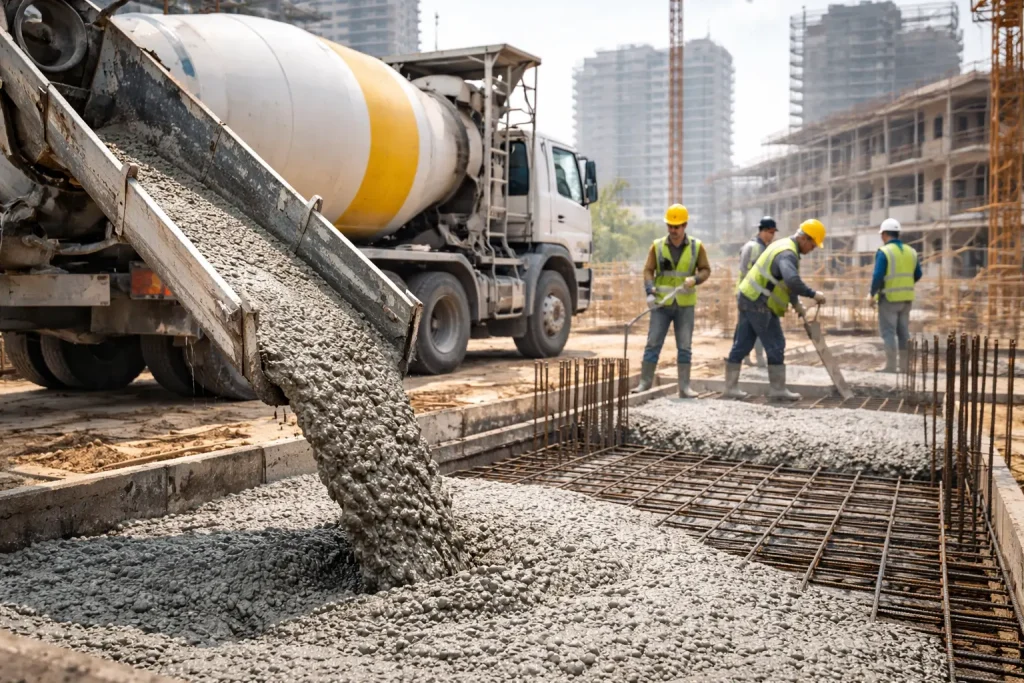
It’s not yet common in small residential homes, but adoption is increasing as costs come down.
Cost: The Question Everyone Asks
Self-healing concrete costs more upfront, but long-term benefits include:
- Reduced maintenance
- Fewer shutdowns
- Longer structural life
- Lower overall lifecycle cost
For long-span or hard-to-repair structures, self-healing concrete stops being a curiosity and starts becoming a smart decision.
What Technology Can’t Replace
Self-healing concrete is not a shortcut for bad workmanship. It requires:
- The right mix ratio to ensure full self-healing potential
- Quality cement (e.g., JK Super Cement) for strength and durability
- Proper curing to gain strength
- Skilled execution by trained professionals
If the basics are weak, no technology will save the structure. Innovation works only when fundamentals are strong.
Is Self-Healing Concrete the Future?
It may not be used in every construction, but it’s ideal for infrastructure and water-related structures. As India builds faster and bigger, reducing long-term repair costs is as important as speed.
Self-healing concrete isn’t magic. It doesn’t replace engineering judgment, but used correctly, it buys time before cracks turn into failures. In construction, time saved is money saved.
FAQs
What is self-healing concrete in simple terms?
Concrete that can automatically seal small cracks on its own.
How does self-healing concrete bacteria work?
Bacteria activate when water enters cracks and produce limestone to seal them.
Where is self-healing concrete used in India?
Typically for infrastructural construction and water-related structures, such as tanks.
Can self-healing concrete repair big cracks?
No. It is effective in repairing small and medium-sized cracks only.
Does self-healing concrete reduce maintenance costs?
Yes. Self-healing concrete reduces frequent repair costs over time.
Is self-healing concrete suitable for homes?
It’s emerging. Currently common in large projects, but not yet widespread for small residential homes.