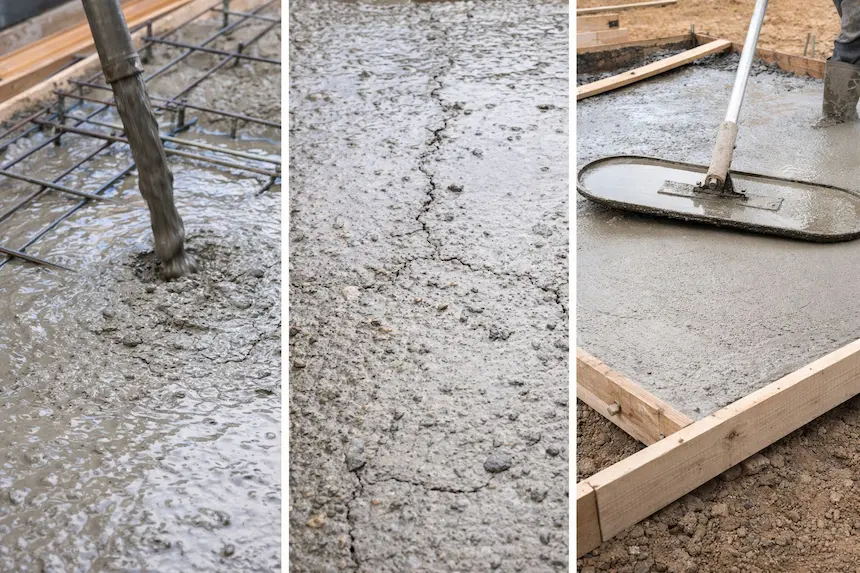
Sometimes, when concrete is poured, notice water rising to the surface within minutes; this is bleeding of concrete in action. This can happen even if you batch it right and place it carefully. Most site engineers and masons have seen this, especially during slab casting in hot weather. That water isn’t rain or curing water. It’s internal mixing water finding its way up. This is classic bleeding of concrete, and understanding what is bleeding in concrete can save you from surface cracks, weak layers, and unhappy clients later.
In India, bleeding of concrete is more common than we realise. High water-cement ratios, overworked mixes, rushed finishing before setting, and inconsistent sand grading all play a role. When segregation and bleeding of concrete happen together, the result is often honeycombing below and dusty surfaces above.
This guide answers the question: What is bleeding of concrete? Why does it happen? How to spot it early? And, most importantly, how to prevent it without overcomplicating things?
What Is Bleeding Of Concrete?
Bleeding of concrete is the upward movement of water to the surface after concrete is placed and compacted. Think of it like squeezing a soaked sponge. The heavier particles, which are cement and aggregates, settle down, while water slowly comes up.
So, what is bleeding in concrete in technical terms? It’s the separation of mixing water from the concrete mass due to the settlement of solid particles. This is closely linked to segregation and bleeding of concrete. Here are some facts:
- Segregation is when aggregates separate from mortar, while bleeding is water separation.
- Bleeding and segregation often happen together, especially in poorly proportioned mixes.
- A small amount of bleeding is normal. Excessive bleeding is a problem.
- On slabs, bleeding creates a weak, watery surface layer.
- On columns, it can cause voids under rebars.
Understanding what is bleeding of concrete helps you decide when to wait, when to finish, and when to fix the mix itself.
What Causes Bleeding In Concrete?
Bleeding doesn’t happen randomly. There are clear, practical reasons behind the bleeding of concrete.
Common causes include:
- High water-cement ratio: More water = more chances of bleeding. Simple math.
- Poor sand grading: Too much coarse sand or a lack of fineness allows water to escape upward.
- Low cement content: Less paste to hold water together.
- Over-vibration: Excess vibration pushes heavier particles down fast, increasing bleeding.
- Hot weather concreting: Faster settlement leads to visible bleeding.
- Lean mixes: Especially common in non-structural slabs.
On many sites, segregation and bleeding of concrete start at the batching stage itself. Once placed, you’re only reacting, not preventing. That’s why knowing what is bleeding in concrete before pouring matters more than fixing it later.
How Does Bleeding Impact The Structure?
This is where bleeding stops being “just water” and becomes a structural concern. Effects of bleeding of concrete include:
- Weak surface layer (laitance): Leads to dusting and poor wear resistance.
- Poor bond with reinforcement: Water collects under bars, reducing grip.
- Plastic shrinkage cracks: Surface dries unevenly while water is still rising.
- Delamination: The top layer may peel off over time.
- Reduced durability: Especially in slabs, pavements, and exposed concrete.
When segregation and bleeding of concrete combine, the bottom becomes aggregate-heavy and the top paste-heavy — neither is ideal. This is why understanding what is bleeding of concrete is not academic. It directly affects site quality.
How To Identify Bleeding On Site?
You don’t need lab tests to spot bleeding of concrete. Look for these signs:
- Shiny water layer appearing within 10–30 minutes of placement.
- Footprints filling with water on fresh slabs.
- Fine cement particles are floating on the surface.
- Delayed setting at the top compared to the sides.
- Excessive trowel marks after finishing.
One common mistake to never make is: finishing while bleeding is still active. This traps water inside, creating a weak skin. Anyone who knows what is bleeding in concrete will tell you — wait till bleeding stops before final finishing.
Prevention Techniques That Work
Preventing bleeding of concrete is easier than repairing its effects. Here’s what actually works on site:
- Control water content — Use only the amount of water required. Avoid site-added water.
- Use aggregates of higher grades — Fineness is essential for binding and reduces water movement.
- Increase the cement amount or use blended cement — The better the paste, the better it will hold water.
- Use admixtures wisely — Plasticizers improve workability without extra water.
- Avoid over-vibration — Compact, don’t overdo it.
- Time the finishing process — Finish only after bleeding stops.
Good-quality cement plays a big role here. Consistency in fineness and strength helps reduce segregation and bleeding. It is always advisable to opt for reliable and innovative brands such as JK Super Cement — it ensures that the quality of construction, especially slabs and structural pours, is never compromised.
Conclusion
Concrete doesn’t fail loudly. It fails quietly, layer by layer. Bleeding of concrete is one of those silent issues that looks harmless but leaves long-term damage if ignored. Once you truly understand what is bleeding in concrete, you stop blaming the weather or the labour and start fixing the mix and method.
Every good slab, beam, or column begins with respecting the material. Control water. Watch the surface. And remember — what is bleeding of concrete today becomes cracks tomorrow if you rush it.
Build patiently. Concrete rewards that.
FAQs
1. Is bleeding of concrete always bad?
No. A small amount is normal. Excessive bleeding is the real problem.
2. What is the difference between segregation and bleeding of concrete?
Segregation is aggregate separation; bleeding is water separation. They often occur together.
3. Can bleeding reduce concrete strength?
Yes. It weakens surface layers and reduces the bond with reinforcement.
4. Does hot weather increase bleeding of concrete?
Yes. Faster settlement makes bleeding more visible.
5. Can admixtures reduce bleeding?
Plasticisers and well-designed admixtures help control water without reducing workability.
6. Should finishing be done during bleeding?
No. Always wait until bleeding stops to avoid trapping water.
7. Does cement quality affect bleeding?
Absolutely. Consistent, well-graded cement reduces segregation and bleeding of concrete significantly.