
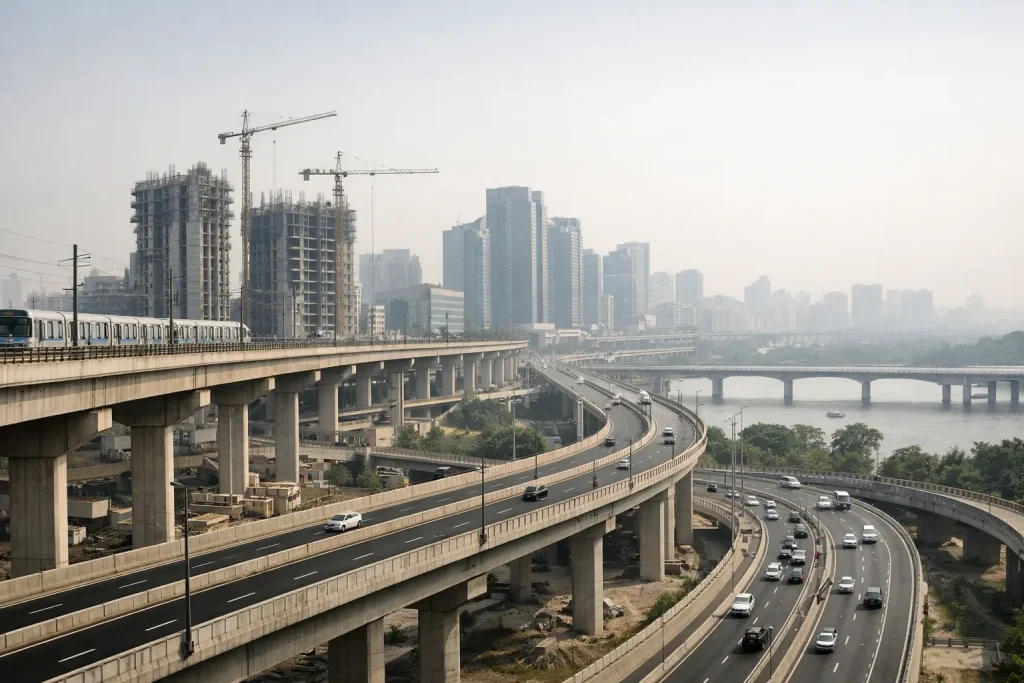
For people in construction and cement, Budget 2026 is more than just numbers and allocations. It’s about what happens on the ground.
Every year, there’s a lot of noise and anticipation about big numbers and promises. Then there is a wait for the policies to take effect.
Budget 2026 feels the same in that sense. No one is expecting miracles. What they’re hoping for is that things don’t suddenly change direction. Because in this business, sudden change costs money.
That’s why Budget 2026 matters. Not because of what’s announced, but because of what it quietly confirms.
If you want to understand how the economy is doing, don’t look at the Sensex. Look at cement movement.
That’s why the cement and construction crowd follows the Budget closely every year. This time, the expectation is simple.
Consistency.
How Industry Players See Budget 2026
People outside the industry think bigger allocation automatically means more work. It doesn’t. What matters is whether that money turns into actuality, and work starts on the ground.
After the previous Budget, plenty of projects were announced. But in many places, nothing moved for months. The equipment sat idle at sites. That’s when realisation struck – an announcement is of no consequence if execution isn’t initiated.
When people in the cement industry look at Budget 2026, they’re watching whether existing projects will be finished.
Completion matters more than expansion. That’s what gives predictability.
City Infrastructure
City infrastructure works quietly, but it matters.
The water lines, drainage, sanitation, and housing projects are not large projects, but they keep demand steady.
As long as these projects keep moving, cement demand doesn’t fall off a cliff. That’s why continuity here matters more than launching new schemes.
Cement demand comes in last after money gets allocated, approvals come in, and work starts. That usually takes six months, sometimes more.
So, the industry shouldn’t expect Budget 2026 to suddenly boost demand.
Rural Construction
Rural construction is underestimated.
It doesn’t look big on its own, but houses, roads, and utilities together keep plants running when larger projects slow down.
That’s why rural spending always matters, even when the spotlight is elsewhere.
Energy Talk
Energy and sustainability also come up every Budget.
The cement industry is certainly looking for clarity here. The major concerns here are:
- If alternative fuels are encouraged.
- If waste heat recovery is talked about.
- If environmental rules tighten and align with infrastructure goals.
What Does Cement and Construction Expect From Budget 2026?
Before expectations, what the industry is not expecting from Budget 2026 is also important to know.
- No instant demand jump.
- No big price support.
- No sudden solution to delays.
Here is what to expect in Budget 2026:
- The smart thing to do after the Budget is to wait for:
- Projects to actually start.
- Dispatch numbers need to improve.
- Real movement before changing plans.
- If you’re a contractor, don’t buy new machines just because something was announced.
- If you’re managing dealers, don’t pile up stock based on headlines.
- Watch what’s actually being done on the ground.
In the end, Budget 2026 doesn’t need to be extraordinary for construction and cement. It only needs to be steady.
If roads keep getting built, housing continues, rural work doesn’t stop, and projects actually see progress, the industry will respond. And for construction and cement, that’s all a good Budget is supposed to do.
FAQs: Budget 2026 and the Cement Industry
Will Budget 2026 immediately boost cement demand?
No. Cement demand typically reacts 2–4 quarters after allocations convert into execution, depending on tender velocity.
Does higher infrastructure capex always mean higher cement volumes?
Only if execution follows. Allocation without tendering and awards does not create demand.
Can Budget 2026 alone justify new cement capacity?
No. Capacity decisions should be based on sustained utilisation trends, not Budget announcements.
What is the Three-Lens Budget Filter for cement?
It evaluates Budget impact through continuity, execution, and demand visibility, rather than headline capex.
What should cement CFOs watch after the Budget speech?
Tender pipelines, award data, and state-level execution over the next two quarters.
Should contractors hire immediately after Budget announcements?
No. Hiring should follow confirmed work orders, not allocation headlines.
How important is rural spending for cement demand?
Very. Rural and semi-urban construction stabilises demand when large projects face delays.
Is Budget language on sustainability important even without allocations?
Yes. It often shapes regulatory expectations and compliance priorities for the year.
What is the biggest Budget-related risk for the cement industry?
Over-interpreting announcements and acting before execution visibility emerges.