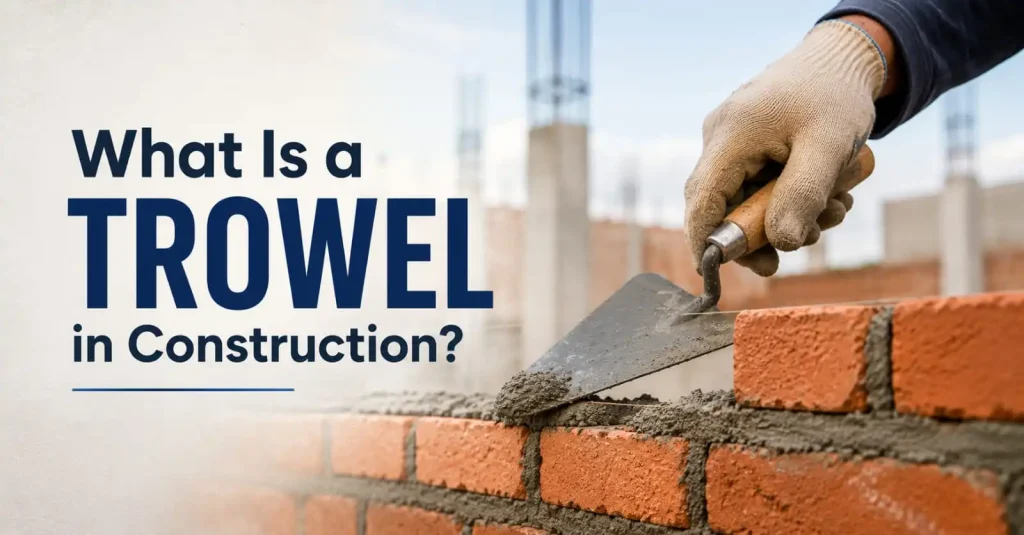
Have you ever seen a mason build a wall? Or have you seen a plaster expert who makes the wall smooth? If yes, you will notice one tool in their hands. That tool is the trowel. It is a small tool that helps achieve results that machines often cannot. It not only allows the workers to lay bricks but also helps them apply mortar. What’s more? The quality of brickwork or plastering often depends on the type of trowel workers use. Read on this blog post to know more about the types and uses of trowels in construction.
What Is a Trowel in Construction?
The trowel meaning is similar to a kitchen spatula. A chef uses a spatula to spread frosting over a cake evenly. Similarly, a mason uses a trowel tool to apply mortar evenly between bricks or smooth plaster. But what exactly does it mean? It is a construction tool with a flat or curve metal blade attached to a handle. The blade is usually formed using hard or stainless steel to ensure durability. Whereas the handle is made of wood or plastic for a comfortable grip.
What Are the Types of Trowels in Construction?
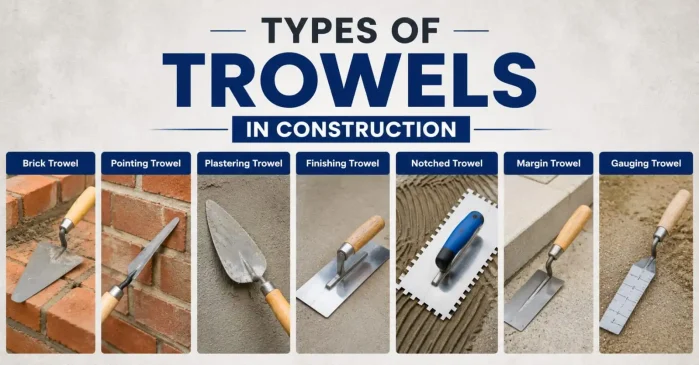
Given below are the different types of trowels that workers use for different construction jobs:
- Brick Trowel
This is the most common type of trowel in construction. The sharp point and triangular blade make it useful to lift and spread mortar. The workers mostly use a brick trowel for masonry work. This is because it allows them to apply mortar without wasting materials.
- Pointing Trowel
It is smaller than a brick trowel. The primary use of this trowel is to repair mortar joints and fill small gaps between bricks or stones. The best part? It has a narrow blade that is really useful for masonry work where accuracy matters.
- Plastering Trowel
A trowel with a long rectangular blade on a construction site is a plastering trowel. The workers use it to spread the plaster across the walls and ceilings to make a smooth surface.
- Finishing Trowel
A finishing trowel creates a smooth and dense surface. This is why workers use it on floors and pavements to ensure a neat finish. This not only improves the appearance but also the durability of the structures.
- Notched Trowel
This type of trowel has the following shapes along its edge:
- Square
- V-shape
- U-shape
These shapes create uniform ridges so that tiles can bond with the surface properly. The notch size of the trowel depends on the dimensions of a tile.
- Margin Trowel
A margin trowel is a compact and easy-to-handle tool. This is why it is ideal for tight corners and confined spaces where it is difficult for larger tools to reach. You will often find workers using it for installing tiles and repair work.
- Gauging Trowel
The tool that workers use to mix or apply small amounts of mortar or plaster is a gauging trowel. Thus, contractors use it to repair patches and finish minor tasks.
What Are the Uses of a Trowel in Construction?
Given below are the uses of a trowel in construction:
- Apply Mortar
A trowel helps you apply and distribute mortar evenly. The result? The joints become stronger and more stable than ordinary structures.
- Plastering Walls
The workers use plastering trowels to spread plaster uniformly across walls and ceilings. Hence, it creates a smooth surface for painting and decorative finishes.
- Tile Installation
A notch trowel tool helps prevent loose or uneven tiles over time. How? It spreads tile evenly while forming ridges. This improves the bonding strength between the material and the tile.
- Concrete Finishing
Finishing the trowel removes imperfections to make the surface smooth. This not only improves the appearance but also reduces the formation of dust.
- Repair Work
The workers use a pointing or margin trowel to repair the small cracks or chipped plaster. What’s more? It also helps the workers to repair the damaged mortar joints.
- Decorative Finishes
You will see the workers using a trowel at a construction site for creating wall textures and polished plaster finishes. Hence, the homeowners have the flexibility to design unique surface patterns.
How to Choose the Right Trowel Tool in Construction?
The choice of the right trowel tool depends on the nature of the work. Given below are some common factors to keep in mind when choosing the right trowel:
- Select the shape of the blade as per the task.
- Choose stainless steel blades to resist rust.
- Pick a handle that feels comfortable, even if you are using it for a longer period of time.
- Match the trowel size to the project. This will ensure better control.
- Consult the manufacturer to know the notch size at the time of installing tiles.
A good quality trowel is necessary as it improves work quality and reduces fatigue during long working hours.
The Final Words
A trowel is a small tool on a construction site. However, it is one of the most valuable tools. It helps you lay the very first brick and provide a final smooth finish to the walls. This simple tool is useful in almost every stage of construction. This is why it is necessary to understand trowel meaning and its types. This will ensure both better efficiency and workmanship.
FAQs
1. What is the trowel meaning in construction?
A trowel is a handheld construction tool used to spread, shape, smooth, and finish materials such as mortar, plaster, concrete, and tile adhesive. It helps builders achieve precise application, strong bonding, and a clean surface finish in masonry, plastering, tiling, and concrete work.
2. What is a trowel tool used for?
A trowel tool is used for laying bricks, applying plaster, spreading tile adhesive, finishing concrete, repairing mortar joints, and leveling surfaces. It ensures even material distribution, improves construction quality, and delivers smooth, professional finishes across different building applications.
3. What are the different types of trowels?
Common types of trowels include brick trowels, pointing trowels, plastering trowels, finishing trowels, notched trowels, margin trowels, gauging trowels, and pool trowels. Each type is designed for specific construction tasks, improving accuracy, efficiency, and finish quality.
4. Which trowel is best for tile installation?
A notched trowel is the best trowel for tile installation. Its notched edges create uniform adhesive ridges, ensuring proper tile coverage, stronger bonding, and reduced air pockets. The notch size should match the tile size and the adhesive manufacturer’s recommendations.
5. What material is a construction trowel made from?
Most construction trowels feature blades made from hardened carbon steel or stainless steel for durability and corrosion resistance. Their handles are typically made of wood, plastic, or rubber, providing a comfortable grip and better control during construction work.
6. Why is a trowel important in construction?
A trowel is essential in construction because it enables accurate application of mortar, plaster, concrete, and adhesives. Proper trowel use improves bonding strength, creates smooth and level finishes, reduces material waste, and enhances the overall quality and durability of construction projects.