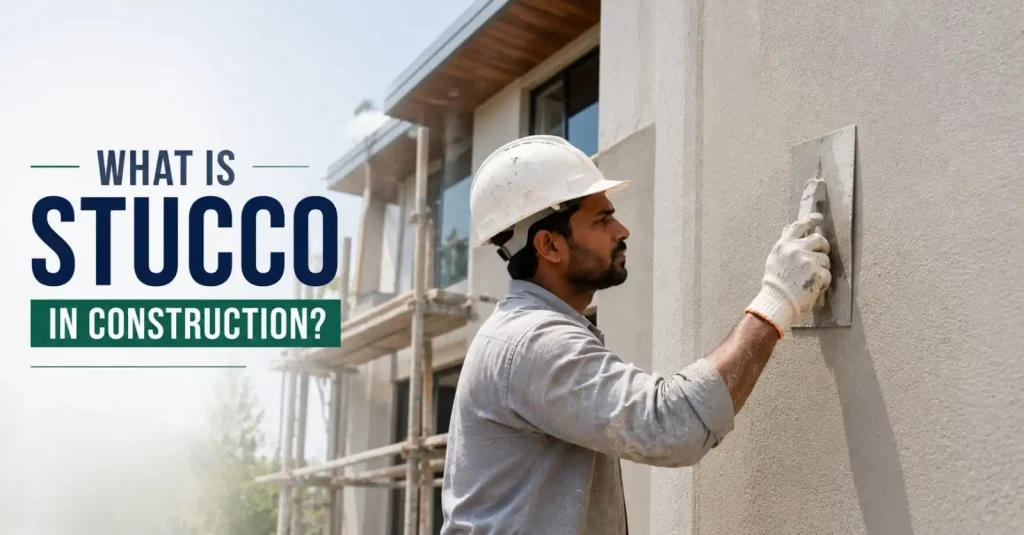
Stucco meaning refers to the skin of a building. It is a cement plaster that forms using various construction materials. It becomes a hard surface when workers mix and apply it. This not only manages weather conditions but also minor impacts on the building. Modern construction also uses acrylic polymers to improve flexibility and reduce cracks in structures. Stucco in construction helps in the following:
- Provide exterior walls from rain and sunlight
- Improve the appearance of buildings
- Cover minor mistakes in masonry
- Increase the lifespan of wall surfaces
- Reduce maintenance costs
Stucco finish in buildings can last up to 50 to 80 years if done properly. That’s why historic buildings around the world preserve their stucco surfaces with periodic maintenance.
What Are the Different Types of Stucco in Construction?
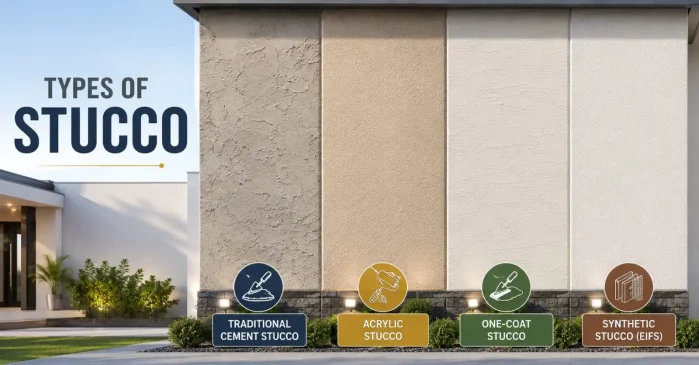
Given below are the different types of stucco in construction:
- Traditional Cement Stucco
This is the classic version of stucco in construction. The workers use the necessary ingredients to prepare it and apply it in the following three coats:
- Scratch coat
- Brown coat
- Finish coat
The layers provide excellent strength and durability to the structures. The contractors use traditional stucco usually for masonry and brickwork.
- Acrylic Stucco
It contains synthetic resins that not only improve flexibility but also adhesion. It prevents hairline cracks because it can expand and contract easily. The best part? The contractors have the option to choose from a wide variety of colors and textures. This is why they often choose it for modern residential projects.
- One-Coat Stucco
This type of stucco combines the base and finish layers into a simple application. The result? It reduces the installation time and ensures long-term performance if the worker prepares the surface properly.
- Synthetic Stucco (EIFS)
The synthetic stucco meaning is the exterior insulation and finish system. EIFS uses insulation boards covered with polymer coatings. It not only improves thermal insulation but also offers a decorative finish. It is advisable to manage moisture properly when you install synthetic stucco in construction.
What Are the Applications of Stucco in Construction?

Given below are the common applications of stucco in construction:
- Exterior Wall Finishes
Stucco is popular for exterior wall finishes in residential and commercial buildings. They resist weather conditions and add visual appeal to the exteriors. The best part? It has a texture finish that hides minor mistakes of masonry work.
- Interior Accent Walls
The contractors also use stucco for indoors to create decorative feature walls. It has a subtle texture that adds warmth and character to spaces.
- Commercial Buildings
Stucco provides durability at affordable rates. It creates large wall surfaces that maintain a uniform appearance for years. This is why builders use stucco for commercial and industrial buildings.
- Restoration Projects
You will often see architects using stucco for restoring heritage buildings. Why? This is because it matches traditional finishes with long-term durability.
What Are the Factors to Consider Before Choosing a Stucco?
Given below are the factors you should take into consideration when choosing a stucco:
- Climate
Different types of stucco perform differently in weather conditions. Traditional cement stucco performs well in dry and moderate climates. However, heavy rainfall areas install synthetic stucco to prevent problems that arise from moisture
- Surface Compatibility
Every wall accepts stucco differently. It performs well if the worker applies it on the following surfaces:
- Concrete blocks
- Brick masonry
- Cement surface
It is advisable to add extra reinforcement in lightweight frame walls.
- Maintenance Needs
Stucco often demands low maintenance. However, you may need to clean it occasionally and inspect small cracks. This is necessary as timely repairs can extend the lifespan of the structure.
- Quality Materials
Good quality materials contribute to the durability and appearance of stucco surfaces. They ensure better bonding of the materials. This is why experts recommend choosing the quality materials for any building project. `
The Final Words
Stucco meaning is not technical. It’s simple. Stucco looks attractive in modern buildings. But this is not the only reason for its popularity. It offers other advantages like durability and protection to the buildings. This is why architects use stucco for different types of construction projects. You can define stucco as a cement wall finish that protects buildings.
FAQs
1. What is stucco in construction?
Stucco is a durable cement-based plaster used on interior and exterior walls. Made from cement, sand, lime, and water, it creates a protective, weather-resistant layer while enhancing a building’s appearance with smooth, textured, or decorative finishes. It is widely used in residential and commercial construction.
2. Can you define stucco in simple words?
Stucco is a hard wall coating made by mixing cement, sand, lime, and water. It is applied over brick, concrete, or masonry walls to protect them from weather while giving them a clean, attractive, and long-lasting finish.
3. What is the stucco meaning for homeowners?
For homeowners, stucco is a durable wall finish that protects the exterior from rain, heat, and daily wear while improving the home’s appearance. It requires relatively low maintenance and can last for decades when installed and maintained properly.
4. Is stucco suitable for Indian weather?
Yes. Stucco performs well in many Indian climates when applied correctly with proper waterproofing and curing. It is especially suitable for exterior masonry walls because it resists heat, sunlight, and moderate rainfall, making it a practical finish for residential and commercial buildings.
5. How long does stucco last?
A professionally installed stucco finish typically lasts 50–80 years or more. Its lifespan depends on installation quality, climate, and maintenance. Regular inspections, prompt crack repairs, and proper waterproofing help keep stucco durable and visually appealing for decades.
6. What is the difference between stucco and plaster?
Stucco and plaster are both wall finishes, but they serve different purposes. Stucco is cement-based and designed for exterior walls because it withstands weather and moisture. Traditional plaster is usually gypsum or lime based and is mainly used for smooth interior wall finishes.
7. Can stucco be painted?
Yes. Stucco can be painted once it has fully cured, usually after several weeks. High-quality masonry paint improves colour, weather resistance, and durability. Alternatively, coloured acrylic stucco systems provide a long-lasting finish without requiring separate painting.
8. Does stucco crack over time?
Minor hairline cracks can appear in stucco due to building settlement, temperature changes, or natural shrinkage. Proper installation, adequate curing, expansion joints, and routine maintenance significantly reduce cracking and help maintain the strength and appearance of the stucco finish.