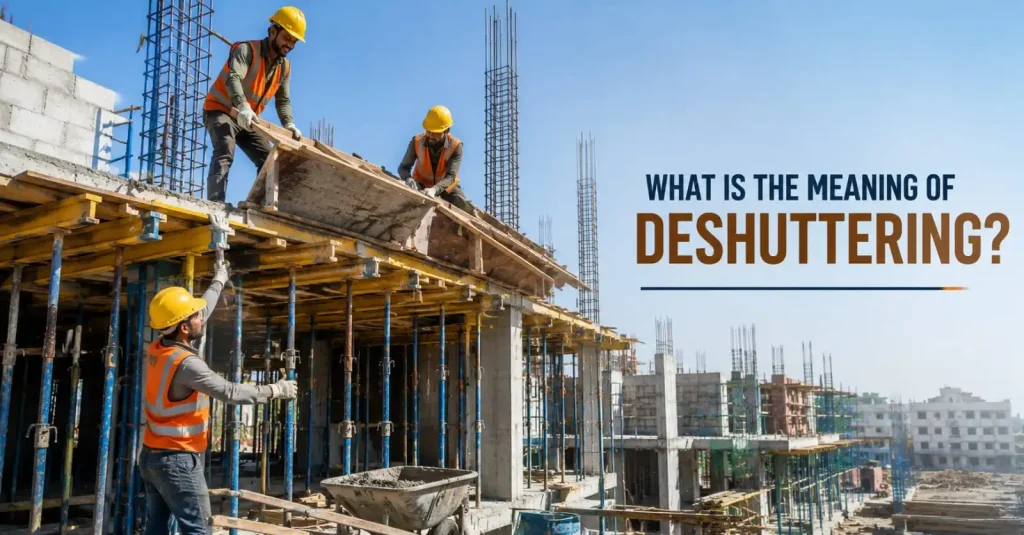
Think of formwork as the training wheels on a child’s bicycle. A child may fall when you remove them too early. The same principle applies to concrete. It is necessary to remove the shuttering at the right time. This not only ensures safety but also provides durability to the structures. So, what is the ideal slab deshuttering time? Read on this blog post to find the details!
What Is the Meaning of Deshuttering?
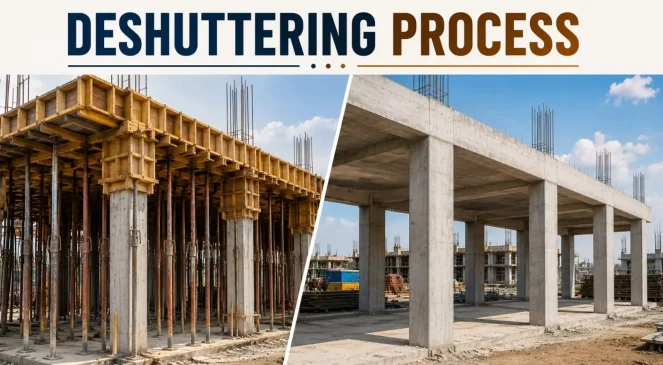
Deshuttering is the process in which workers remove the temporary formwork after the concrete gains strength. This means concrete can support its own weight and heavy loads effectively. Shuttering acts like a mold during the casting process. It helps the concrete form the necessary shape. The workers remove this support when the concrete is hard.
Concrete needs proper curing to gain strength. The experts usually recommend curing concrete for 7-28 days for the best performance. The deshuttering period varies for different structures due to strength gain. Given below are some factors that influence the deshuttering time:
- Type of structural member
- Cement grade
- Ambient temperature
- Quality of curing
- Span of the member
- Concrete mix design
These factors can reduce the service life of the structure if the contractor ignores them.
What Is the Ideal Deshuttering Time As Per the IS Code?
The Plain and Reinforced Concrete Code of Practice (IS 456:2000) recommends the safe removal of formwork. The code specifies minimum periods for the proper curing of ordinary portland cement. The table below highlights the standard deshuttering period of the formwork.
| Structural Member | Shuttering Time |
| Vertical sides of walls, columns, and beams | 16-24 hours |
| Slabs (props left under) | 3 days |
| Beam soffits (props left under) | 7 days |
| Removal of props under slabs (span up to 4.5 m) | 7 days |
| Removal of props under slabs (span above 4.5 m) | 14 days |
| Removal of props under beams and arches (span up to 6 m) | 14 days |
| removal of props under beams and arches (span above 6 m) | 21 days |
What Are the Standard IS Code Deshuttering Guidelines?
Given below are the standard IS code guidelines for deshuttering:
- Continue Proper Curing
Concrete gains strength when it receives proper moisture. Poor curing can result in weak structures even if you complete the deshuttering period.
- Avoid Overloading of Fresh Deshutted Slab
The workers usually keep stacks of bricks and cement on new slabs. However, it might result in cracks. This is why it is advisable to avoid heavy loads on slabs until it gains adequate strength.
- Weather Matters
Concrete develops strength slowly in winter. It loses its moisture if curing is improper in extremely hot weather. Hence, different types of weather conditions influence the safe slab deshuttering time.
- Inspect Before Removing Formwork
The deshuttering process should be done only after proper inspection of the following:
- Honeycombing
- Surface cracks
- Deflection
- Loose or damaged supports
The engineers should inspect it carefully to ensure that the structures gain strength properly.
- Follow the Instructions of the Structural Engineer
The engineer may recommend a longer or shorter deshuttering period as per the cube test results. This is more common for large commercial projects and special concrete mixes.
Is It Possible to Reduce Deshuttering Time?
Yes, it is possible to reduce deshuttering time only under certain conditions. Some practices safely reduce the deshuttering period of the slab. The best part? It prevents structural strength. Given below are some tips to follow to reduce deshuttering time:
- Use High Early-Strength Cement
Some types of cement develop strength more quickly than conventional mixes. This helps the engineers to remove formwork early.
- Use Approved Concrete Admixtures
An increase in admixtures can speed up hydration. This helps concrete achieve the necessary strength quickly.
- Maintain Excellent Curing
Curing is necessary for better performance of concrete. So, the experts advise proper water curing of concrete for early deshuttering.
The Final Words
Good things take time. This principle also applies to concrete. It gains strength after proper curing. Moreover, experts recommend that you avoid early deshuttering to prevent expensive repairs in the future. The structural engineers follow IS 456:2000 guidelines to ensure safe and durable structures. To conclude, slab deshuttering time in construction should be a smart choice.
FAQs
1. What is deshuttering?
Deshuttering is the process of removing formwork or shuttering after concrete has gained enough strength to support its own weight and construction loads safely. Proper deshuttering prevents cracks, deformation, and structural damage while ensuring the concrete element remains stable.
2. What is the slab deshuttering time as per IS code?
As per IS 456:2000, slab formwork can generally be removed after 3 days, while supporting props remain in place. Props are removed after 7 days for slabs up to 4.5 m span and 14 days for longer spans, provided the concrete has gained adequate strength.
3. What is the standard deshuttering period for beams?
According to IS 456:2000, beam soffits can generally be removed after 7 days. However, supporting props should remain for 14 days for spans up to 6 m and 21 days for spans exceeding 6 m to ensure sufficient concrete strength.
4. Can the deshuttering period be reduced?
Yes, the deshuttering period can be reduced if concrete achieves the required strength earlier. This is possible with high early-strength cement, approved admixtures, proper curing, and compressive strength tests confirming the concrete is safe for formwork removal.
5. Why is curing important before deshuttering?
Curing is essential because it helps concrete gain strength through proper hydration. Even if the recommended deshuttering time has passed, inadequate curing can reduce durability, cause shrinkage cracks, and weaken the structural performance of slabs, beams, and columns.
6. Which IS code covers deshuttering guidelines?
The deshuttering guidelines in India are specified in IS 456:2000 – Plain and Reinforced Concrete – Code of Practice. The code recommends minimum formwork removal times for slabs, beams, columns, and props based on concrete strength and structural span.