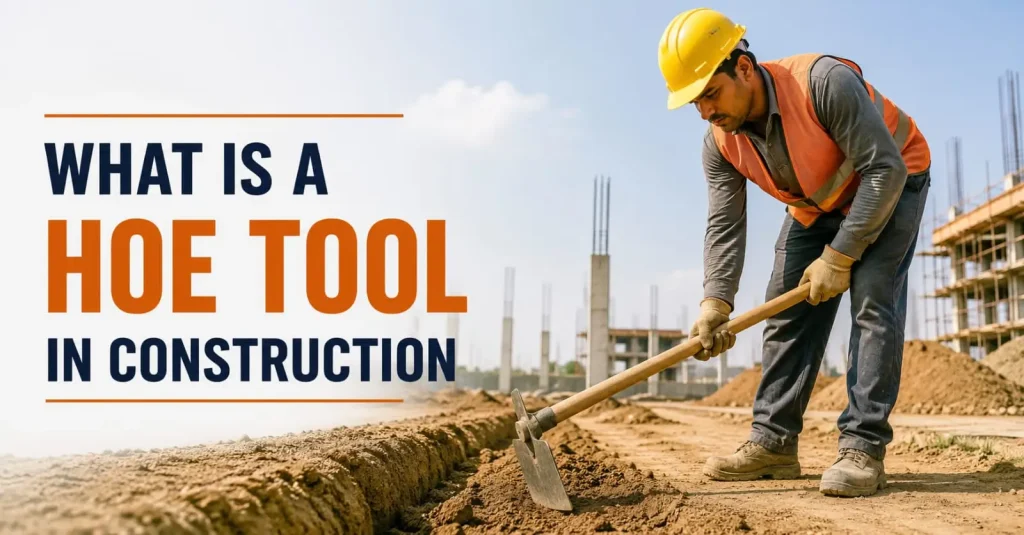
Every task at a construction site requires a machine. However, many jobs still rely on simple hand tools. One such tool is the hoe. The workers are using this tool for different purposes over time. They use it to prepare ground for paving blocks or clean narrow trenches. That’s it? Indeed, not! There are many other uses of the hoe tool in construction. Moreover, there are various types of hoe tools for different applications. Read on this blog post to find out the details.
What Is a Hoe Tool in Construction?
A hoe tool helps the workers to dig and scrape with their hands for the following purposes:
- Loosen soil
- Move materials
- Clean surfaces
- Shape the ground
But what exactly is the meaning of “hoe”? It is a tool with a long handle that attaches to a flat or minor-curve metal blade. It is positioned at an angle to form a hoe tool. This arrangement allows workers to perform the above activities with minimal effort.
Many people confuse a hoe with a shovel that lifts and carries materials. A hoe is mainly meant for pulling and shaping materials across the surface. A hoe remains indispensable even with the rise in use of machinery. Why? Because machines cannot easily access every corner of a site. Hence, it proves more efficient than large equipment.
How Does a Hoe Tool Work in Construction?
The working principle of a hoe tool is surprisingly simple. The worker grips the long handle with both hands. They pull or push the blade across the ground. The blade sits at an angle that slices into loose soil. The workers are able to control the depth and direction of a hoe tool easily.
A hoe tool works similarly to a squeegee that pulls water across a floor. A hoe moves soil, gravel, sand, or mortar instead of water. The design of a hoe tool reduces unnecessary bending. Hence, the repetitive work on site becomes more comfortable.
To put it simply, a hoe tool on a construction site is really helpful. It focuses on precision matters more than speed.
What Are the Types of Hoe Tools in Construction?
Every hoe tool has a different blade that serves a specific purpose. Given below are some common types of hoe tools in construction:
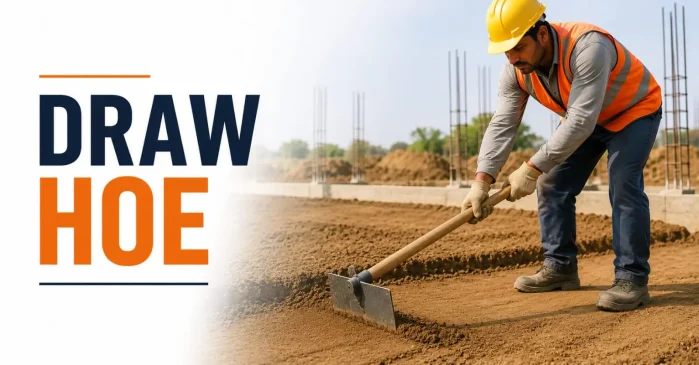
Draw Hoe
This is the most common type of hoe found on construction sites. It has a flat blade that sits at a right angle to the handle. The uses of a draw hoe are the following:
- Pull soil
- Level surface
- Clean trenches
The professional workers also use a draw hoe when they prepare the ground.
Grub Hoe
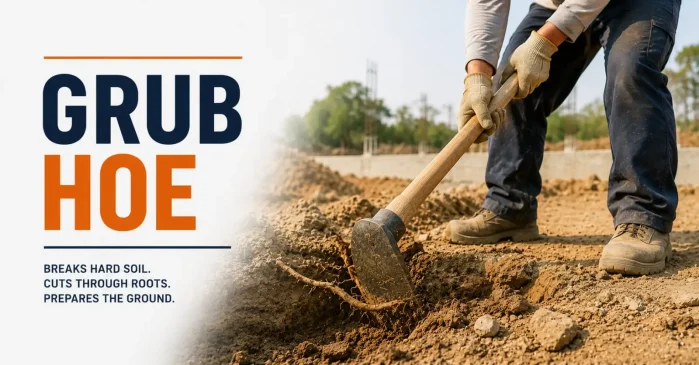
A grub hoe has a thick and heavy blade. The workers use it for tough jobs like:
- Break hard soil
- Cut through roots
- Remove compact earth
- Prepare foundations
You will usually find the contractors using a grub hoe tool before the excavation process.
Warren Hoe
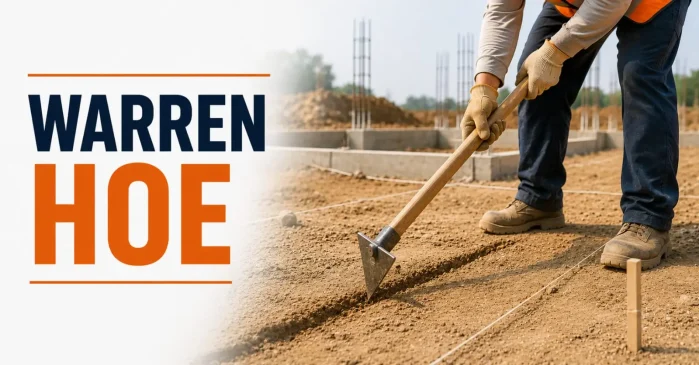
A hoe at a construction site with a pointed triangular shape is a Warren hoe. The narrow edges of this hoe make it useful for the below:
- Dig shallow channels
- Mark foundation lines
- Create drainage paths
The workers prefer using it for landscaping and utility work due to its precision.
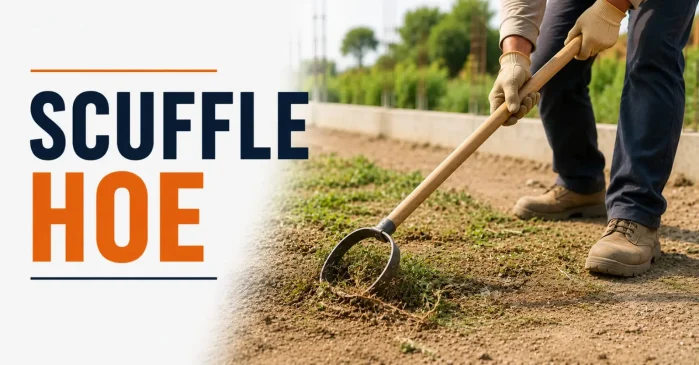
Scuffle hoe
The scuffle hoe is different from traditional hoes. It works with a push-and-pull motion. The blade is in a loop shape that removes weeds and clears loose debris. The best part? It doesn’t disturb the deeper soil layers. The construction workers often use it to clean a site before the construction process.
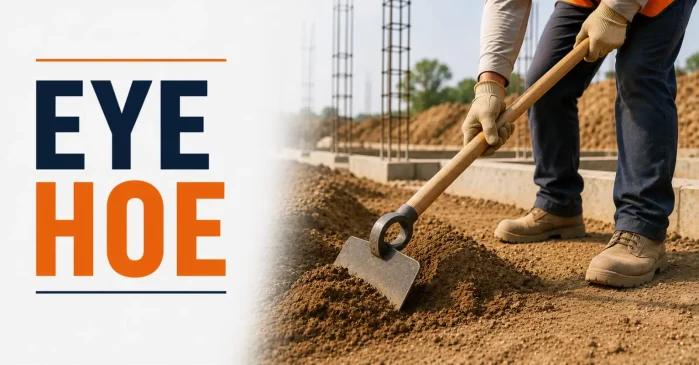
Eye Hoe
It has a reinforced connection between the blade and the handle. Hence, it is strong and ideal for heavy-duty applications. The most common applications of an eye hoe are:
- Earthmoving
- Soil preparation
- Small excavation tasks
- Road maintenance
The choice of the right hoe tool depends on the nature of the work. So, make sure you hire skilled workers for the construction of your home.
What Are the Common Applications of the Hoe Tool in Construction?
The common uses of a hoe tool in construction are as follows:
Site Preparation
Workers often use a hoe tool to remove weeds and loosen surface soil before the excavation process. The proper surface creates a better foundation for future construction.
Trench Cleaning
Trenches need manual finishing after the machine excavation. A hoe removes loose soil and creates clean trench edges. The workers complete this process before the installation of pipes or cables.
Mixing Mortar
You will often see workers using a hoe to mix cement with other materials at small construction sites. The blade angles allow materials to fold together evenly. The most interesting part is that there is no need for special equipment.
Levelling Sand and Gravel
Construction crews use a hoe tool to spread aggregates into an even layer. A level base not only improves structural stability but also reduces future settlement.
Landscaping Around Buildings
The workers use a hoe for the following reasons after the structure work is complete:
- Preparing garden
- Forming pathway
- Soil grading
- Tree plantation areas
The landscaping process requires detailed manual work. This is why a hoe is one of the most practical hand tools.
Drainage Work
Proper drainage protects buildings from water accumulation. With a hoe, workers shape shallow channels and maintain the correct slope. The result? Rainwater flows away from the structure.
Road Repair Projects
Municipal maintenance teams also use hoes to repair roads. How? They use it for the following applications:
- Spread asphalt
- Remove loose material
- Prepare patches before resurfacing
The Final Words
There are a lot of developments in the construction industry. However, some manual tools are still popular. The hoe is a perfect example. It is an affordable and easy-to-handle tool for different applications. There is no science to understand the meaning of “hoe”. All you have to do is remember that it is a simple tool that contributes to the construction of buildings.
FAQs
1. Why is a hoe an important tool in construction?
A hoe is important because it helps workers perform precise tasks such as trench cleaning, ground levelling, soil loosening, and manual material mixing. It remains one of the most cost-effective hand tools for small construction projects and finishing work.
2. What are the different types of hoe tools used in construction?
Common construction hoe types include the draw hoe, grub hoe, Warren hoe, eye hoe, and Dutch hoe. Each is designed for specific tasks such as breaking hard soil, digging trenches, shaping surfaces, or clearing debris efficiently.
3. What materials are hoe tool blades made from?
Most hoe blades are made from forged or high-carbon steel for durability and wear resistance. The handles are typically made from hardwood, fiberglass, or steel, depending on the tool’s intended use and required strength.
4. Can a hoe be used for landscaping as well as construction?
Yes. A hoe is widely used in both landscaping and construction. Besides excavation and levelling, it helps prepare garden beds, remove weeds, shape soil, create drainage channels, and spread mulch or gravel.
5. How do you choose the right hoe for construction work?
Choose a hoe based on the task, soil condition, blade shape, handle material, and weight. For hard soil, a grub hoe is ideal, while a draw hoe works better for levelling, scraping, and general site preparation.
6. What safety precautions should you follow while using a hoe?
Wear gloves, safety boots, and eye protection before using a hoe. Inspect the handle for damage, keep a firm grip, maintain a safe distance from others, and use controlled swings to reduce the risk of injuries.
7. How long does a good-quality hoe tool last?
A high-quality hoe can last for many years with proper care. Regular cleaning, rust prevention, blade sharpening, and timely handle replacement help extend its lifespan and maintain reliable performance on construction sites.