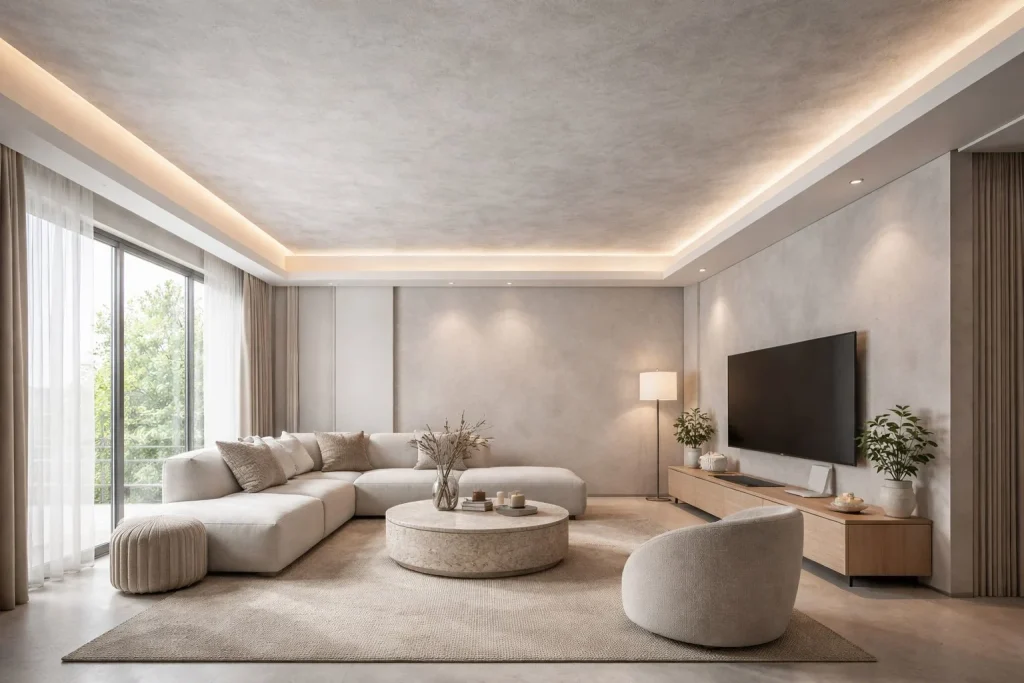
For years, ceilings were treated like an afterthought. But things have changed. Today, ceilings are part of the design story.
And cement plaster design fits perfectly into this shift. People want ceilings that look clean, feel solid, age well, and don’t demand constant repairs.
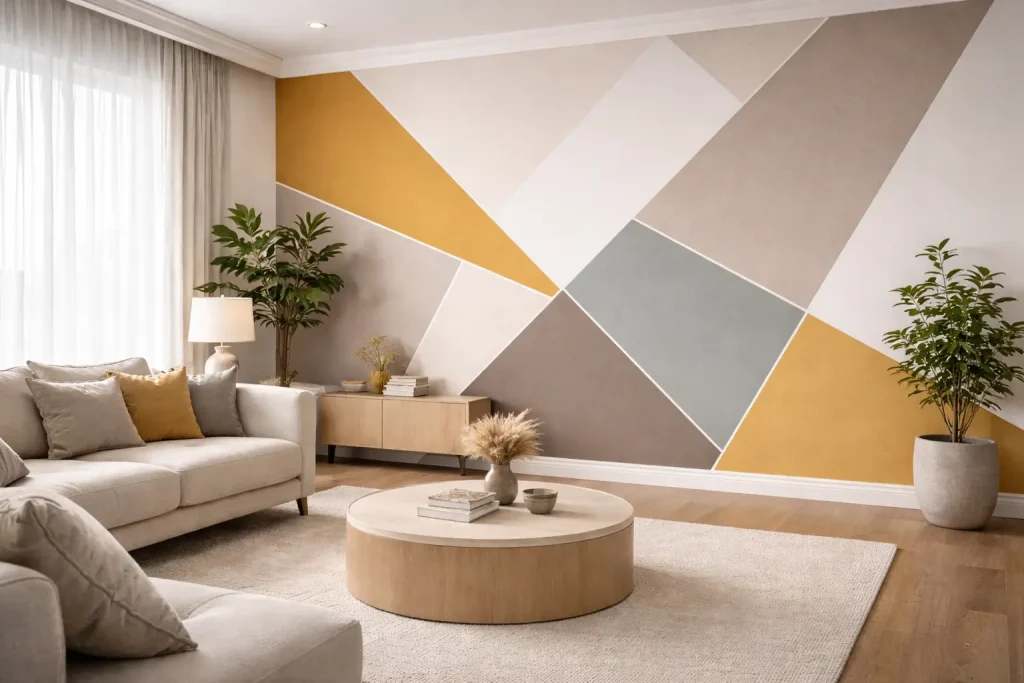
That’s why ceiling design cement plaster wall design with cement plaster is quietly becoming the go-to choice—especially for Indian homes dealing with heat, dust, and long monsoons. A well-done cement plaster wall design becomes part of the structure, not a layer pasted on later.
On real sites, from Pune apartments to independent homes in Jaipur, we’re seeing homeowners choose cement plaster because it feels permanent.
Let’s walk through the ceiling designs that are actually working in 2026.
1. Clean Flat Cement Plaster Ceilings
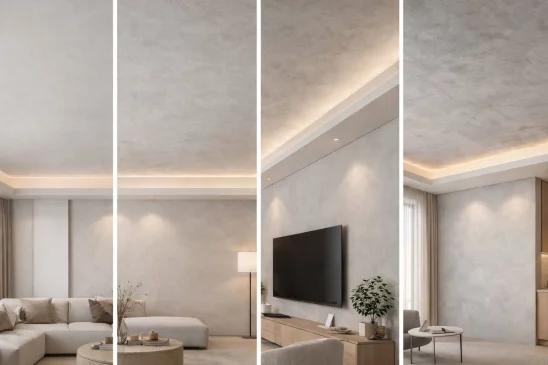
This is the most common and most misunderstood trend. But minimal is still the king.
A flat cement plaster ceiling, finished smoothly, looks simple. But getting it right takes skill.
In 2026, the focus is on:
- Sharp edges
- Perfect leveling
- Subtle matte finishes
- No cornices.
- No heavy borders.
In compact homes, this cement plaster ceiling design makes rooms feel taller and calmer. This approach works beautifully when your cement plaster wall design is also clean and uncluttered.
Tip: Pair it with warm lighting and light wall shades, and the ceiling quietly disappears – which is exactly the point.
2. Cement Plaster with Soft Cove Lighting
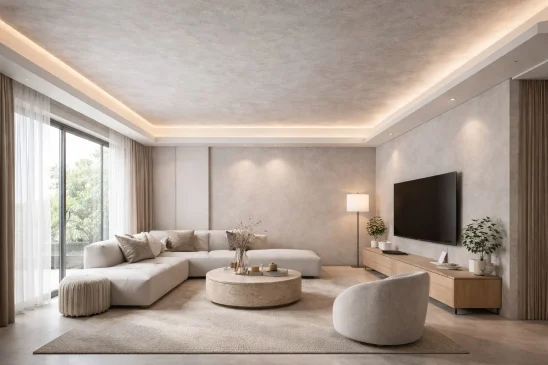
Here’s where things get interesting. Instead of gypsum false ceilings, many designers are forming shallow coves directly in cement plaster. It’s tougher to execute but far more durable.
The benefit?
- No cracks at joints
- No replacement after 5–6 years
- Better resistance to moisture
This cement plaster ceiling design is popular in living rooms and master bedrooms.
The light washes the ceiling softly, highlighting the texture without screaming for attention.
Tip: Always finalise lighting points before plastering. Retrofitting ruins the finish.
3. Raw Textured Cement Plaster Ceilings
Yes, the “unfinished” look is still trending. But there’s a difference between raw and rough.
In modern homes, the textured cement plaster design is controlled. It:
- Has a consistent tone
- Visible subtle trowel marks
- Gives off uniform grain
This is ideal to be used in:
- Lofts
- Studio apartments
- Home offices
Tip: When paired with a neutral cement plaster wall design, the ceiling adds character without feeling messy.
4. Cement Plaster Ceiling with Wooden Accents
This is a favourite in 2026 homes. A solid cement plaster ceiling forms the base.
Wooden beams or panels are added selectively.
The contrast works because cement brings strength while wood brings warmth.
In villas and duplex homes, this cement plaster ceiling design feels grounded and premium, without looking flashy.
Tip: Always separate wood from plaster with proper fixing systems to avoid cracks later.
5. Curved Cement Plaster Ceiling Details
Straight lines are a safe choice, while curves are bold.
With better tools and skilled masons, curved cement plaster ceilings are making a comeback.
Not dramatic arches – just gentle curves near edges or transitions.
This cement plaster ceiling design is usually used in:
- Entryways and foyers
- Dining areas
- Passage ceilings
It softens the space and breaks the boxy feel common in apartments.
6. Seamless Ceiling and Wall Continuity
This is by far one of the strongest ceiling trends for 2026 is continuity.
Instead of treating walls and ceilings separately, designers are using the same cement plaster design for both – No sharp breaks and no heavy mouldings.
This approach works perfectly well in modern homes where simplicity matters more than decoration.
Tip: A continuous cement plaster design flowing into the ceiling makes rooms feel larger and calmer – especially when paired with neutral paints.
7. Cement Plaster Ceilings in Wet Areas
Earlier, bathrooms and kitchens were risky zones for ceilings. But now, with high-quality materials and execution, cement plaster ceilings are being created here too.
The advantages they offer include:
- Better moisture resistance
- No peeling boards
- Easier repairs
In 2026, many homes are ditching PVC and gypsum in favour of cement plaster ceiling designs for kitchens and utility areas.
Just remember: waterproofing below the slab is non-negotiable.
Ceiling Design Mistakes to Avoid
Even the best cement plaster ceiling design can fail if the basics are ignored. Here are mistakes we still see on sites:
- Rushing the curing time
- Poor levelling before finishing
- Ignoring expansion joints
- Adding lighting after plaster work
- Using low-quality cement or sand
A ceiling isn’t the place to cut corners.
Fixing it later is expensive and messy.
Trends come and go. Durability doesn’t.
That’s why cement plaster design is winning in 2026. It’s not about being fancy.
It’s about building ceilings that last, age gracefully, and suit real Indian living conditions.
When planned well, a ceiling design with cement plaster blends strength with style without demanding constant maintenance.
If you’re building or renovating, talk to your contractor early.
Good plaster work is planned, not patched later.
FAQs
1. Is cement plaster good for ceilings compared to gypsum?
Yes. Cement plaster ceilings are stronger, moisture-resistant, and last longer—especially in Indian climates.
2. Can cement plaster ceilings crack over time?
They can, if curing or materials are poor. Proper execution minimizes cracking significantly.
3. Are cement plaster ceilings suitable for modern homes?
Absolutely. Modern design is about clean lines and durability—both suit cement plaster design well.
4. Can lighting be installed in a ceiling design with cement plaster?
Yes, but it’s important to plan wiring and fixtures before plastering.
5. Is it expensive to get a cement plaster ceiling design done?
Initial cost may be slightly higher than gypsum, but long-term maintenance is much lower.
6. Can a textured ceiling design with cement plaster be repainted later?
Yes. Use breathable paints to retain texture and avoid peeling.
7. Do cement plaster ceilings work in small apartments?
They do. Flat, smooth finishes actually make small rooms feel taller and cleaner.