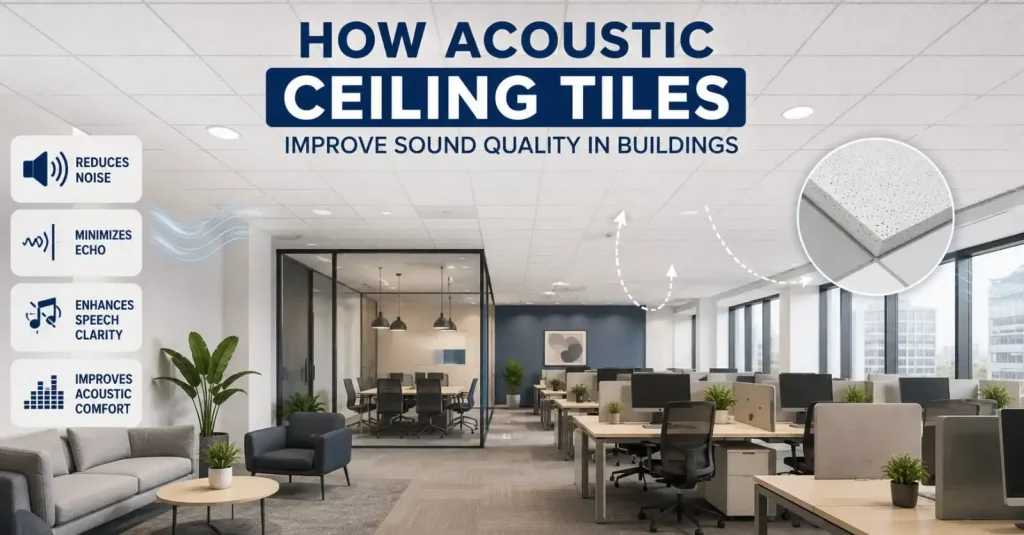
There are some spaces where the sound bounces around the room. It creates an echo. However, it is soft and under control in others. What’s the difference? It’s about choosing the right building material. Noise is the major concern in modern buildings. The studies by the World Green Building Council highlight that excessive indoor noise reduces productivity and concentration. So, what’s the solution? Acoustic ceiling tiles are the interior finishing that helps with sound management.
Read on this blog post to know the types and benefits of acoustic ceiling tiles.
Key Takeaways
- Acoustic ceiling tiles absorb sound waves that reduce echo and noise in rooms.
- Many varieties of modern tiles do not contain asbestos. It only has it if they are from pre-1981 installations.
- Acoustic tiles cut the noise levels by 30-50%. They ensure clear conversations and provide comfort in the spaces.
- Homeowners install the acoustic ceiling panels easily. However, some tiles with asbestos may require professional help.
- The applications of acoustic ceiling tiles are growing rapidly.
What Are Acoustic Ceiling Tiles?
Acoustic ceiling tiles are special ceiling panels for sound management. They absorb sound to make a space quiet and more comfortable. They are similar to a sponge for sound in the buildings. The tiles absorb part of the noise when sound waves from conversations or traffic hit the tiles. It restricts the noise from bouncing around the room. These tiles contain tiny holes and fibers. The result? They trap sound waves easily. It reduces the echo, and it becomes easy to hear a speech.
The future of acoustic ceiling tiles continues to grow. The statistics highlight that the global market may increase from USD 9.1 million in 2026 to USD 16.4 billion by 2035. It is estimated to grow at a 6.7% CAGR.
What Are the Different Types of Acoustic Ceiling Tiles?
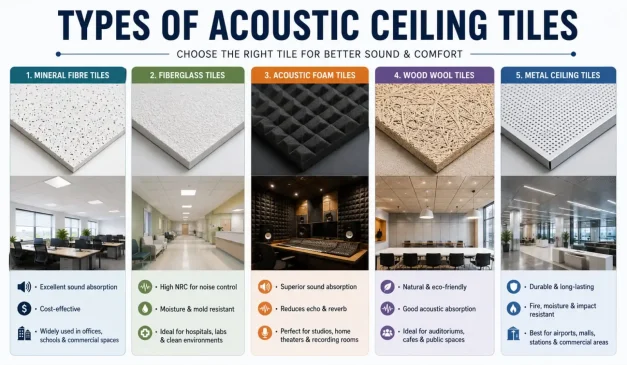
Acoustic ceiling tiles are of different types. Each material offers a different level of sound absorption and other benefits. Given below are some of the best acoustic ceiling tiles:
- Mineral Fibre Ceiling Tiles
This is the most common acoustic tile that engineers use in commercial and private buildings. It can either be a school or an office building. These tiles are manufactured using mineral wool and fibreglass. Recycled materials are also used in some cases. The best part? They are ideal for busy spaces because they resist fire and moisture.
- Fibreglass Ceiling Tiles
Fibreglass ceiling tiles are manufactured when fine glass fibres are woven together into lightweight panels. They often install in places where sound quality is important, like recording studios and conference rooms. This is because they absorb sound effectively. Most importantly, they are lightweight, which makes them easy to handle.
- Acoustic Foam Panels
Acoustic foam panels use soft foam materials to absorb sound waves. The distinctive wedge or pyramid shapes in music studios and podcast rooms are acoustic foam panels. They are ideal for small projects because they are easy to install. What’s more? They are budget-friendly for homeowners.
- Wood Wool Ceiling Tiles
Natural wood fibres are mixed with cement or other binding materials to produce wood wool tiles. Where exactly are they popular? They are most common in the spaces where design matters as much as acoustics. They not only reduce noise levels but also add warmth and texture to the spaces.
- Metal Ceiling Tiles
They use aluminum or steel to get into shape. Steel perforations in the surface allow sound to pass through an acoustic backing material. This results in less noise. Although they don’t absorb too much sound, they are durable and moisture-resistant.
What Are the Benefits of Acoustic Ceiling Tiles?
Acoustic ceiling tiles do much more than just reduce noise. They bring comfort to the room and improve the overall experience. Given below are some common benefits of acoustic ceiling panels:
- Reduce Noise
Sound often bounces continuously in a room with hard surfaces. This echoes the noise in the room. Acoustic ceiling tiles absorb a large portion of these sound waves. They prevent them from bouncing back into the room. The result? The space becomes quieter and more peaceful.
- Better Speech Clarity
Did you know why speech is so clear in conference rooms and hotels? This is because of acoustic ceiling tiles. They absorb the excess sound that makes the voice clear and easy to understand. It becomes easy to communicate with people at a low or medium pitch.
- Improve Fire Safety
Many acoustic ceiling tiles resist fire. How? They are made from materials like mineral fibre and fibreglass. These materials do not burn easily and slow the spread of flames. The rescue teams get extra time for evacuation and emergency response. But remember, they can never replace proper fire protection systems.
- Hidden Utilities
Modern buildings often have electrical wiring and more running across the ceiling. Acoustic ceiling systems installed below the main ceiling. This creates a neat space where you can hide these utilities. Thus, the room has a clean and more professional appearance.
- Thermal Insulation
There are some insulating acoustic ceiling tiles. They slow the transfer of heat from the roof into the room. The result is that indoor spaces feel cooler during hot summers. It also saves on energy costs as the workload on air conditioners also decreases.
What Are the Common Applications of Acoustic Ceiling Tiles?

Acoustic ceiling tiles are suitable for all places with noise pollution. People mostly prefer installing it in places where clear communication is necessary. Given below are some common applications of acoustic ceiling tiles asbestos:
- Offices and Open-Plan Workspaces
Modern offices often have open layouts for employees to work in the same area. This design encourages collaboration. But a lot of noise is produced due to conversations and meetings. Acoustic ceiling tiles absorb much of this background noise. They make the workspace quieter and more productive. The focus of employees and the overall workplace comfort improve.
- Educational Centres
Ask yourself, will you be able to concentrate with a lot of noise? Indeed not! Clear communication is necessary in educational spaces. Sound pollution makes learning difficult. Acoustic ceiling tiles improve speech clarity in educational places. Students hear lessons more clearly. This is very useful in busy cities where heavy traffic or construction noise impacts the classrooms.
- Hospitals and Healthcare Facilities
Conversations. Medical equipment. Alarms. Foot traffic. These are common noises in hospitals. They can create stress for both patients and healthcare workers. Acoustical ceiling tiles ensure a calm and peaceful atmosphere. The doctors and nurses can communicate to patients more clearly.
- Home Theatres and Entertainment Rooms
Poor room acoustics ruin the experience of the projector or sound systems. Sound may bounce off walls and ceilings. This might create echoes and affect audio quality. Acoustic ceiling tiles control these reflections. They make the sound effects clear and more immersive.
- Recording Studios and Podcast Rooms
Professional audio recording demands precise control of sound. Background noise can affect the quality of recordings. This is why recording studios and music production studios often use acoustic ceiling systems.
- Restaurants and Food Courts
A busy restaurant and cafe become noisy when conversations and background noise mix together. It makes dining uncomfortable for the customers. This is why restaurant owners install acoustic ceiling tiles. They absorb noise and create a pleasing atmosphere. The customers enjoy conversations without shouting.
What Is the Process to Install Acoustic Ceiling Tiles?
It is easy to install acoustic ceiling tiles. Given below are the steps you need to follow when installing acoustic ceiling tiles:
- Measure the Room
The first step is to determine the number of ceiling tiles and grid components you will need. So, measure the length and width of the room. It is advisable to order a few extra tiles to use in case of accidental damage during installation.
- Choose the Right Acoustic Tiles
There are multiple types of acoustic ceiling tiles with different characteristics. Assess your noise cancellation needs and budget before making a final purchase. Most importantly, check the moisture levels of your room.
- Install the Wall Angles
This is the most important step in the process of installing acoustic ceiling tiles. It determines the look of the ceiling. Wall angles are metal strips that professionals fix around the perimeter of the room. Why? This is because they support the ceiling grid that is suspended. Take a level to mark the ceiling height you wish and attach the wall angles.
- Set up the Suspension Grid
Another phase is to install the metal suspension grid. It holds the ceiling tiles. The grid suspends from the main ceiling using wires or hangers. The result? The network of square or rectangular openings forms. This framework is a support system for the tiles. Thus, it is necessary to level it properly before moving forward.
- Complete Electrical Installation
The open grid makes it easy to organise the utilities. It is ideal to install any electrical wiring or speakers before placing the tiles. It provides a clean and aesthetic look to the room.
- Install the Acoustic Ceiling Tiles
The grid is complete. The last step is to place the acoustic tiles into the grid openings. Most acoustic tiles rest on the grid. What does this mean? The process becomes easier and quicker. The expert may trim the tiles to fit them in the room dimensions.
The Final Words
Acoustic ceiling tiles are popular in different setups and places. They are the practical solutions to improve your daily life. The best part? They are free from asbestos. The acoustic ceiling tiles’ asbestos worry happens only if it is pre-1981 installations. This needs professionals to remove the asbestos. Thus, it is advisable to invest smartly and carefully.
FAQs
1. Are acoustic ceiling tiles expensive in India?
Acoustic ceiling tiles are not expensive in India. They are available for most budgets. Foam tiles start at around ₹200 per piece, while mineral fibre ceiling tiles typically cost ₹400–₹800. For a 100 sq. ft. room, the total acoustic ceiling installation cost usually ranges from ₹8,000 to ₹15,000, including labor and materials.
2. Can I install acoustic ceiling tiles myself?
Yes. Drop-in acoustic ceiling tiles are DIY-friendly and easy to install with a suspended grid system. Adhesive tiles require more precision and surface preparation. Following the manufacturer’s instructions helps ensure proper installation, durability, and effective sound absorption.
3. Do acoustic ceiling tiles contain asbestos?
Modern acoustic ceiling tiles are asbestos-free and safe for residential and commercial use. However, some tiles manufactured before 1981 may contain asbestos. If you have older ceiling tiles, professional testing and safe removal are recommended before renovation or replacement.
4. How much noise do acoustic ceiling tiles reduce?
Acoustic ceiling tiles can reduce indoor noise levels by 30–50%, depending on the material and room conditions. They absorb sound, reduce echo, and improve speech clarity, making offices, classrooms, and homes quieter and more comfortable.
5. Are acoustic ceiling tiles fire-resistant?
Yes. Many acoustic ceiling tiles, especially mineral fibre and fiberglass options, are fire-resistant and meet commercial fire safety standards. Always check the product’s fire rating to ensure compliance with local building regulations and safety requirements.
6. Can acoustic ceiling tiles help reduce Delhi’s traffic noise?
Yes. Acoustic ceiling tiles help reduce indoor echo and limit the impact of outside noise. While they do not completely block traffic sounds, they can make apartments and offices near busy roads in Delhi noticeably quieter and more comfortable.
7. How long do acoustic ceiling tiles last?
Most acoustic ceiling tiles last between 10 and 20 years with proper maintenance. Their lifespan depends on humidity levels, installation quality, and upkeep. Replacing damaged or stained tiles promptly helps maintain acoustic performance and appearance.
8. Do acoustic ceiling tiles work in humid areas like bathrooms?
Yes, but choosing the right material is important. Metal acoustic ceiling tiles offer excellent moisture resistance, while moisture-resistant mineral fibre tiles work well in moderate humidity. Foam acoustic tiles are generally not recommended for bathrooms or wet areas.