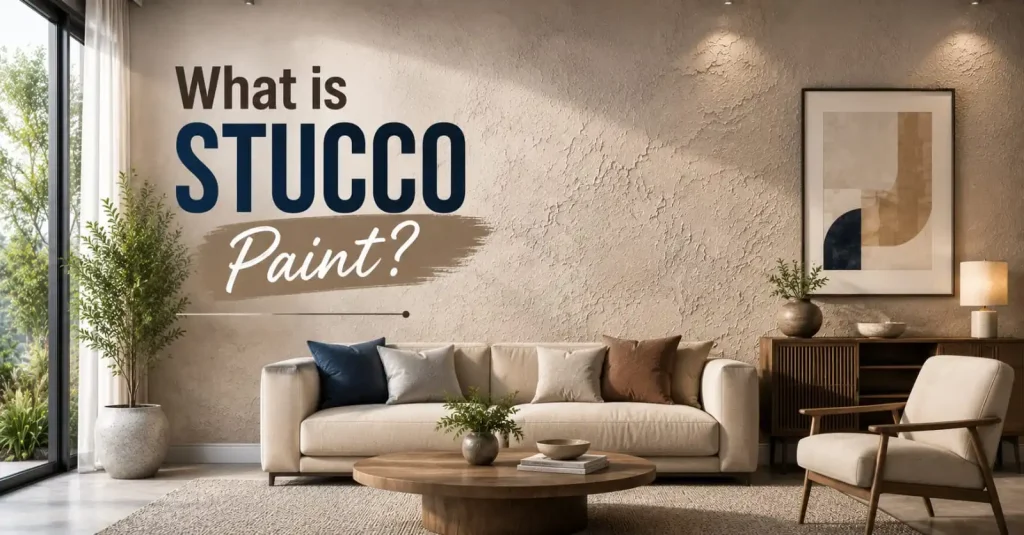
Stucco paint is a decorative wall coating that architects use to create texture on surfaces. It is ideal for homeowners who want depth and dimension to the walls. The acrylic or mineral binders combine with aggregates to form modern stucco coatings. The result? The architects use it to create attractive surface patterns. The best part? Architects use it for both interior and exterior walls. Read on this blog post to know the types and textures of stucco paint in detail.
What Are the Different Types of Stucco Paint?
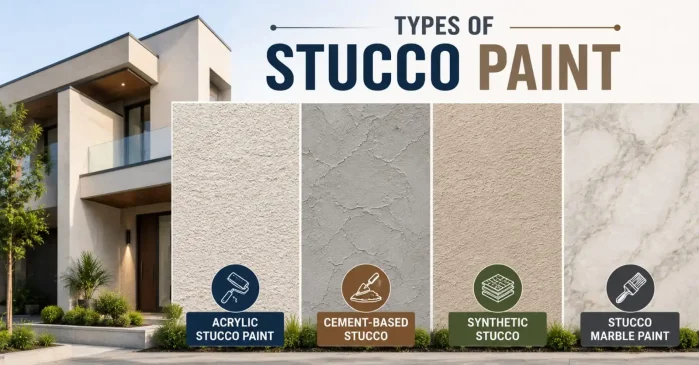
Given below are the different types of textures in stucco paint:
- Acrylic Stucco Paint
Modern homeowners usually prefer stucco paint because it is flexible and resists the weather efficiently. The most intriguing part is that it prevents hairline cracks. It is ideal for both interior feature walls and exterior facades.
- Cement-Based Stucco
This is a highly durable type of stucco paint that workers prepare using cement and sand. They are popular for exterior wall finishes due to their ability to manage different weather conditions.
- Synthetic Stucco
Synthetic stucco is made of polymer materials. It offers great flexibility and resists moisture efficiently. The experts often use it for contemporary buildings, as long-term performance is important.
- Stucco Marble Paint
This is one of the most luxurious decorative finishes for modern homeowners. It helps you recreate the appearance of marbles with soft variations. Hence, homeowners can achieve a marble look at an affordable cost.
What Are the Different Types of Textures in Stucco Paint?
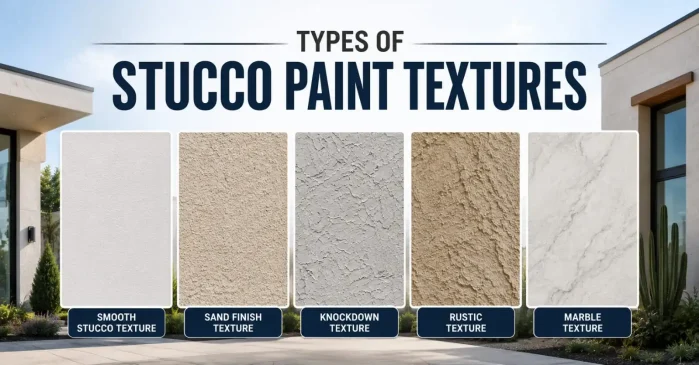
Given below are the different types of textures in stucco paint:
- Smooth Stucco Textures
It provides an elegant appearance with subtle textures. These textures are only visible under light. Architects mostly use this texture if the homeowner seeks minimal texture on their walls.
- Sand Finish Texture
This type of texture adds depth to the walls. It has tiny sand particles that provide a soft and grainy appearance. The experts advise using it for living rooms and corridors.
- Knockdown Texture
The workers apply the raised textures on the wall and make it flat using a trowel. The result? It provides a soft and natural-looking surface. This resembles handcrafted plaster.
- Rustic Texture
Rustic stucco paint texture creates bold patterns. They are based on Mediterranean and traditional architecture. This is why architects prefer using it for villas and farmhouse-style homes.
- Marble Texture
This forms when the workers use stucco marble paint. It imitates natural stone with layer movements and subtle veins. Hence, it makes feature walls look subtle and rich.
What Are the Different Types of Stucco Paint Finishes?
Given below are the different types of stucco paint finishes:
- Matte Finish
It absorbs light to provide a soft appearance to the walls. This is why it is ideal for comfortable spaces like bedrooms and study rooms.
- Satin Finish
It offers a gentle sheen that homeowners can clean easily. What’s more? It maintains the texture of stucco wall paint. Architects often prefer this type of finish for living rooms and dining spaces.
- Metallic Finish
This type of stucco paint finish combines wall textures with shimmering pigments. These pigments reflect light to create warmth in the space. It is advisable to use a metallic finish in large spaces like premium offices and luxury homes for better performance.
- Marble Finish
Stucco marble paint resembles Italian marble or Venetian plaster to create a smooth surface. Homeowners mostly prefer this type of stucco paint finish to upscale interiors of their homes.
What Are the Different Applications of Stucco Paint?

Given below are the different applications of stucco paint:
- Interior Feature Walls
Many homeowners choose one wall behind the sofa or bed to add accent textures. This brings the aesthetic look into the spaces.
- Exterior Walls
The architects also use stucco wall paint on outside walls, as it adds beauty. It helps buildings maintain an elegant appearance in different weather conditions.
- Commercial Spaces
Hotel chains and public dining spaces often use decorative stucco paint texture. Why? This is because they create memorable interiors to provide a memorable impression on visitors.
- Luxury Residential Projects
Designers recommend using stucco marble paint to create a premium experience in the spaces. The best part is that it provides a natural marble look at an affordable cost.
The Final Words
Modern walls define the personality of a space. Stucco paint offers flexibility to choose different textures and finishes for homeowners. Most importantly, stucco wall paint provides a decorative finish to a wall at an affordable rate. It is advisable to hire a professional painter to install stucco paint texture on the walls. This will ensure a smooth surface with a longer performance.
FAQs
1. What is stucco paint used for?
Stucco paint is used to create decorative textured finishes on interior and exterior walls. It enhances aesthetics, adds depth, improves durability, and helps conceal minor cracks, uneven plaster, and surface imperfections. It is widely used in homes, commercial buildings, hotels, offices, and feature walls.
2. Is stucco wall paint suitable for exterior walls?
Yes, stucco wall paint is ideal for exterior walls because it provides excellent weather resistance, UV protection, and long-lasting durability. High-quality exterior stucco coatings also resist moisture, fading, and temperature changes, making them suitable for residential and commercial buildings.
3. What is stucco marble paint?
Stucco marble paint is a premium decorative wall finish designed to replicate the elegant appearance of natural marble. It uses multiple layers and specialized application techniques to create a polished, stone-like surface, offering a luxurious look at a lower cost than real marble.
4. Is stucco paint expensive?
Stucco paint typically costs more than standard emulsion paint because it requires specialized materials and skilled application. However, it is much more affordable than natural stone or marble cladding while delivering a premium textured finish and long-lasting durability.
5. Can stucco paint texture hide wall defects?
Yes, stucco paint texture effectively conceals minor wall imperfections such as hairline cracks, uneven plaster, dents, and patch marks. Its textured finish creates depth and visual interest, making walls look smoother and more refined than with conventional flat paint.
6. Is stucco paint easy to maintain?
Yes, stucco paint is relatively easy to maintain. Interior surfaces usually require only occasional dusting or gentle wiping with a soft cloth, while exterior stucco finishes may need periodic washing to remove dirt, dust, and environmental deposits and maintain their appearance.
7. Can stucco paint be applied over existing paint?
Yes, stucco paint can often be applied over existing paint if the surface is clean, dry, firmly bonded, and properly primed. Loose, peeling, or damaged paint should be removed before application to ensure strong adhesion and a durable, long-lasting finish.