Wall painting design in 2026 is not about choosing a “nice colour.”
It’s about choosing a colour that still feels right:
- In harsh afternoon sunlight
- Under warm LED lighting at night
- After furniture moves
- After five monsoons
In Indian homes, paint quietly controls three powerful things:
- How large a room feels
- How warm or sterile it appears
- How quickly it looks outdated
A wrong colour feels wrong every day.
A good one disappears into comfort.
Let’s break this properly — trends, finishes, colour logic, lighting interaction, costs, real site mistakes, and what actually lasts in Indian conditions.
Quick Answer
Wall painting design refers to the thoughtful selection of colours, finishes, and visual treatments applied to interior walls to enhance comfort, proportion, and long-term durability.
In 2026, good wall painting design:
- Uses warm-balanced neutrals instead of cold greys
- Prioritizes matte or low-sheen finishes
- Limits heavy accent walls
- Uses washable, low-VOC paints
- Responds to Indian daylight intensity
Bad planning leads to glare, fading, patchiness, and repaint cycles every 2–3 years.
Why Wall Colour Matters More in 2026
Homes today are different from a decade ago.
They are:
- More glass-heavy
- LED-lit instead of tube-lit
- Compact but visually ambitious
- Texture-integrated (mouldings, panels, flutes)
Flat white walls that looked modern in 2016 now feel clinical.
In 2026, the shift is toward controlled warmth.
Paint must work with:
- Ceiling lighting layers
- Wood flooring tones
- Glass reflections
- Skirting and trims
- Fabric textures
Wall colour is no longer independent. It is part of a visual ecosystem.
2026 Wall Painting Colour Trends (India-Focused)
1. Warm Neutrals (Replacing Cool Grey)
Grey is not dead. Cold grey is.
Trending tones:
- Greige
- Mushroom beige
- Warm ivory
- Almond
- Putty
Why they work:
Indian sunlight is strong and warm. Cool greys turn bluish under LEDs. Warm neutrals absorb glare and soften shadows.
They age quietly.
2. Earth-Based Colours (Calming but Rich)
- Terracotta
- Clay brown
- Olive green
- Muted mustard
- Sandstone
These tones ground a room.
They pair beautifully with:
- Wooden flooring
- Brass lighting
- Textured wall moulding
- Matte black fixtures
Earth colours reduce visual fatigue — especially in LED-heavy homes.
3. Muted Pastels (The Grown-Up Versions)
Not candy colours.
Think:
- Dusty blue
- Sage green
- Soft mauve
- Blush beige
- Lavender-grey
These create calm bedrooms and balanced study spaces.
Used with matte finish, they feel mature — not playful.
4. Dark Accent Walls (Only With Discipline)
- Forest green
- Deep navy
- Charcoal
- Cocoa brown
Rules:
- Only one wall
- Strong lighting required
- Never in poorly ventilated small rooms
Dark walls add depth — but only when framed correctly.
Wall Painting Design for Hall (Living Room Logic)
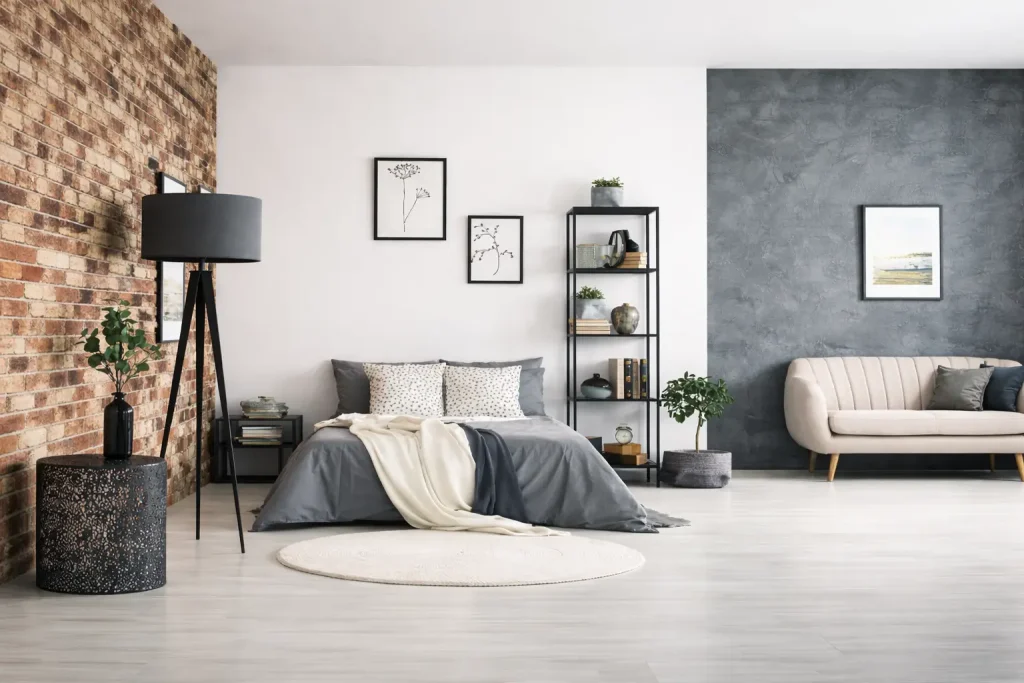
The hall is where most colour mistakes happen.
- Too white → sterile
- Too dark → heavy
- Too trendy → dated in 2 years
Safe 2026 formula:
- 60% warm neutral
- 30% secondary earthy tone
- 10% accent via décor, not paint
Two-tone walls are rising again — but cleaner.
Example:
- Lower half: clay beige
- Upper half: soft ivory
This creates architectural separation without installing moulding.
Wall Painting Design for Bedrooms
Bedrooms need softness.
Best combinations:
- Sage + cream
- Greige + muted terracotta
- Warm beige + dusty blue
- Mushroom + off-white
Avoid:
- High-gloss paint
- Cool white lighting
- Overly saturated colours
Bedrooms are emotional spaces. Colour should relax — not stimulate.
Texture Paint Trends (2026)
Flat walls are slowly fading. But heavy textures are gone.
Subtle finishes dominate:
- Sand texture (hides hairline cracks)
- Venetian plaster (soft reflective depth)
- Micro-concrete effect
- Fabric/suede texture
Use texture on one feature wall only. Texture on all walls makes space feel smaller.
Matte vs Satin vs Gloss (Finish Science)
Finish choice affects glare more than colour does.
Matte:
- Best for living rooms and bedrooms
- Hides imperfections
Satin:
- Good for hallways and kitchens
- More washable
Gloss:
- For trims, mouldings, doors — not full walls
Matte dominates 2026 because it absorbs LED harshness.
What Actually Goes Wrong on Indian Sites
- No primer → peeling during monsoon
- Damp wall painting → blistering
- Dark colour in low light → uneven patches
- Low-grade paint → fading in 12 months
- Over-texturing damp plaster → cracking
Most paint failures are not paint failures. They are preparation failures.
Moisture + poor priming = early repaint.
Wall Painting Cost Guide (India 2026)
Approximate ranges:
- Basic emulsion: ₹15 – ₹25 per sq ft
- Premium washable: ₹35 – ₹60 per sq ft
- Luxury textures: ₹80 – ₹250 per sq ft
- Hand-painted murals: ₹100 – ₹400 per sq ft
A 400 sq ft hall repaint may cost ₹25,000 – ₹60,000 depending on preparation and finish.
Premium washable paints last 5–7 years when properly primed.
Vastu-Based Colour Preferences (Optional Layer)
Many homeowners still consider Vastu colour.
Common preferences:
- Living room → Light yellow, cream
- Bedroom → Peach, earthy tones
- Kitchen → Soft orange accents
- Pooja room → White, pale yellow
Deep black or full dark grey rooms are still avoided in traditional homes.
Colour + Lighting Interaction (Critical But Ignored)
Test paint under:
- Morning light
- Evening warm LED
- Night full lighting
The same colour shifts dramatically.
- Greys turn blue
- Beiges turn yellow
- Whites turn harsh
Always test sample patches on-site. Showroom lighting lies.
If This Were My Own Home
- Use warm greige across common areas
- Add one muted earthy accent wall
- Choose premium washable matte paint
- Double-prime every wall
- Avoid heavy textures in compact rooms
Paint should age quietly.
If guests notice your wall colour before your space — it’s too loud.
FAQs
Which wall painting colour is best for small rooms?
Light warm neutrals such as greige, almond, or soft ivory reflect light evenly and make small rooms appear larger without glare.
What is the latest wall painting trend in 2026?
Warm neutrals, subtle textures, and balanced two-tone walls are leading trends in 2026 interiors.
Is matte paint better than satin?
For living spaces, matte is preferred because it reduces glare and hides minor surface flaws. Satin works better in high-traffic zones.
How often should walls be repainted in India?
Premium interior paint lasts 5–7 years. High-humidity areas may require repainting sooner.
Are texture paints durable?
Yes, when applied over properly primed and dry walls. Poor substrate preparation leads to cracking.
Can dark accent walls make rooms look smaller?
If overused, yes. One well-lit dark accent wall can add depth instead of shrinking space.
Is primer necessary before repainting?
Always. Primer ensures adhesion, colour consistency, and long-term durability.
Which paint finish is easiest to clean?
Washable matte and satin finishes offer the best balance of cleanability and aesthetics.
Final Thought
Paint is not decoration.
It is atmosphere control.
It affects how your home feels:
- In sunlight
- At night
- In silence
- In conversation
Choose colours that calm — not impress.
Prime properly.
Test under real light.
Design with restraint.
That’s how wall colour survives beyond trend cycles — and still feels right five years later.
That’s how wall colour lasts.