Wall design in 2026 is no longer about decoration.
It is about how a wall behaves — under light, under humidity, under cleaning, and under time.
In Indian homes especially, walls are exposed to:
- Strong daylight
- Warm LED lighting
- Monsoon moisture
- Furniture abrasion
- Fingerprints and daily use
A beautiful wall that fails in two years is bad design.
A simple wall that ages well is good design.
This guide breaks wall design down properly — materials, proportions, durability logic, room-wise strategies, site mistakes, and what truly works in Indian conditions.
Quick Answer
Wall textured design is the structured treatment of wall surfaces using paint, panels, moulding, cladding, or textures to control visual depth, durability, and maintenance over time.
In 2026, the best wall design:
- Balances paint and panels intelligently
- Limits feature walls to 1–2 per home
- Uses washable, matte finishes
- Accounts for lighting behaviour
- Prioritises surface preparation
Bad wall design fails during the first monsoon.
Good wall design quietly survives five years.
What Wall Design Actually Means on Site
On Pinterest, walls look aesthetic.
On site, walls are technical systems.
Every wall finish must handle:
- Surface flatness
- Substrate moisture
- Expansion & contraction
- Load from mounted objects
- Cleaning cycles
Most wall failures happen because:
- Panels are fixed over damp plaster
- Heavy cladding is installed without anchoring
- Gloss paint highlights uneven surfaces
- Materials with different expansion rates are combined carelessly
Preparation decides lifespan — not finish cost.
Types of Wall Design Used in Modern Homes
| Type | Best For | Risk | When To Use |
|---|---|---|---|
| Painted Walls | Full-home coverage | Staining | Bedrooms, secondary walls |
| Texture Paint | Feature walls | Over-application | Halls, accent areas |
| PVC / WPC Panels | Moisture-prone areas | Denting (low-grade) | TV walls, kitchens |
| Wall Moulding | Formal spaces | Joint cracks | Living rooms |
| Stone / Tile Cladding | Statement walls | Weight | Large halls |
| Wallpaper | Low-impact rooms | Peeling | Dry bedrooms |
Rule: Choose based on exposure first, aesthetics second.
2026 Wall Design Styles That Age Well
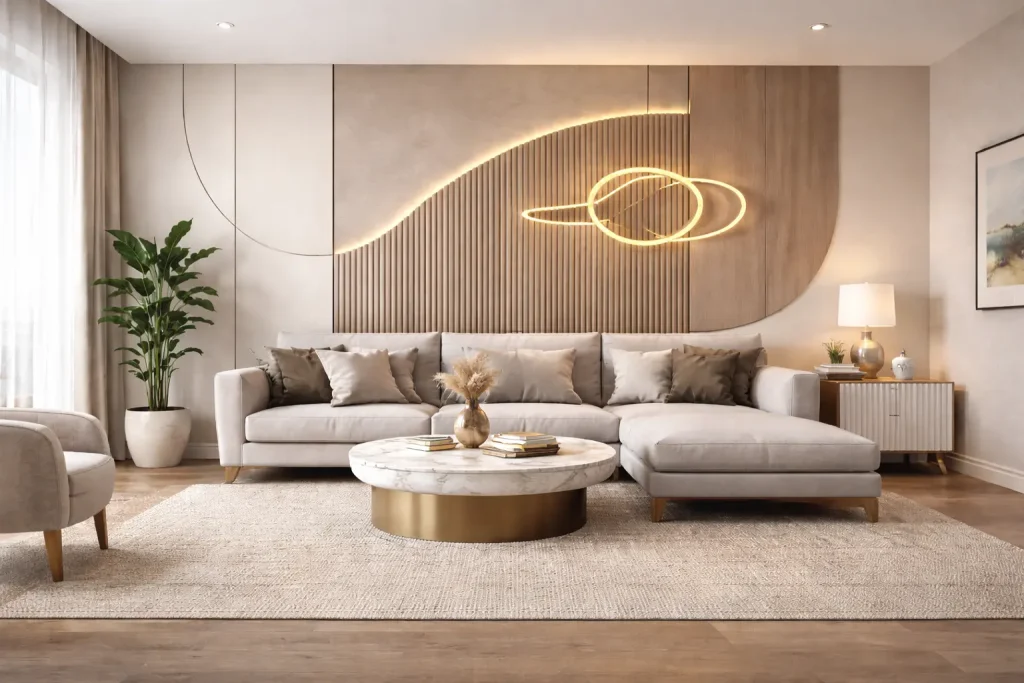
1. Soft Minimalism
- Warm neutral paint
- One fluted or panel feature wall
- Hidden cove lighting
Clean, durable, and timeless.
2. Hybrid Wall Design (Most Practical Trend)
Combination of:
- Textured paint (upper section)
- Panel or wainscoting (lower section)
This reduces scuff damage while adding depth.
Delivers 80% luxury at controlled cost.
3. Contemporary Linear
- Vertical fluted panels
- Slim brass or metal inlays
- Matte paint backgrounds
Works best with layered ceiling lighting.
4. Neo-Classical (Controlled Use)
- Picture frame moulding
- Symmetry
- Soft beige/cream palette
Requires disciplined spacing.
Best Wall Design for Hall (Living Room Logic)
The hall is the most over-designed room in Indian homes.
Better strategy:
- One feature wall opposite seating
- Neutral matte paint on remaining walls
- Avoid glossy finishes
- Use lighting to enhance depth
Two-material formula that works:
Fluted PVC + Warm Greige Paint
or
Texture Paint + Slim Moulding
Avoid:
- Full stone cladding in small halls
- Overlapping textures
- Too many patterns
Hall walls must feel open, not busy.
Wall Design by Room
Living Room
One statement wall. Soft neutral base. Durable finish.
Bedroom
Matte finishes. Muted tones. Optional upholstered or panel headboard wall.
Kitchen
Tile backsplash or washable PVC panel. Never plain matte paint behind the stove.
Bathroom
Full tile or moisture-resistant panel. No MDF, no wallpaper.
Wall Design & Lighting Interaction
Light changes walls dramatically.
- Dark colours absorb light
- Gloss amplifies glare
- Matte softens LED harshness
- Textures cast shadow depth
Always test wall samples under:
- Morning daylight
- Evening warm lighting
- Full artificial lighting
Showroom lighting lies.
What Actually Goes Wrong on Indian Sites
Real failures seen repeatedly:
- MDF panels on damp walls → swelling
- Stone cladding without anchors → cracks
- Gloss paint on uneven plaster → patchy look
- No expansion gap in PVC → buckling
- Over-texturing settling slabs → cracking
These don’t show at handover.
They show after 6–12 months.
Humidity and preparation decide success.
Wall Design Cost Guide (India 2026)
Paint: ₹15–₹60 per sq ft
Texture paint: ₹80–₹250 per sq ft
PVC/WPC panels: ₹90–₹350 per sq ft
Stone cladding: ₹150–₹400+ per sq ft
Full hall hybrid design (15×12 ft):
₹40,000 – ₹1.2 lakh depending on material.
Spend on the focal wall.
Save on secondary walls.
If This Were My Own House
I would:
- Keep most walls matte neutral
- Add 1 hybrid feature wall
- Avoid heavy cladding indoors
- Use washable finishes
- Double-prime every wall
Walls should age quietly.
If guests notice your wall before your space — it’s too loud.
FAQ
What is the best wall design for hall in small apartments?
A single fluted or textured feature wall with light matte paint on the remaining walls keeps the hall open and visually balanced.
Which types of wall design last longest?
PVC or WPC panel systems and properly primed washable paints last longest in Indian conditions.
Can I mix different wall design styles in one room?
Yes, but limit to two finishes maximum. More creates visual clutter.
Does dark wall design make rooms smaller?
Yes, unless balanced with strong lighting and lighter surrounding walls.
Are textured walls hard to maintain?
Subtle textures are manageable. Deep textures collect dust and are harder to clean.
Is wallpaper suitable in India?
Only in dry, air-conditioned rooms.
How often should walls be repainted?
Every 5–7 years for premium interior paints.
Can wall design increase resale value?
Yes, if done subtly. Over-designed walls reduce buyer appeal.
Are glossy wall finishes recommended?
Only for trims and accents, not entire walls.
What wall design hides uneven plaster?
Textured paint or full paneling masks minor undulations effectively.
Is stone cladding safe indoors?
Yes, if properly anchored and used on a single feature wall.
What wall design ages best?
Neutral matte walls with one restrained feature treatment.
Final Thought
Wall design is not decoration.
It is surface engineering with aesthetic intention.
Choose materials that tolerate:
- Humidity
- Cleaning
- Lighting shifts
- Time
Trends change.
Durability remains.
Design for five years ahead — not for social media today.