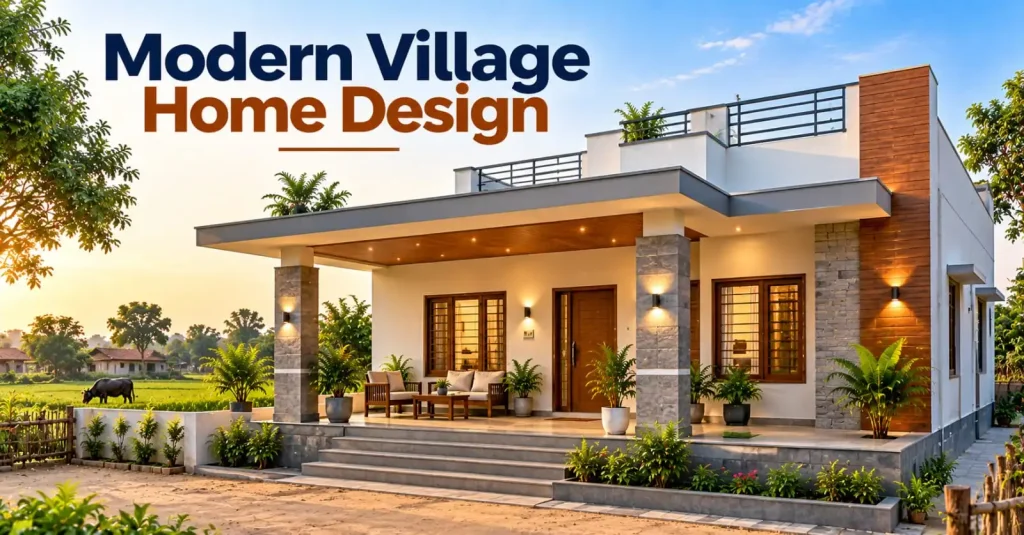
A house is built in stages in many Indian villages. First, the family builds a bedroom or two, a kitchen, and a roof over their heads. The owner adds another room when savings follow. That approach still makes sense today.
What has changed is the kind of house people want. Homeowners now seek good-looking and comfortable homes. The challenge is to balance these modern village home design ideas with a realistic budget.
Read on this blog post to find modern and low-budget village home design ideas.
List of Modern Village Design Ideas for Indian Homes
The following are the low-budget village design ideas for Indian homes:
- Simple Village House Plan
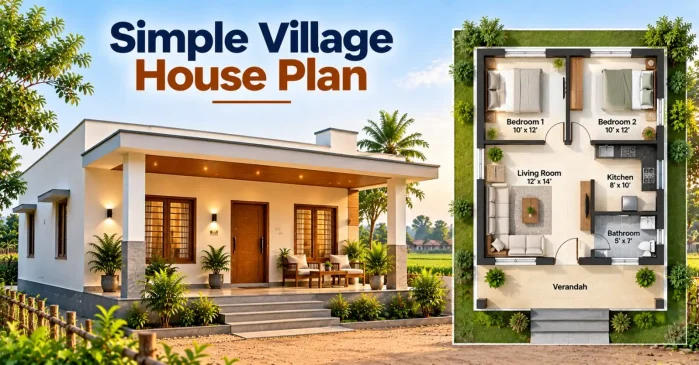
Before choosing colors or looking at elevation designs, settle the floor plan.
For a small family, a compact layout with two bedrooms, a living room, a kitchen, and a bathroom may be sufficient. However, a 3BHK would be more suitable for a larger family. The following are the tips to design a simple modern village home:
- Keep the kitchen close to the dining area
- Place bathrooms where plumbing lines can be routed efficiently
- Provide windows on suitable external walls for daylight and cross-ventilation
- Reserve a small area for washing clothes, storing tools, or keeping household supplies.
- If you plan to add a floor later, discuss the structural requirements with a qualified engineer before construction begins.
That last point matters. It is necessary to design the strong structural members from the beginning if you plan to add another storey in the future.
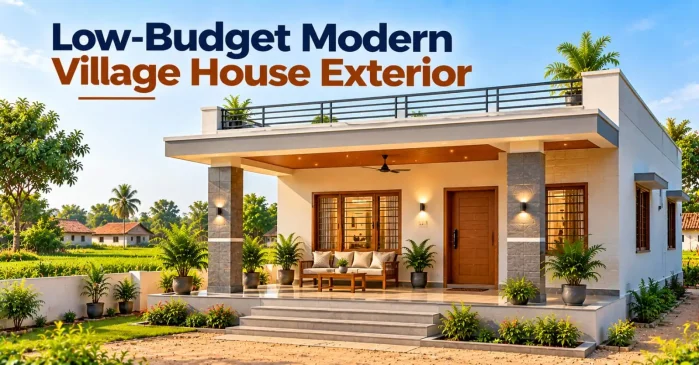
- Give the Front Elevation a Modern Look
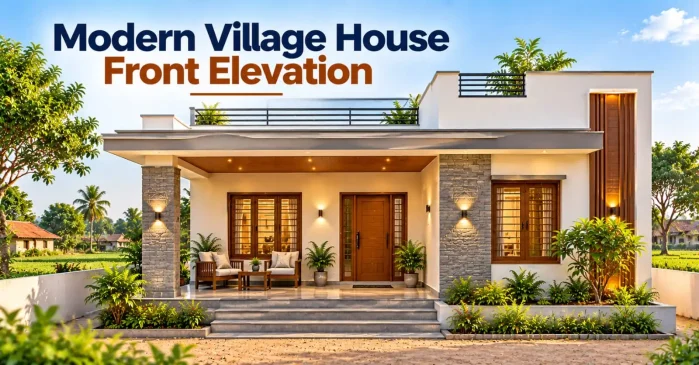
The front elevation is what most people notice first. Fortunately, a clean design can look better than an expensive one covered in decorative features. Consider a rectangular building with a simple parapet, a modest entrance porch, and two complementary exterior colors. A small band of textured finish around the entrance can add character without covering the entire facade in costly materials.
A useful budget tip: Spend on good workmanship first. Uneven plaster, poorly aligned windows, and untidy paint edges can spoil an otherwise attractive elevation.
- Build a Verandah or Small Courtyard
A verandah is one of the most useful features in a traditional Indian village house. It provides a shaded place to sit, talk to neighbors, clean vegetables, or take a break from indoor work. Even a modest covered space at the entrance can improve how the house is used throughout the day.
Where the plot allows, a small courtyard is another option. It can bring daylight into the home, provide an outdoor sitting area, and create a little breathing space between rooms. The design should suit the climate.
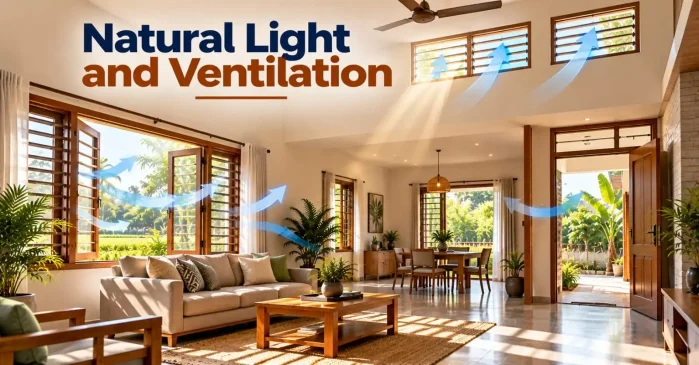
- Use Natural Light and Ventilation
A house can have fresh paint and attractive furniture yet still feel uncomfortable if the rooms remain dark and stuffy. Window placement deserves attention before the walls are built. Where the plot layout permits, openings on different sides of a room can help air move through the house. Their size and position should also account for privacy, security, dust, and the direction of the prevailing winds.
Avoid making every window small just to save a little money. At the same time, oversized windows are not automatically better if they cause glare, heat gain, or privacy problems.
- Keep Interior Simple
A modern village house can have attractive interiors without a large furnishing budget. Start with light wall colors in smaller rooms. Instead of installing expensive wall panels throughout the house, choose one focal wall in the living room. A contrasting paint color or a simple textured finish can be enough.
- Consider Weather Conditions
Indian village homes face very different weather conditions, from heavy monsoon rainfall to long, dry summers. The design should reflect the local climate rather than copy a house seen elsewhere. Check that the ground around the house slopes away from the walls and that rainwater has a clear route to drain. Water collecting beside the plinth can lead to persistent dampness.
Also plan for maintenance. Keep access to plumbing lines, avoid unnecessarily complicated roof details, and choose finishes that can be cleaned or repaired without dismantling large sections
The Final Words
A good village home does not have to be grand to feel complete. It needs rooms that work for the family, spaces that stay comfortable through the seasons, and construction that holds up to everyday use.
Get the planning right, build carefully, and add the finishing touches at your own pace. That is often the more sensible way to create a home that looks good today and remains dependable for years to come.
FAQs
1. What is the best village home design for a low budget?
The best low-budget village home design is usually a compact single-floor house with a simple layout, essential rooms, and good ventilation. Plan according to your plot size, family needs, local climate, and construction budget.
2. How can I make my village house look modern?
Make your village house look modern with a clean front elevation, coordinated exterior colors, large, well-placed windows, and a simple entrance verandah. Focus on neat finishing and practical design instead of expensive decorative features.
3. Is a single-floor or double-floor village house better?
A single-floor village house is often more affordable to build in stages and convenient for elderly family members. A double-floor house can save plot space but needs a suitable structural design and a higher initial budget.
4. Which roofing option is suitable for a village house?
The best roofing option for a village house depends on local weather, budget, materials, and design. RCC roofs and pitched roofs are common choices, but proper drainage, heat protection, and maintenance requirements should guide the decision.
5. How can I reduce construction costs without affecting quality?
Reduce village house construction costs by choosing a simple floor plan, finalizing drawings early, sourcing suitable local materials, and avoiding design changes. Never compromise on structural safety, skilled workmanship, proper curing, or essential waterproofing.
6. Which colors work well for a village house exterior?
Off-white, cream, light grey, and earthy shades are versatile choices. You can add a darker accent around the entrance or windows without painting the entire house in multiple colors.