Every Indian home has that one corner that feels softer than the rest.
Where the noise drops, where you pause before stepping out, or sit quietly after a long day. It’s the mandir. In Indian homes, it isn’t just a design element, but an emotion.
And over time, the home mandir has undergone evolution. While some still love the hand-carved wooden temples passed down from grandparents, others prefer something sleek and compact.
So, when it comes to choosing a mandir design for your home, should you opt for a traditional look or add a modern touch?
This blog will explain the two designs, so you can pick the one that suits your style.
The Mandir- Beyond Style
Before we get into looks, remember: a mandir isn’t décor. It’s an emotion.
Whether you live in a city flat or a farmhouse, your pooja room should feel like a space that helps you breathe a little slower.
In older homes, mandirs used to be whole rooms — carved doors, brass bells, sandalwood drawers. But in today’s apartments, space is tighter. That’s why many people are trying small pooja room designs in apartments — simple wall-mounted shelves or corner units that still hold all the warmth, without taking u
p much space.
Traditional Mandir – Wood & Art
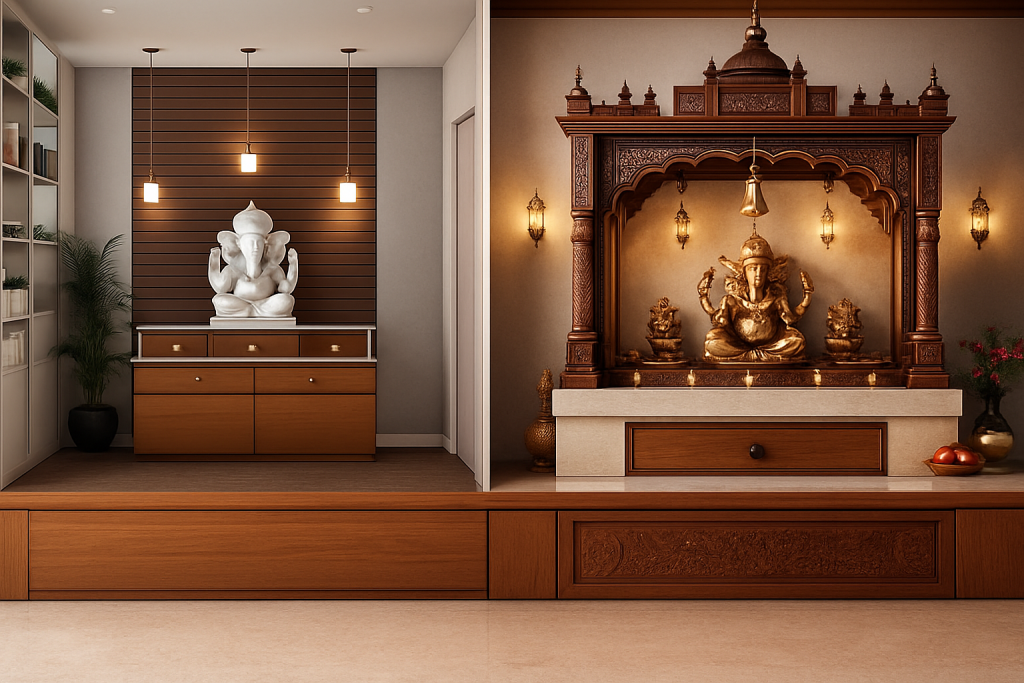
There’s something beautiful about the old-school way. Those Indian style pooja room designs – the dark teak wood, lotus carvings, domed tops, and golden bells – they may sound old school, but they reflect tradition. When you choose a pooja ghar design like this, you’re not chasing trends. You’re carrying forward a part of home culture that’s been there for generations.
- Traditional mandirs follow familiar patterns. Usually made of wood, facing east, with a little step or raised platform for the idols.
- Between small homes and modern interiors, these pieces can sometimes feel bulky or out of place. That’s when a cleaner, simpler version makes sense.
Modern Mandir – Minimal & Compact
If your home leans minimal, then a modern mandir design for the home fits right in. This works especially well for small pooja room designs in apartments, where space is tight but the intent is strong.
- Think soft backlights, marble shelves, maybe a brass inlay or a jaali pattern that nods to tradition without shouting it.
- A lot of newer homes now use compact puja unit designs that sit neatly in living rooms or corridors. They don’t look out of place, yet feel sacred enough to hold daily rituals.
- You’ll often see stone or glass backdrops, hidden drawers for pooja essentials, and LED lighting that gives a calm glow instead of harsh brightness.
A Blend of Modern & Traditional
The truth? You don’t really have to pick a side. Some of the best pooja room designs are a mix. That’s how you make something timeless. Here’s how to achieve it:
- A wooden frame with clean marble shelves, or brass bells against a white textured wall.
- An old carved door with white marble, soft lighting, and sleek drawers.
Choosing the Right Materials
Your materials decide both the look and the energy. Whatever you pick, think long term. It should handle daily cleaning, oil lamps, and the odd bit of turmeric or kumkum without losing its finish.
- Wood (especially teak or sheesham) feels warm and rooted.
- Marble and granite bring a clean, calm touch. Metal or glass can add shine and reflect light beautifully.
- If you’re going for modern village house design style simplicity, you could even try matte laminates or frosted glass.
- If you love crafts, a carved wooden pooja unit design will always have unmatched charm.
For Smaller Homes
Modern city life means making the most of every inch. But even a tiny space can hold a big heart. These small pooja room designs in apartments keep faith alive, quietly and beautifully.
- Corner shelves, wall niches, or a foldable puja ghar design can fit into apartments without looking cluttered.
- A warm light, a single diya, a few idols – that’s all it takes.
- In compact homes, use your spare balcony corner or the dead space near the entry as a mandir. You can separate it visually with a wooden screen or even just a change in wall texture.
The Personal Space
You’ll know your mandir is right for you when it makes you want to pause. It’s about comfort. So, when picking a mandir design for home, walk through your house and ask: Where does light fall softly? What is your home’s energy? That’s what your mandir reflects.
- A wooden pooja ghar design speaks of family and roots.
- A marble or glass pooja unit design speaks of today’s rhythm and simplicity.
Ultimately, it doesn’t matter if your space is modern or traditional. Both have their own charm. Pick what feels peaceful, not perfect. Even the most stylish pooja room designs lose meaning if they don’t feel personal. Because a mandir isn’t a showpiece – it’s a habit, a moment, a reminder to stop and breathe before the world rushes back in.
FAQs
1. What materials work best for a long-lasting mandir?
Solid wood and marble are classics – easy to maintain and timeless in look.
2. How do I create a mandir in a small apartment?
Wall-mounted shelves, compact small pooja room designs in apartments, or foldable corner units do the job beautifully.
3. Are Vastu rules still important for modern pooja rooms?
If possible, yes. East or north-facing mandirs bring light and good energy.
4. How can I blend modern and traditional styles?
By pairing a traditional element with a contemporary one. For Example, a carved wooden frame and a minimalist marble base look great and blend the two seamlessly.
5. How can lighting make a difference?
A warm ambience creates a sense of peace. Use warm LED backlights or pendant lamps to create a calm, meditative vibe.
6. What colours suit a pooja room best?
Whites, golds, and soft pastels work beautifully. Avoid dark, heavy tones for small spaces.
7. Do glass and metal look too cold for a mandir?
Not if balanced with warm light, wooden accents, or soft brass décor. The key is warmth, not shine.