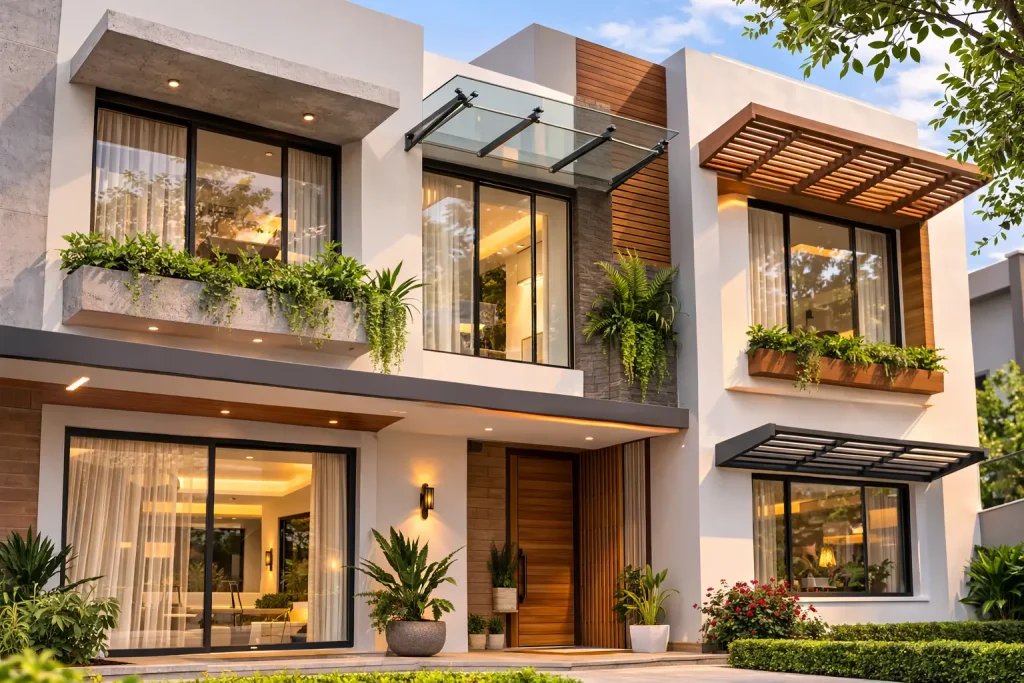
When architects and civil engineers design a house, they rarely think about windows alone. One small but extremely important element always comes into the discussion—the sunshade, commonly called a chajja in Indian construction.
Walk around any residential site and you’ll hear contractors explaining why a window needs a proper shade. Without it, rainwater can seep inside, direct sunlight can heat up rooms, and exterior walls may deteriorate faster. That’s where modern sunshade designs come into play.
A sunshade or window chajja is a protective projection installed above windows, doors, or balconies. Its main job is to block harsh sunlight and rainwater, but modern architecture has turned it into a design feature as well.
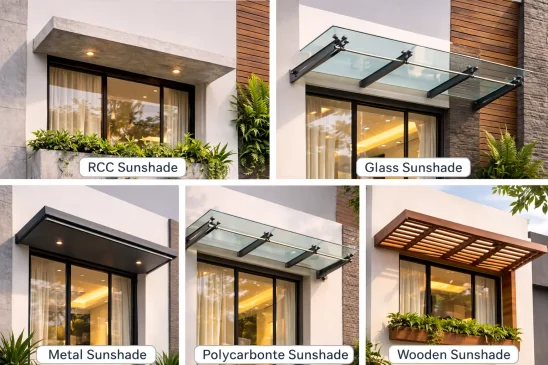
Today, sunshades are not just simple concrete projections. Architects are experimenting with glass, metal, polycarbonate sheets, and stylish RCC designs to make buildings look more contemporary.
Let’s explore 10 modern sunshade designs that work well for homes, apartments, and modern buildings.
1. RCC Sunshade (Traditional Concrete Chajja)
The RCC sunshade is one of the most common designs used in residential construction. It is made using reinforced cement concrete, usually cast along with the wall or slab.
Why builders prefer RCC chajja
- Extremely durable
- Strong against wind and rain
- Low maintenance
- Cost-effective during construction
Contractors usually slope the RCC sunshade slightly so rainwater drains away from the wall.
This type of window shade works well for traditional homes and apartment buildings.
2. Glass Sunshade Design
Glass sunshades are a popular choice in modern architecture. They use tempered or laminated glass panels supported by metal brackets.
Advantages
- Sleek and modern appearance
- Allows natural light while blocking rain
- Perfect for contemporary homes
Architects often use glass sunshades for:
- Main entrances
- Balcony doors
- Large windows
It gives buildings a clean, premium look.
3. Metal Sunshade (Steel or Aluminium)
Metal sunshades made from steel or aluminium sheets are becoming common in modern homes.
Benefits
- Lightweight but strong
- Rust-resistant when coated
- Easy to install
These window shade designs are often used in modern villas and commercial buildings.
They also allow designers to experiment with perforated patterns or decorative metal panels.
4. Polycarbonate Sheet Sunshade
Polycarbonate sheets are widely used for modern sunshade installations, especially in urban homes.
Why homeowners choose polycarbonate
- Lightweight and flexible
- High impact resistance
- Transparent or tinted options available
- UV-resistant
They are ideal for balconies, terraces, and window canopies.
5. Wooden Sunshade Design
Wooden sunshades create a warm and elegant architectural look.
They’re often used in luxury villas or eco-friendly homes.
Why designers love wood
- Natural aesthetic
- Creates a premium facade
- Works well with modern minimalist architecture
However, wood needs weatherproof treatment to protect it from moisture and sunlight.
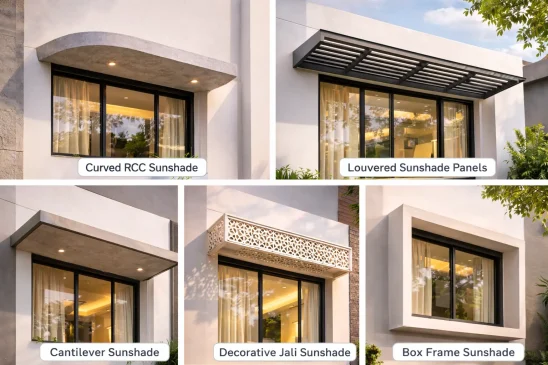
6. Curved RCC Sunshade
Instead of flat projections, some houses use curved RCC sunshade designs.
These provide:
- Better rainwater drainage
- A softer architectural appearance
- A unique facade element
You’ll often see them in modern residential architecture and contemporary homes.
7. Louvered Sunshade Panels
Louvered sunshades consist of angled horizontal panels that block direct sunlight while allowing airflow.
Benefits
- Reduces indoor heat gain
- Improves ventilation
- Stylish architectural feature
They are widely used in commercial buildings and modern homes.
8. Cantilevered Sunshade Design
A cantilever sunshade extends outward without visible supports underneath.
Why architects like it
- Creates a floating design effect
- Looks sleek and modern
- Works well with minimalist architecture
These are commonly built using RCC or steel framing.
9. Decorative Jali Sunshade
Jali sunshades combine traditional Indian architecture with modern design.
These perforated panels allow filtered sunlight and airflow.
Ideal for
- Hot climates
- Traditional-modern homes
- Courtyard houses
They also create beautiful light and shadow patterns inside rooms.
10. Box Frame Sunshade
The box frame sunshade surrounds the window with a rectangular projection.
This design is popular in modern minimalist architecture.
Advantages
- Creates depth in the facade
- Provides full window protection
- Enhances exterior aesthetics
It’s often used in luxury villas and modern apartment buildings.
Tips for Choosing the Right Sunshade Design
Before selecting a sunshade or chajja design, architects and contractors usually consider:
- Climate conditions
- Building orientation
- Window size
- Exterior design style
- Budget
For example:
- Hot climates → louvered or extended sunshades
- Modern homes → glass or metal designs
- Budget homes → RCC sunshade
The right sunshade can improve comfort, reduce heat gain, and enhance the building facade.
FAQs About Sunshade and Chajja Designs
What is a sunshade in construction?
A sunshade is a projection installed above windows or doors to protect them from sunlight, rain, and weather exposure.
What is a chajja in building construction?
A chajja is the traditional Indian term for a projecting sunshade, usually made of RCC or concrete above windows.
Which sunshade design is best for homes?
RCC sunshades are the most durable and economical, while glass or metal sunshades are preferred for modern architectural designs.
What materials are used for sunshades?
Common materials include concrete (RCC), glass, aluminium, steel, polycarbonate sheets, and wood.
What is the standard projection of a window sunshade?
Most window sunshades project 450 mm to 600 mm from the wall, depending on window size and rainfall conditions.
Why are sunshades important in buildings?
Sunshades help reduce heat, block rainwater, protect windows, and improve the exterior design of buildings.