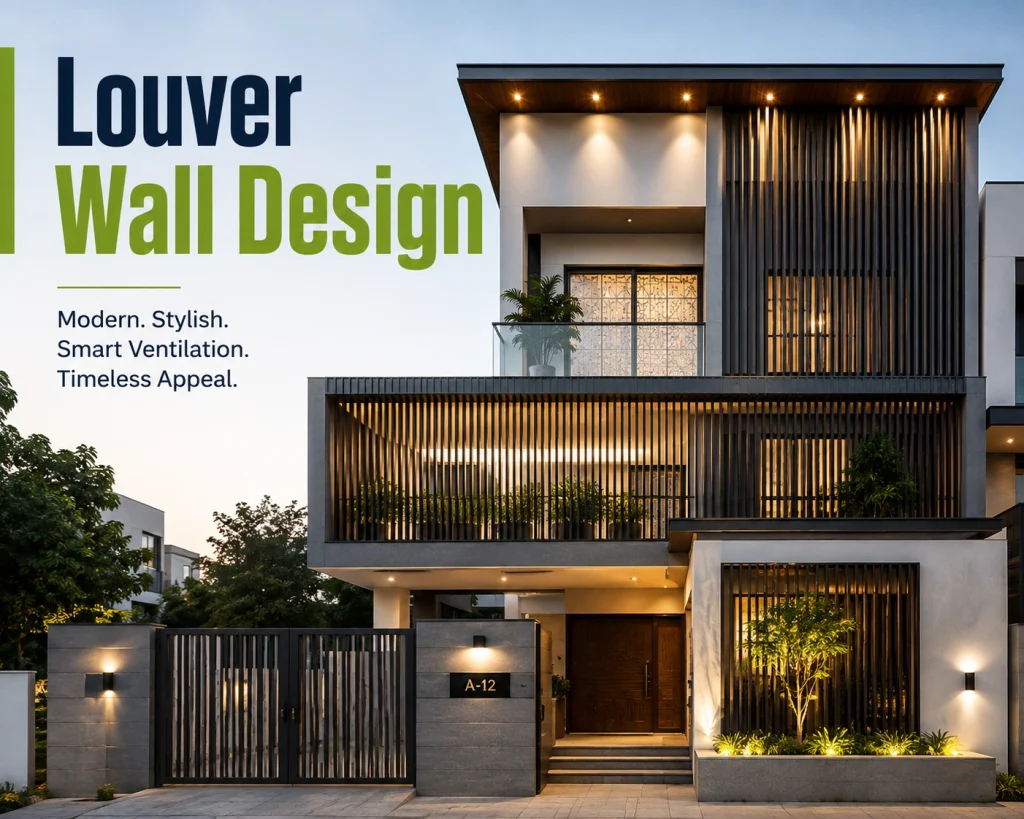
Most people confuse a louver wall with a design element. It indeed makes the building look modern. However, the right louver design also helps you reduce heat and ensure proper ventilation. Architects use louvers for walls both indoors and outdoors. Why? This is because it brings fresh air but blocks unwanted heat and direct views. If you are building a new home or renovating your existing home, read on this blog post to explore the latest louver wall design ideas.
Quick Answer
A louver wall design is an angled wall or screen made of slats. These slats can either be horizontal or vertical. Modern homes prefer louver walls because they allow air and natural light to pass through.
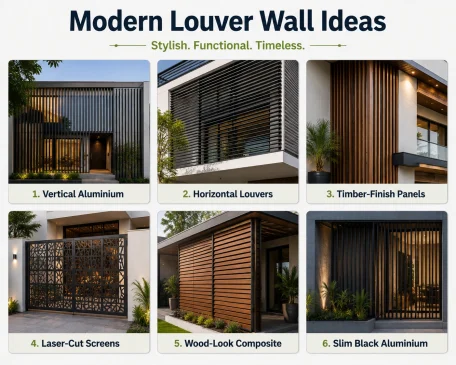
The most intriguing part is that they also help you improve the overall appearance of the building. Some of the trending louver wall design ideas for homes are:
- Vertical aluminum louver
- Horizontal exterior wall louver
- Timber-finish decorative panels
- Laser-cut metal louver screens
- Wooden louver
- Slim black aluminium profiles
- Privacy screen louver wall panels
Why Are Louver Wall Designs Popular in Modern Homes?
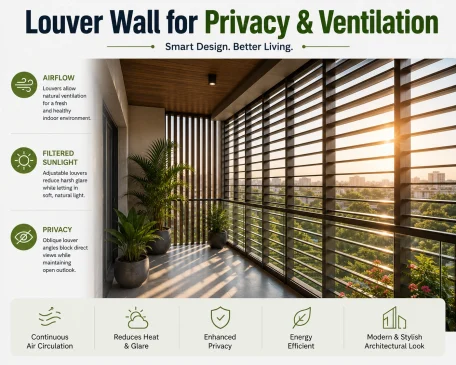
Modern homeowners not only focus on aesthetics. But they want their space to look attractive and provide comfort. This is why architects use louver wall designs. The angled slats partially open the structure to air and filtered daylight. Thus, it makes your space feel more comfortable. Given below are some more benefits of louvers for walls in modern homes:
- Better air circulation in the house
- Reduce indoor heat gain
- Improve privacy
- Enhance exterior appearance
- Lower dependence on air conditioners
Fact check: The report highlights that exterior shading reduces solar heat gain through windows. Thus, it improves indoor air quality and energy efficiency.
What Are the Popular Louver Wall Designs for Modern Homes?
Given below are the modern louver wall design ideas for homes:
- Vertical Aluminium Louvers
The long and upright slats fixed to the exterior of a building are vertical aluminum louvers. They provide a clean and contemporary look to a building. The best part? They reduce direct sunlight on the facade. This is because aluminum is lightweight and resistant to rust. Architects advise using them for the following applications:
- Front elevations
- Double-height walls
- Entrance areas
Tip: It is an ideal louver wall design idea if you want to spend less effort on maintenance.
- Horizontal Exterior Wall Louvers
The engineers install horizontal louver slats running parallel to the ground. The primary purpose of this design is to improve natural ventilation. Most importantly, they protect interiors from excessive sunlight and rain. Horizontal exterior wall louvers are popular in areas with warm climates. Architects use them in the following spaces:
- Balconies
- Utility spaces
- Staircase walls
- Ventilation screens
Tip: Some architects may also use them for west-facing walls to improve indoor comfort.
- Timber-Finish Decorative Panels
It is an ideal louver wall design idea for someone who wants a wooden appearance. However, they don’t want to use wood because it is hard to maintain. Timber-finish decorative panels offer the same wooden appearance. They use aluminum and composite boards to create a realistic wood texture. It becomes appealing contemporary architecture if you blend it with stone and neutral-colored walls.
- Laser-Cut Metal Louver Screens
Laser-cut metal louver screens filter sunlight to create attractive shadow patterns during the day. These panels feature geometric or abstract patterns that are made using laser-cutting technology. Modern homes install LED lighting behind these screens to create a beautiful facade at night.
- Wood-Look Composite Louvers
These types of louver wall design ideas resemble natural timber. So, how is it different from it? Wood-look composite louvers are more resistant to moisture and termites. They offer a natural appearance but require high maintenance. Hence, they are more suitable for homeowners who want long-term durability.
- Slim Black Aluminium Profiles
It is one of the trending louver wall design ideas in contemporary architecture. It features narrow sections with clean and straight lines. Hence, these lines create an aesthetic and premium appearance. This type of design is most commonly used in luxury homes and modern apartment facades.
- Privacy Screens
Modern homeowners prefer privacy screens to protect their outdoor spaces from neighboring buildings. They are popular because they provide proper ventilation with privacy. This wall design idea for louvers is highly useful in urban areas where homes are built close together. The most intriguing feature of privacy screens is that you can choose the material as per your preference.
What Are the Tips to Choose the Right Louver Wall Design?
Given below are the tips to keep in mind when choosing the right louver wall design idea for your home:
- Consider Your Local Climate
It is important to consider your location. A louver design that blocks harsh afternoon sunlight is more suitable for hot regions. However, powder-coated aluminum is a better choice for coastal areas.
- Match the Style of Your Home
It is advisable to choose a louver wall that complements the architectural style of your home. The experts often recommend slim black aluminium profiles for contemporary homes. However, timber-finish or wood-look composite louvers are ideal for traditional architectural style homes.
- Choose the Right Material
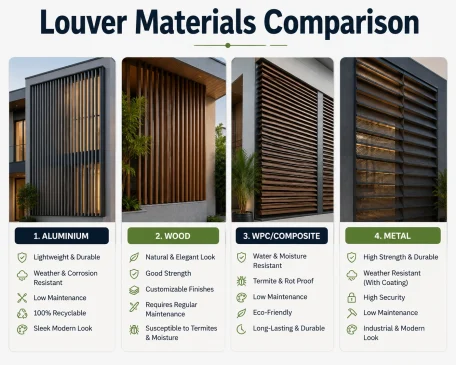
Louver wall designs are available in different materials. Hence, it is necessary to select the right material that aligns with your budget and maintenance needs.
- Privacy and Ventilation
The greatest benefit of a louver wall design is to balance openness with privacy. It is ideal to choose louvers with narrow space or adjustable slats if your home is close to neighboring buildings. It is highly useful for proper air circulation.
The Final Words
The best louver wall design idea makes your space feel more comfortable. It improves ventilation without exposing your home. There are different louver designs for walls among which you can choose the one as per your needs. Most importantly, it is necessary to keep the local climate and maintenance needs in mind before a final decision.
FAQs
1. What is a louver wall design?
A louver wall design is a wall or screen made of angled horizontal or vertical slats. It improves natural ventilation, filters sunlight, enhances privacy, and adds a modern architectural look to homes, offices, balconies, and building facades.
2. Which material is best for outdoor louvers?
Aluminum is the best material for outdoor louvers design because it’s lightweight, rust-resistant, and low maintenance. Reinforced concrete offers superior strength, while WPC (Wood Plastic Composite) provides a wood-like appearance with better weather resistance.
3. Are louver walls suitable for small homes?
Yes. A well-planned louver wall design makes small homes feel brighter, more spacious, and better ventilated. It also improves privacy without blocking natural light, making it ideal for balconies, courtyards, and compact urban homes.
4. Do louver walls reduce indoor heat?
Yes. Exterior louvers design helps reduce indoor heat by blocking direct sunlight before it reaches walls and windows. This lowers solar heat gain, improves indoor comfort, and can reduce the need for air conditioning.
5. Are wooden louvers high maintenance?
Yes. Natural wooden louver wall design requires regular polishing, sealing, and weather protection. If you want a similar appearance with less maintenance, aluminum with a timber finish or WPC louvers is a practical alternative.
6. Can louver walls be used indoors?
Yes. Interior louver wall design is widely used for room dividers, staircase partitions, living room screens, and decorative feature walls. It creates privacy while maintaining natural light and an open, modern feel.
7. Are aluminum louvers better than wooden louvers?
It depends on your needs. Aluminum louvers’ design is more durable, weather-resistant, and low-maintenance, while wooden louvers offer a warm, natural look. Choose aluminum for longevity and wood for timeless aesthetics.