We’ve all had that moment — you sweep in the morning, and by evening, there’s a fine layer of dust back on the table.
City air finds its way in no matter how well you shut your windows. From traffic fumes to neighbour’s paint smells, keeping clean air indoors in India feels like a full-time job.
Most folks end up buying an air purifier home India, which helps — but it’s not the whole solution. Machines can only do so much if your space itself isn’t built to breathe better.
Real Fixes for Fresher, Healthier Air Indoors
Let’s talk about the little things that make a big difference. The sort of things your grandmother might’ve suggested, but with a modern twist — plants, natural filters, and good old materials that actually work.
1. Open the right windows at the right time
You can start with the simplest trick by timing your ventilation. In cities, early mornings or late evenings usually have the lowest pollution levels.That’s when you should open opposite windows for cross-ventilation. It pushes stale air out and pulls fresh air in.
If you live close to a busy road, put fine mesh or cotton screens behind your curtains. They block out a lot of dust while still letting air flow. You’ll notice how much lighter your room feels in just a week.These basics alone can improve clean air indoors more than most people expect.
2. Filters matter more than gadgets
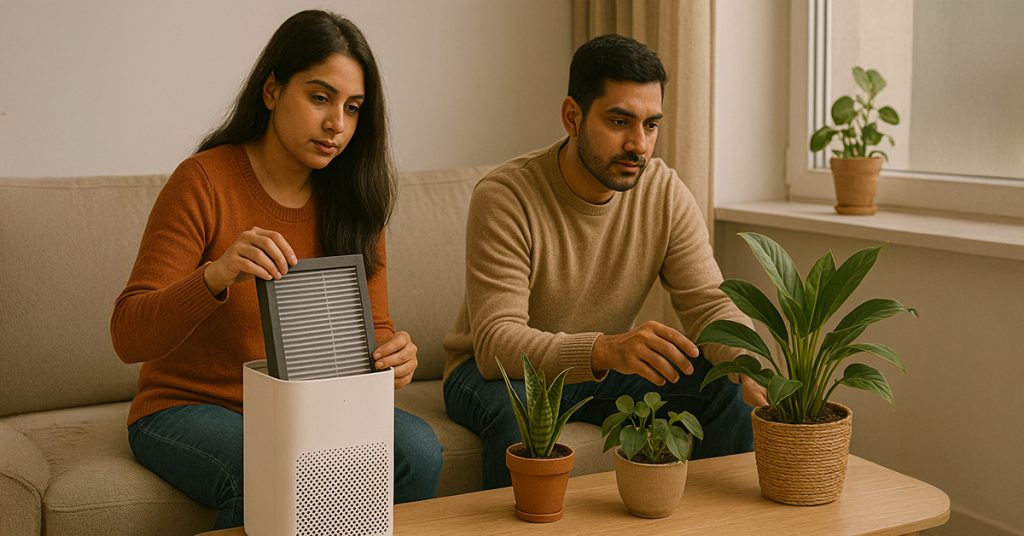
An air purifier is only as good as its filter. The rest is just packaging. HEPA filters trap the tiny dust and smoke particles.
Activated carbon filters catch smells, gases, and fumes. Pre-filters handle the larger stuff like hair and lint.
If buying a full purifier isn’t in your plan, make a quick DIY version.
Just tape a HEPA sheet to the back of a regular box fan. Run it for a few hours.
The difference in dust on your shelves and beds will surprise you. And if you already use an air purifier at home in India, clean or replace the filters on time — otherwise, it’s like using a clogged nose to breathe.
3. Let nature handle some of the work
There’s a reason people keep air purifying plants India has been loved for generations — they’re not just for show.
Here are the real performers:
- Areca Palm – adds humidity and clears air naturally.
- Snake Plant – lives on neglect, still filters toxins.
- Peace Lily – pretty and powerful; absorbs indoor fumes.
- Money Plant – classic, easy to grow, cleans and uplifts mood.
- Aloe Vera – purifies and doubles as a skin healer.
A good thumb rule: one medium plant per 100 sq. ft.of space.Wipe the leaves weekly. Dust-covered plants can’t clean air effectively.
These little green workers help balance humidity, reduce heat, and make your home feel calmer. No app, no noise — just steady, quiet work.
4. Choose what your home breathes through
We don’t realise it, but paints, varnishes, and furniture glues keep releasing invisible fumes called VOCs.Over time, they make indoor air feel heavier.
When you’re repainting, choose low-VOC paints or mineral-based finishes.
JK Cement’s wall products, for instance, support sustainable interiors with smoother, longer-lasting surfaces that don’t trap dust.
Pick wood with natural polish instead of chemical coatings. Go for cotton, clay, or jute instead of plastic.These aren’t “eco” trends — they’re just common-sense ways to keep the air lighter and your space feeling cleaner.
Old-school purifiers that never fail
Before gadgets, our grandparents used materials that quietly did the job.
Those still work better than most fancy solutions.
Activated charcoal bowls soak up odours and moisture.
Himalayan salt lamps may not be miracle workers, but they freshen air and make the room feel warm and calm. Clay and terracotta pots regulate humidity naturally — perfect for monsoon months.
Simple. Natural. Reusable. The backbone of sustainable interiors.—
1. Keep soft furnishings in check
Curtains, rugs, and cushions hold more dust than you think.
Vacuum or wash them regularly, and if possible, sun-dry them.
Sunlight kills most bacteria and does it for free.
Swap heavy drapes for light cotton ones if you live in a polluted zone — easier to clean, easier to breathe through.
You’ll immediately feel the difference in how “light” your room air feels.
2. Know your air, don’t guess it
Small air quality monitors are worth it. Even basic ones show PM2.5 levels (fine dust).
Once you see how much it changes during cooking or peak traffic hours, you’ll naturally adjust your habits — open windows at better times, turn on your purifier when needed.
You don’t need to obsess over numbers. Just use them as a guide to keep your clean air indoors consistent.
3. Make it part of daily life
There’s no one-time fix.
Wipe with a damp cloth instead of a dry one (dry dusting just moves dust around).
Skip aerosol sprays — they smell nice but choke the air. And if you light candles, choose beeswax or soy instead of paraffin. It’s not about having a perfect home; it’s about a breathing one. A place that uses sunlight, fresh air, and earthy materials to stay clean on its own. That’s what sustainable interiors really mean.
Cleaner Air Begins with Better Walls
Clean air isn’t a luxury — it’s what keeps your home alive. A few mindful habits, a couple of plants, some natural touches — that’s all it takes. When it comes to creating sustainable interiors, it’s not just about plants or purifiers — it starts with the materials that make up your walls. Products from JK Cement, like their low-VOC wall putties and smooth white cement finishes, help reduce dust, improve indoor air quality, and give your home walls a cleaner, longer-lasting surface. It’s a small but powerful way to build beauty and clean air indoors right from the foundation.
You’ll breathe easier, sleep better, and start noticing how your space itself feels fresher.And that’s when you know — your home is finally doing its bit for you too.
FAQs
1. Do I need both plants and an air purifier?
Yes — purifiers clean fast, air purifying plants India clean slow but steady.Together, they balance each other.
2. How many plants are enough?
One medium plant for every 100 sq.ft.works well for most homes.
3. What’s the easiest way to start improving air at home?
Open windows at the right time, clean fabrics often, and add one plant. No need to buy anything fancy.
4. Which natural materials help air stay clean?
Charcoal, clay, and jute are simple and effective materials for sustainable interiors.
5. When to replace air purifiers’ filters?
Once a month for pre-filters, every 6–12 months for HEPA ones. Dirty filters can make air worse.
6. Are incense sticks and candles bad for air?
Regular incense and paraffin candles release soot. Go for beeswax candles or natural essential oils.
7. Do paints affect air quality?
Yes. Low-VOC paints or JK Cement’s mineral finishes help maintain clean air indoors longer.