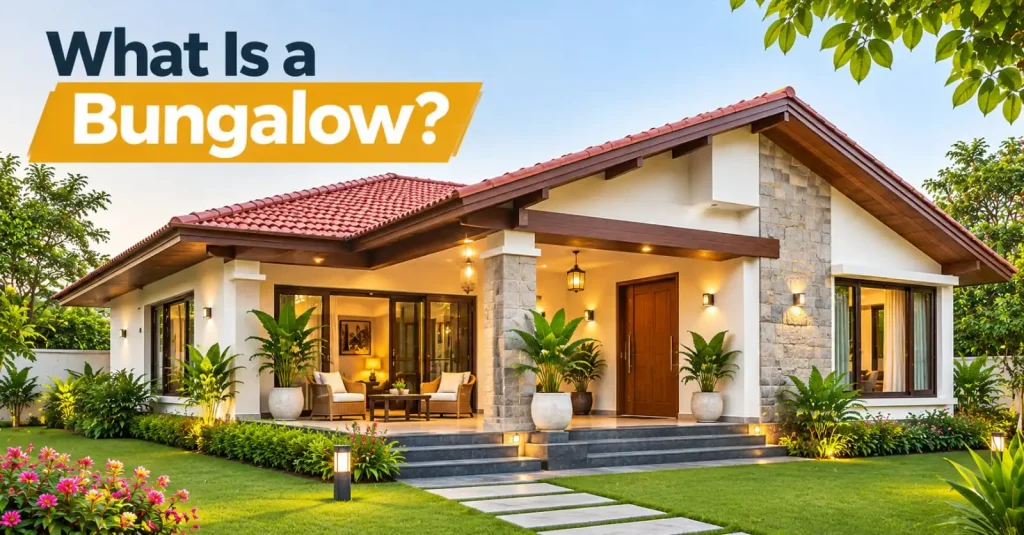
A home is more than a place to live. It is a space where your everyday life unfolds. There are many types of residential home styles. However, a bungalow has always been a popular choice. Why? This is because it provides a spacious layout and easy movement between rooms. A bungalow is often a single-story building with a low-pitched roof. Read on this blog post to find the features and types of a bungalow.
What Is a Bungalow?
A bungalow is an independent residential building. This single-story building often accommodates the following:
- Bedrooms
- A living room
- Kitchen
- Bathrooms
- Other essential spaces
The most interesting part of bungalows is that they offer a private living environment. Homeowners can also use the space for a private garden and parking area.
What Are the Main Features of a Bungalow?
Given below are the main features of a bungalow:
- Single-Story Layout
Most bungalows place their main living spaces on one floor. Hence, homeowners can easily move without using stairs. This layout is often useful for older people.
- Spacious Floor Plan
Bungalows provide a wider floor plan. Hence, it provides a flexibility to customize rooms and create separate spaces for work and family gatherings.
- Private Entrance
A bungalow often has a personal entrance. It provides flexibility to customize the entrance as per their preference.
- Verandah or Porch
Many traditional bungalows feature a veranda or porch near the entrance. Why? This is because it provides a comfortable space to sit outdoors.
- Sloping Roof
A sloping roof is one of the most traditional architectural features of a bungalow. It helps rainwater drain away. This is why it is suitable for the regions with heavy rainfall.
What Are the Different Types of Bungalows?
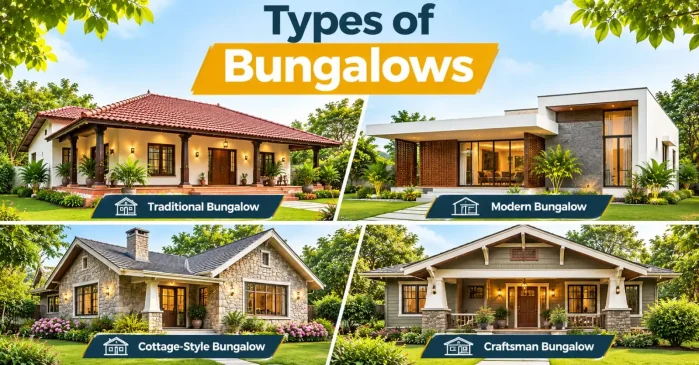
Given below are the different types of bungalows:
- Traditional Bungalow
This type of bungalow is ideal for homeowners who want easy access to outdoor areas. A traditional bungalow features the following elements:
- Sloping tiled roof
- Front veranda
- Wooden doors
- Exterior finishes
Some designers may also pair it with shaded balconies and decorative pillars. However, it is advisable to consider the local weather conditions before a final choice.
- Modern Bungalow
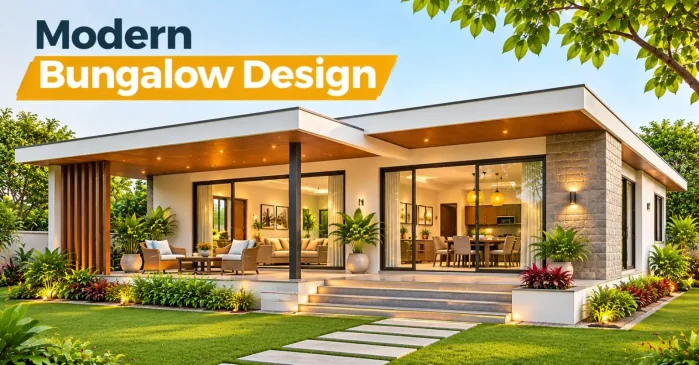
Modern bungalows have open-plan living areas. Thus, they feel more spacious. What’s more? Designers install large windows in modern bungalows. They not only improve ventilation but also bring natural light into the interiors. Some of the common materials used in this type of bungalow are as follows:
- Concrete
- Glass
- Steel
- Wood
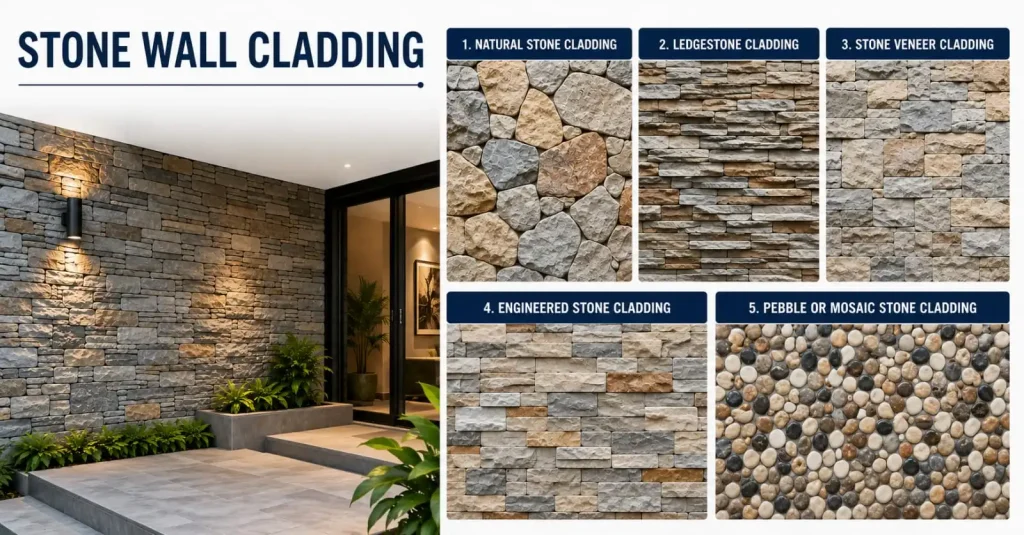
- Stone
Tip: Choose the material that fits your budget and requires less maintenance.
- Cottage-Style Bungalow
A cottage-style bungalow brings warmth to your living space. The following are the common details of the cottage-design bungalow:
- Pitched roof
- Textured walls
- Wooden details
- Small garden
It is advisable to pair this type of bungalow with natural materials and soft exterior colors to strengthen the character.
- Craftsman Bungalow
This type of bungalow is inspired by the Arts and Crafts movement. It is popular because of its craftsmanship and natural materials. Given below are the common features of the Craftsman bungalow:
- Low-pitched roof
- Exposed rafters
- Sturdy columns
- Prominent front porch
Remember that you style the Craftsman bungalow as per the local weather conditions.
What Are the Architectural Features to Consider While Designing a Bungalow?
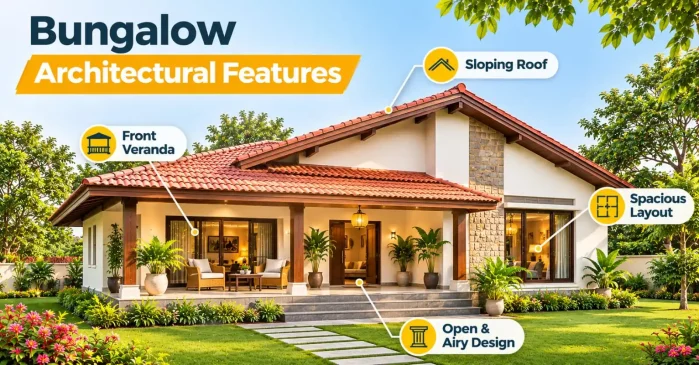
Given below are the architectural features to Bungalow designs :
- Floor Plan and Space Planning
A good bungalow plan separates public and private areas. The most interesting feature is that it makes the movement easier. Designers often plan living areas near the entrance.
- Roof Design
The roof of a bungalow influences its performance. Sloping roofs are ideal to manage rainwater. However, homeowners can consider flat roofs if they want a terrace.
- Natural Light and Ventilation
It is indeed true that natural ventilation and sunlight feel relaxing. This is one of the most common reasons for the popularity of bungalows. They have large windows that make air move through the house.
- Materials and Finishes
It is necessary to choose the right materials for your bungalow. You must consider various factors like local climate, maintenance, and the overall budget before a final decision.
The Final Words
A bungalow is one of the popular residential options in India. It provides an independent living area with spacious rooms. The best part is that it provides an option to choose from different types of bungalows. However, the right design depends on your lifestyle and budget.
FAQs
1. What is the main purpose of a bungalow?
A bungalow provides independent residential space with a comfortable and practical layout. It usually features a single main floor, making everyday movement easier. Bungalows also offer privacy, flexible room arrangements, and opportunities to connect indoor spaces with gardens or verandas.
2. How many floors does a bungalow have?
Most bungalows have one main floor, with bedrooms, kitchens, and living areas on the same level. However, some designs include an attic, a partial upper floor, or an additional storey. The exact layout depends on architectural style, space requirements, and local preferences.
3. What is the difference between a bungalow and a villa?
A bungalow typically features one main floor and a practical residential layout. A villa generally refers to an independent house that may have multiple floors, spacious interiors, and premium amenities. However, the terms can overlap depending on regional usage and architectural design.
4. Is a bungalow suitable for Indian homes?
Yes, a bungalow suits many Indian homes because architects can adapt its design to local climate conditions. Sloping roofs, shaded windows, courtyards, and proper ventilation improve comfort. A well-planned layout also provides privacy, outdoor space, and convenient movement for family members.
5. What are the common types of bungalows?
Common bungalow types include traditional, modern, cottage-style, Craftsman, raised, and semi-detached designs. Traditional styles feature verandas and sloping roofs, while modern designs emphasize clean lines and open spaces. Each type offers different architectural features to suit individual preferences and site conditions.
6. Is a bungalow more expensive than a two-story house?
A bungalow is not always more expensive than a two-story house. It may require more land and roofing, while a two-story house may involve additional structural work and stairs. Overall costs depend on plot prices, materials, design complexity, and construction requirements.