Have you ever seen an open space surrounded by walls or buildings? It is an important part of many residential and commercial buildings. That space is known as a courtyard. Architects use courtyards to make your space feel warm and comfortable. It is a traditional architectural feature that designers recommend to improve ventilation. Read on this blog post to find out the types and uses of courtyards in Indian homes.
What Is a Courtyard?
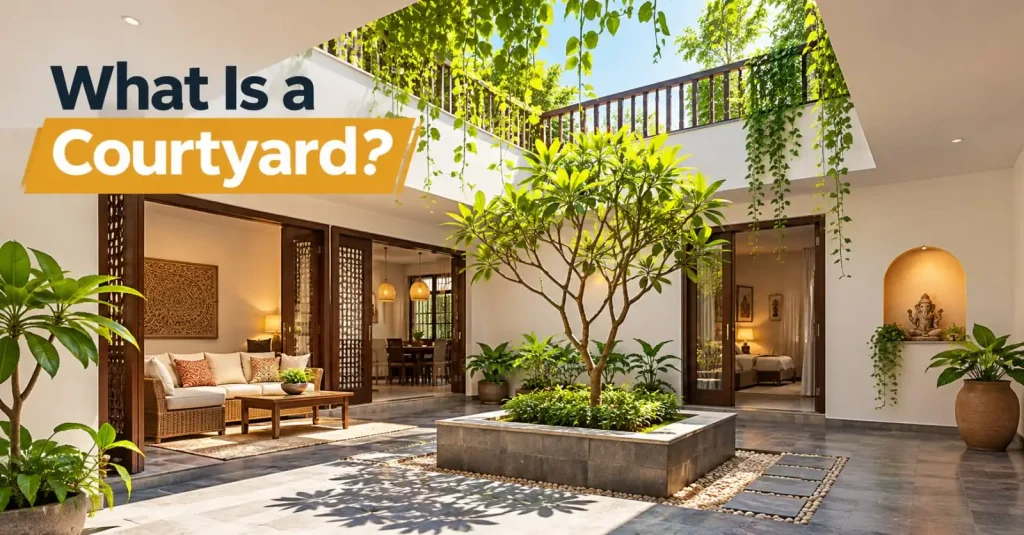
A courtyard is an outdoor area within or beside a building. It often surrounds the walls. However, many people confuse a courtyard with a conventional garden. The main difference is that a courtyard often forms an integrated part of the building layout. The size of the courtyard area may vary depending on the space. The greatest benefit of a courtyard is that it helps you share a family space.
What Are the Different Types of Courtyards in India?

Given below are the different types of courtyards in India:
- Central Courtyard
A central courtyard is the one that sits in the middle of a building. It is an important part of the layout because rooms and corridors surround it. The best part? The central courtyard allows daylight to enter the rooms. It also improves airflow if architects plan the layout carefully.
- Enclosed Courtyard
This type of courtyard has walls or building sections around most of its perimeter. It is popular because it offers greater privacy between the outdoor space and surrounding areas. The enclosed courtyards are often used for family gatherings.
- Entrance Courtyard
The first space you see when you enter the home is an entrance courtyard. It creates a warm transition between the street and the interior. Architects often add plants or decorative lighting to create an appealing appearance.
- Landscape Courtyard
The landscape courtyard brings greenery into spaces. Designers include plants, trees, flower beds, and more to create the warmth in the courtyard. This type of courtyard is often found in residential complexes and educational buildings.
- Internal Courtyard
An internal courtyard is within the building, but it remains open to the sky. It connects the outdoor interior spaces without the need for a large external garden. Internal courtyards are most common in compact urban homes.
What Are the Modern Courtyard Designs in Architecture?
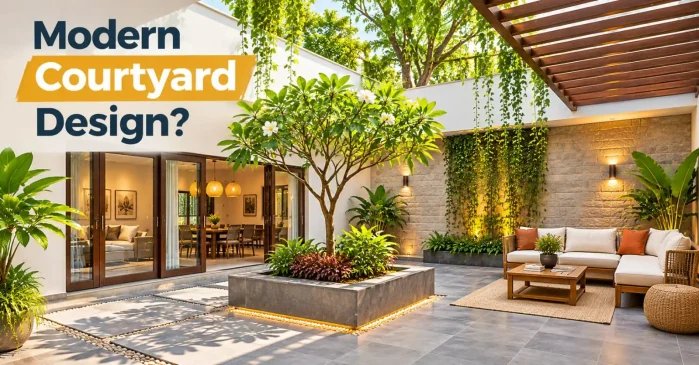
The following are the modern courtyard designs in architecture:
- Layout and Orientation
The location of the courtyard affects sunlight. Hence, architects study the following before choosing the right position:
- Path of the sun
- Surrounding buildings
- Direction of winds
But remember that layout must allow easy movement between indoor and outdoor spaces.
- Natural Light and Ventilation
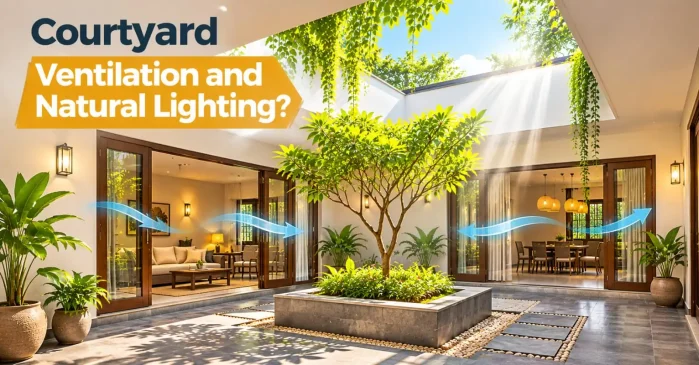
The main purpose of a courtyard is to ensure proper light and ventilation. However, it is only possible if an architect installs the windows properly. The building layout also matters in the architecture of a courtyard.
- Materials and Flooring
The final look of a courtyard depends on various factors. Some of these factors are as follows:
- Appearance
- Durability
- Climate
- Maintenance needs
Tip: Areas with heavy rainfall must choose non-slip surfaces. This is because it reduces the risk of falling.
- Plants and Water Features
Plants make your space more pleasing. Designers often add the following features in the courtyard:
- Small trees
- Shrubs
- Climbing plants
- Potted flowers
- Small fountains
Tip: Consider maintenance and mosquito-prevention options before adding small fountains.
- Privacy and Comfort
Architects install walls and screens to protect the courtyard from views from outside. Moreover, they consider smart options to protect the courtyard from rain.
What Are the Uses of a Courtyard in Indian Homes?
Given below are the common applications of a courtyard:
- Improve Natural Lighting
A courtyard allows daylight to enter rooms through the openings. Hence, it reduces the need for artificial lighting during the day.
- Support Ventilation
Open courtyards ensure proper ventilation in the rooms. This makes your space feel more comfortable. The most intriguing benefit is that it supports passive cooling.
- Create Outdoor Living Space
Courtyards provide space to spend quality time with your loved ones. They are highly useful in urban homes because they have less space for large gardens.
- Enhance Architectural Appearance
Courtyards create visual interest. This is because they connect the different parts of a building. Proper layout and design can further make your space feel more appealing.
The Final Words
A courtyard combines outdoor space with the layout of the building. It not only improves natural lighting but also supports ventilation. Homeowners seeking a small garden or clubbing space on their property often have courtyards. You can choose from different types of courtyards as per your style. However, it is advisable to consider your budget and maintenance before a final decision.
FAQs
1. What is the main purpose of a courtyard?
The main purpose of a courtyard is to provide an outdoor space within or beside a building. It brings natural light, supports ventilation, and offers a comfortable area for relaxation, gardening, family gatherings, and social activities.
2. What are the main types of courtyards?
The main types of courtyards include central, enclosed, entrance, landscaped, internal, and patio-style courtyards. Each type serves a different purpose based on the building layout, available space, privacy needs, and intended use.
3. What is the difference between a courtyard and a garden?
A courtyard is an outdoor space enclosed by walls or building sections and integrated into the building layout. A garden focuses on plants and landscaping and can exist independently or within a courtyard.
4. Are courtyards suitable for small houses?
Yes, courtyards are suitable for small houses when designers use space efficiently. A compact courtyard can bring natural light, support airflow, introduce greenery, and create a relaxing outdoor area without requiring a large garden.
5. Does a courtyard improve ventilation?
Yes, a well-designed courtyard can support natural ventilation by allowing air to move through connected rooms. Its effectiveness depends on window placement, opening sizes, wind direction, surrounding structures, and local climatic conditions.
6. Which materials are suitable for courtyard flooring?
Natural stone, concrete pavers, outdoor tiles, brick, and gravel are common options. The best choice depends on durability, appearance, slip resistance, and drainage requirements.