Most people don’t wake up one morning wanting to learn about underpinning.
They hear the word when something feels off in the house.
A crack that wasn’t there last year.
A door that scrapes the floor every monsoon.
A neighbour digging deeper than expected.
That’s usually when someone asks, half worried, what is underpinning.
On site, underpinning isn’t some fancy concept.
It’s a fix.
A necessary one.
The underpinning meaning is simple if you’ve spent time around old buildings.
The structure above is fine.
The problem is what’s holding it up.
What is underpinning?
If you ask an engineer what is underpinning, you’ll get a textbook answer.
If you ask a contractor, you’ll get a practical one.
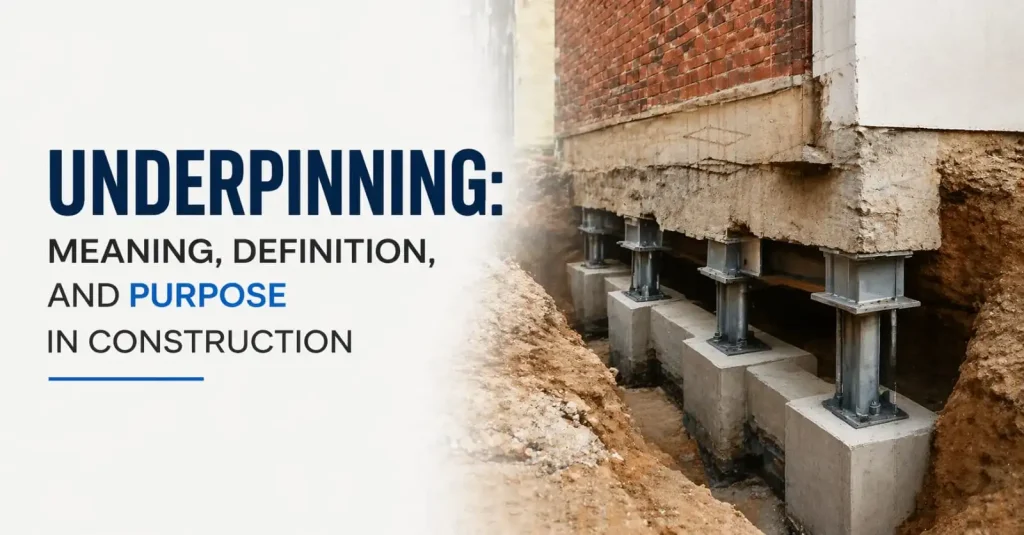
Underpinning means strengthening the foundation that already exists.
Nothing more.
Nothing dramatic.
The building stays.
Life goes on above.
Work happens below.
That’s the real underpinning meaning— support added where support has weakened.
Why buildings suddenly need underpinning
Foundations don’t fail overnight.
They get tired.
Soil changes.
Water moves.
Loads increase.
Houses that stood perfectly fine for 30 years started showing problems after one drainage line was laid nearby.
Shops crack because the owner added a heavy slab without checking the soil.
That’s where underpinning comes in.
Not because the building is bad.
Because conditions changed.
If you’re asking what is underpinning needed for, the answer is usually one of these:
* The soil below settled
* Water washed fines away
* A new floor was added
* Adjacent excavation disturbed the base
The underpinning meaning always circles back to stability.
What homeowners usually misunderstand about underpinning
Most homeowners think underpinning is extreme.
Like last option stuff.
It isn’t.
It’s corrective work, not demolition.
Cracks on plaster can be fixed again and again.
But when cracks come from below, paint won’t help.
That’s when what is underpinning stops being theory and becomes practical.
Underpinning doesn’t mean your house is unsafe today.
It means it will be if nothing is done.
How underpinning actually happens on site
People imagine the whole house being lifted or dug out.
That doesn’t happen.
Underpinning is slow work.
Piece by piece.
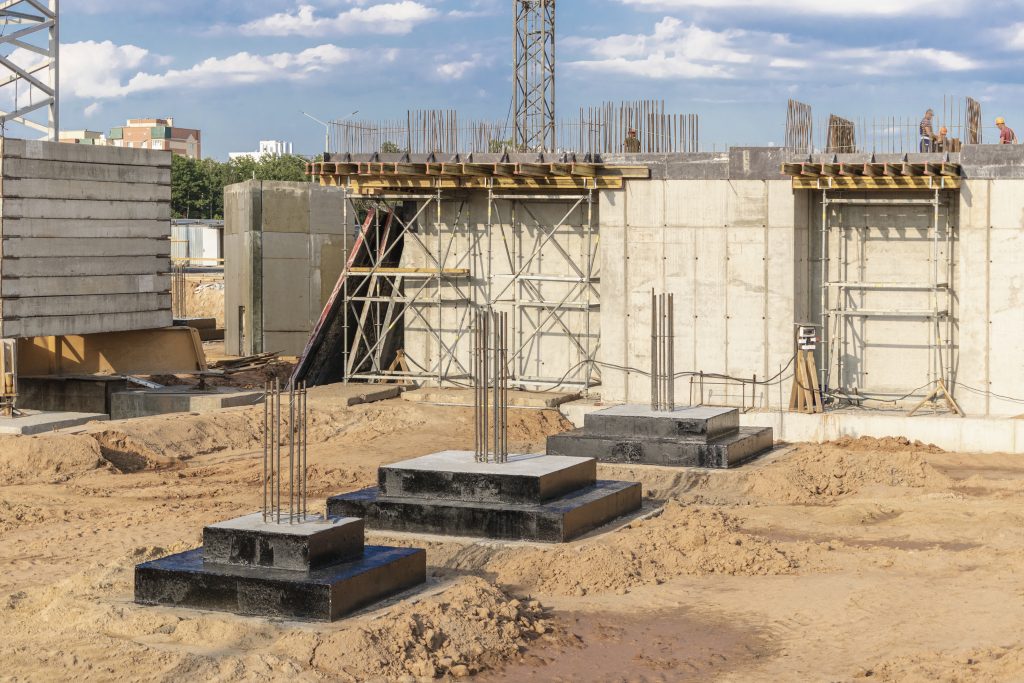
One small section of foundation is exposed.
That section is strengthened or extended deeper.
Concrete is allowed to gain strength.
Only then does the next section start.
This is why experienced engineers matter.
Rushing underpinning is dangerous.
The underpinning meaning on site is patience.
Different buildings, different underpinning approaches
There’s no single solution.
An old brick house on clay soil won’t be treated the same way as a newer RCC structure on filled land.
Common underpinning methods include:
* Mass concrete underpinning
* Beam and base systems
* Mini piles for weak or deep soil
When someone asks what is underpinning, the correct follow-up question is always: for which soil and which building?
Cost is always the uncomfortable part
Let’s be straight.
Underpinning isn’t cheap.
But repeated repairs aren’t cheap either.
They just hide the problem better.
Owners spend years fixing tiles, doors, and walls only to finally do underpinning when cracks return.
Once you understand the real underpinning meaning, you realise it’s a one-time structural fix, not cosmetic work.
Does underpinning affect daily life?
Usually less than people expect.
Noise? Some.
Dust? Controlled.
Vibration? Minimal if done right.
In many residential projects, families stay inside while underpinning work goes on below.
That surprises people who first ask what is underpinning thinking the house will need to be vacated.
Underpinning and future construction plans
This part doesn’t get talked about enough.
Underpinning isn’t just repair.
It’s preparation.
Many buildings are underpinned specifically so:
* Extra floors can be added
* Load capacity improves
* Settlement stops permanently
So the underpinning meaning also includes future-proofing.
You’re not just fixing today’s problem.
You’re avoiding tomorrow.
A site truth that never changes
Buildings speak.
Not loudly.
Slowly.
Small cracks.
Uneven lines.
Doors that change behaviour with seasons.
Underpinning is what you do when you listen early instead of waiting for failure.
That’s all it is.
No drama.
No overthinking.
Just proper support, added where it should have been stronger in the first place.
That’s what is underpinning, without the noise.
FAQs
1. What is underpinning in plain language?
It’s strengthening an existing foundation so the building doesn’t move or settle further.
2. Is underpinning only for damaged buildings?
No. It’s often done before adding floors or when soil conditions change.
3. How long does underpinning work usually take?
Anywhere from a few weeks to a couple of months, depending on size and method.
4. Will cracks disappear after underpinning?
Structural movement stops. Existing cracks are then repaired properly.
5. Is underpinning risky?
Only if done without proper design or supervision.
6. Can underpinning be done during rains?
Yes, but drainage and sequencing become very important.
7. How do I know if my house actually needs underpinning?
Only a structural engineer can give a reliable assessment.