Have you ever seen damp patches creeping up a wall? The main culprit you think is poor paint quality or bad maintenance. Agreed? Well, it’s the half-truth! It’s moisture rising from the ground through the walls. That’s why builders pay special attention to protecting moisture from the foundation stage. How does a damp-proof course (DPC) come into the picture?
Read on this blog post to find out what is DPC and how it is really helpful.
What Is DPC in Building Construction?
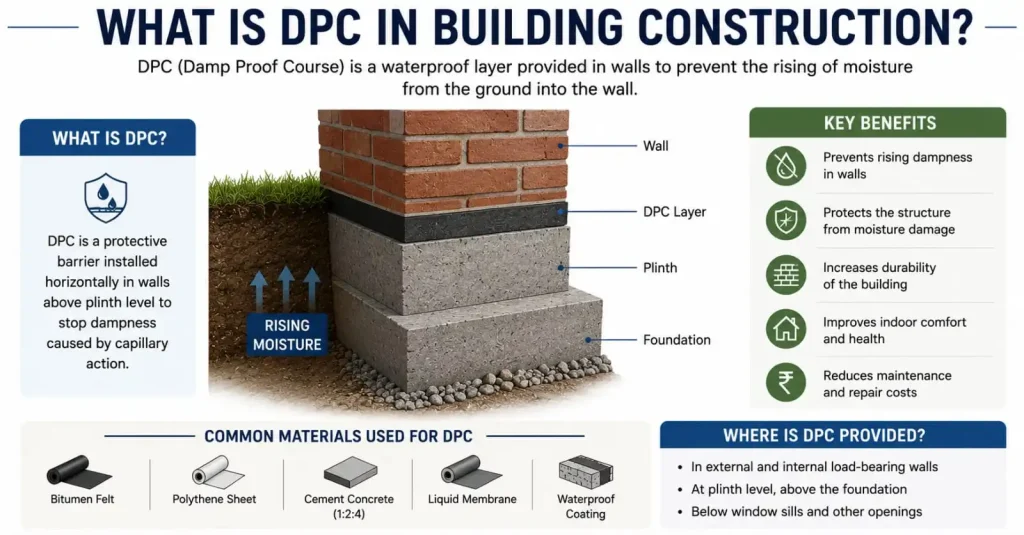
The DPC full form is “damp-proof course.” It is a waterproof layer in a building to stop moisture. The moisture can rise through walls, floors, or foundations. DPC acts as a barrier between the ground and the structure. It doesn’t allow water to travel upward through tiny pores in concrete or mortar.
Let’s understand it this way: You might have seen a traffic barrier that stops vehicles from entering a restricted area. DPC works similarly. It stops moisture at a certain point which otherwise may rise through capillary action.
But what’s most important? You must install it properly to keep the walls dry and improve durability.
Why Is DPC Important in Building Construction?
The DPC becomes important when you see the moisture causing damage. You may see the water as harmless at first. However, it can create serious issues inside a building over time. Given below is the importance of DPC in building construction:
- Peeling paint
- Damp patches on walls
- Efflorescence (white salt deposits)
- Mold and fungal growth
- Damage to wooden furniture
- Corrosion of steel reinforcement
- Reduced structural life
The DPC full form is simple. But its role in protecting a building is big. It saves thousands in maintenance costs later if you spend on a quality damp-proof course during construction.
How Does a Damp Proof Course (DPC) Work?
Imagine that you place a plastic sheet between a wet sponge and a dry sponge. Water no longer passes through the sponge. A damp-proof course works similarly.
A damp-proof course creates an impermeable layer within the building structure. The moisture goes into masonry materials through tiny pores. This movement is known as capillary action. This path interrupts when you install DPC.
The waterproof layer in DPC blocks the movement of moisture. What’s more? It prevents water from reaching higher portions of the wall. As a result:
- Walls stay dry
- Paint lasts longer
- Plaster remains intact
- Indoor air quality improves
The effectiveness of a damp-proof course depends heavily on proper material selection and correct installation practices.
What Is the Location of DPC in the Building?
The location of DPC is just as important as the material itself. Typically, a damp-proof course is provided at the plinth level. This is the portion of the building located between the ground level and the floor level.
It is advisable to install a DPC layer 150 mm to 300 mm above the surrounding ground level. The other common locations to add a DPC layer are the following:
- Below floor slabs
- Basement walls
- Retaining walls
- Roof parapets
- Around door and window openings
- Terrace junctions
Note: Placing the damp-proof course properly creates a continuous moisture barrier throughout vulnerable parts of the building.
What are the types of DPC in building construction?
Given below are different types of DPC in building construction:
- Flexible DPC
These materials can hold minor structural movements and temperature changes without cracks. What exactly are these materials? They include bituminous felt, plastic sheets, and polythene membranes.
- Semi-Rigid DPC
It provides a balance between flexibility and strength. It is suitable for various building applications. Some semi-rigid DPC materials are mastic asphalt and bitumen-based compounds.
- Rigid DPC
You will usually find rigid DPC in masonry structures that require high compressive strength and durability. It includes not only materials such as rich cement, concrete, or stone slabs, but also waterproof cement mortar.
- Integral DPC
Integral DPC forms when you add waterproofing compounds directly into concrete or mortar during mixing. This method enhances moisture resistance throughout the structure. What’s more? It provides additional damp protection.
What are the Common Materials Used For PPC?
The performance of a damp-proof course depends on the materials you select. Given below are common DPC materials that you can use for PPC:
- Bitumen
It is one of the widely used DPC materials. Why? This is because it has excellent water-resistant properties. It can create an effective barrier against rising damp.
- Mastic Asphalt
Mastic asphalt forms a seamless and highly durable waterproof layer to prevent moisture penetration. Engineers mostly use it for the structures that are exposed to a high level of dampness.
- Cement Concrete
Rich cement concrete provides a strong and durable damp-proof course when you mix it with waterproofing compounds. It is a popular choice for residential and commercial building construction.
- Polythene Sheets
High-density polyethene sheets are lightweight and cost-effective. These easy-to-install sheets act like a moisture barrier and are mostly used in modern construction projects.
- Metal Sheets
Copper, aluminum, and lead sheets offer excellent durability and long-term moisture protection. These materials are generally used in special construction projects that require superior performance.
What is the Step-by-Step DPC Installation Process?
The process to install DPC is given below:
Step 1: Surface Preparation
The engineer cleans the masonry surface to remove dust, debris, loose particles, and uneven spots. A clean and level base ensures proper bonding and effectiveness of the damp-proof course.
Step 2: Apply Mortar Bed
The next step is to lay a smooth and uniform mortar bed over the prepared surface. This layer not only provides a stable foundation but also helps install it properly.
Step 3: Place DPC Material
The material you select for the damp-proof course is placed over the mortar bed. Make sure you lay it evenly without folds and gaps to maintain moisture resistance.
Step 4: Ensure Continuity
Seal the joints, overlaps, and corners carefully to prevent moisture penetration. A continuous damp-proof course layer helps you create an effective waterproof barrier.
Step 5: Check Alignment
Check the DPC layer to ensure it runs continuously across the entire wall thickness. Proper alignment helps you eliminate weak points where dampness could bypass protection.
Step 6: Continue Construction
Once you install and cure the DPC layer, you shall continue with the construction of the masonry wall. This protects the building from rising damp throughout its lifespan.
Step 7: Proper Workmanship Matters
Even the best DPC material fails if the engineer installs it incorrectly. Thus, proper alignment and thorough sealing are necessary for long-lasting damp protection.
What Are the Advantages of Providing DPC in Buildings?
Given below are the advantages of having DPC in buildings:
- Prevents moisture and protects walls from dampness.
- Improves building life as dry structures last longer.
- Reduce maintenance costs of repainting and plaster repairs.
- Discourage the growth of mold and fungus.
- Provides indoor comfort and healthier living conditions.
- Walls remain clean and visually appealing for longer periods.
What Are the Common DPC Installation Mistakes to Avoid?
One mistake during the installation of DPC can result in its low performance. So, given below are some common DPC mistakes you should avoid:
- Installing DPC at the Wrong Level
Moisture bypasses the barrier if you install DPC at the wrong height. This reduces protection against rising damp.
- Using Poor-Quality Materials
Poor-quality materials don’t work over time. As a result, the risk of moisture coming to the structure increases.
- Leaving Gaps Between Sections
Moisture movement happens when there are gaps between DPC sections. Thus, it is necessary to install DPC continuously for effective damp protection.
- Damaging the Layer During Construction
The DPC layer damages through frequent construction activities. How? Tears and punctures make the DPC weak and reduce the ability to block moisture.
- Inadequate Thickness
A thin DPC layer provides limited moisture resistance. Proper thickness ensures reliable long-term performance.
- Poor Joint Sealing
Poorly sealed joints allow moisture to pass through vulnerable areas. Proper sealing maintains a continuous moisture barrier.
- Ignoring Waterproofing at Corners and Junctions
Corners and junctions are common moisture entry points. Proper waterproofing prevents dampness in these critical areas.
- Importance of Proper Supervision
Many dampness problems result from incorrect installation. Careful supervision helps ensure proper DPC performance.
The Final Words
The foundation not only determines the strength of the building. But protection from moisture plays an equally important role. This is why DPC plays an important role in modern construction. It prevents damp walls and peeling paint to increase the durability of the structure. When planning any construction project, make sure that you consider DPC as a mandatory requirement. Why? This is because it is one of those hidden components that quietly protects your investment for the long term.
FAQs
1. What is the DPC full form in construction?
The DPC full form is “damp-proof course.” It is a waterproof barrier installed to prevent moisture from rising through walls and floors.
2. Why is DPC important in a building?
DPC prevents dampness, mold growth, paint damage, and structural deterioration caused by moisture.
3. Where is DPC provided in a building?
A damp-proof course is usually installed at the plinth level, above ground level, and below wall construction.
4. What materials are commonly used for DPC?
Bitumen, mastic asphalt, cement concrete, polythene sheets, and metal sheets are commonly used for DPC.
5. Can a building survive without DPC?
While a building can stand without DPC, it is highly vulnerable to moisture damage, damp walls, and costly repairs.
6. What are the signs of DPC failure?
Common signs include peeling paint, damp patches, mold growth, musty odors, and white salt deposits on walls.
7. Can a damaged DPC be repaired?
Yes. Methods such as chemical injection, damp-proof creams, membrane replacement, and waterproof coatings can restore DPC performance.