Introduction
The foundation of any building determines its strength and long-term stability, especially when constructing large and heavy structures. The performance of the structure depends on whether the foundation is durable enough to withstand the load. A deep foundation is a type of foundation that is used for structures that demand high load-bearing capacity or that are constructed on uneven and weak soil.
This blog will answer: what is a deep foundation, the types of deep foundations, and its uses and benefits in modern construction.
What is Deep Foundation?
A deep foundation is a type of foundation that extends significantly below the ground surface to transfer loads from a structure to deeper, more competent soil or rock strata. Deep foundations usually extend down to several meters below the ground.
These types of foundations are designed to support structures when the soil below is weak or when the building is intended to carry heavy loads. Bridges, dams, high-rise construction and industrial constructions require deep foundations.
Types of Deep Foundation
There are several types of deep foundations, each suited for specific construction requirements:
1. Pile Foundation
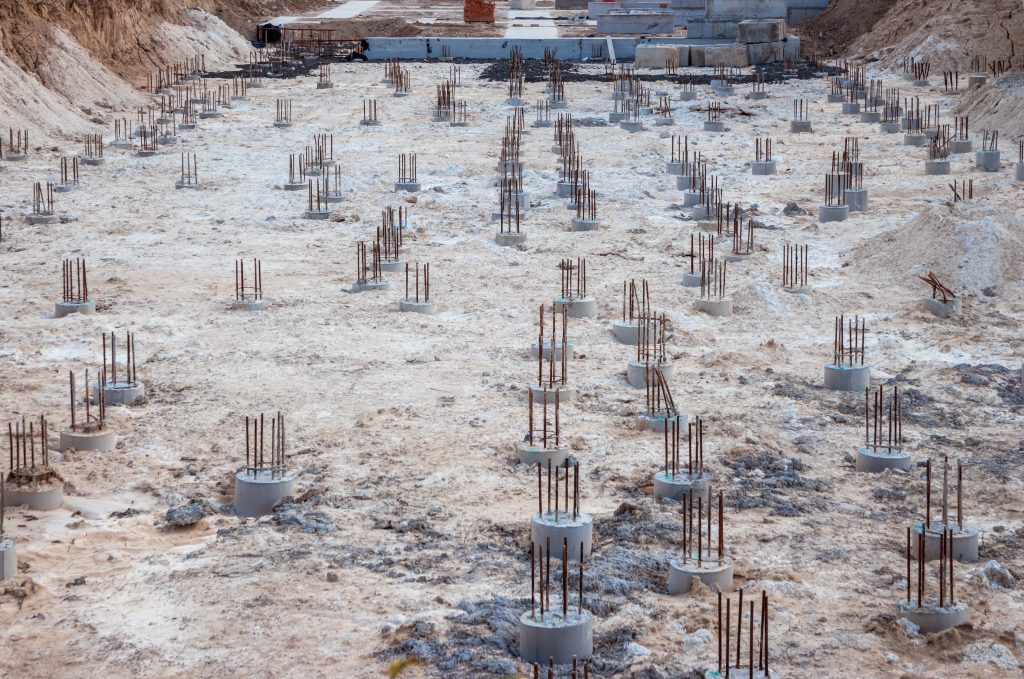
Pile foundations are built as long, vertical columns made of concrete or steel placed deep into the ground. These columns transfer the load of the structure evenly, directly to the ground or through friction along their sides, providing a solid base for the building to withstand environmental pressures.
2. Caisson Foundation
A caisson foundation is a deep foundation that’s essentially a hollow, watertight box or cylinder sunk into the ground or water to a desired depth. Once at the desired depth, it’s filled with concrete to create a stable base. These are ideal for areas with high water tables or for supporting heavy structures like bridges.
3. Raft Foundation
The raft foundation is built as one large single slab of concrete under the entire area where the structure is being built. It gives a raft-like appearance, holding the entire weight of the building and distributing the load over a very large area.
4. Basement Foundation
As the name suggests, sometimes basements can also act as a foundation. Though used primarily for storage and living, basements can also help in transferring the load of the building to deeper layers.
5. Shaft Foundation
This type of deep foundation is built as cylindrical columns made of concrete installed deep into the ground. They provide a solid base for high and large structures. Unlike a raft foundation, the shaft foundation columns are drilled into the ground. This helps in transferring the load directly to the ground.
Uses of Deep Foundation
Deep foundations are used to carry heavy and large structures and ensure that the weight is distributed safely into the deeper layers of the ground:
- The soil has a very low load-bearing capacity.
- Large and heavy structures such as high-rise buildings, bridges, and dams are to be built.
- The construction is to take place in an area prone to erosion and fluctuating water tables.
Benefits of Deep Foundation
Deep foundations are meant to provide solid support for heavy construction. Apart from strength, the benefits of a deep foundation are:
1. Higher Load-Bearing Capacity:
They lend a much higher capacity to bear the load of the structure than shallow foundations, which makes them ideal for tall structures.
2. Stability in Weak Soils
Deep foundations are built deep into the ground which helps in bypassing the structural load from poor soil areas directly to the stronger layers of the earth.
3. Resistance to Uneven Settlement
Even in areas where there is a risk of uneven settlement, deep foundations reduce the risk of damage to the building.
4. Adaptable to Site Conditions
In areas where the soil is weak, the varied types of deep foundations can be used to create a stable and strong base for tall and large structures.
5. Durability
These foundations offer excellent performance and long-term durability, as they allow the deeper layers of earth to take on the load.
To ensure the safety and stability of a structure, it is important to understand what is deep foundation and its uses and benefits. The varied types of deep foundations offer different designs for different soil conditions, providing a choice to suit the structure and construction goals.
FAQs
1. What exactly is a deep foundation — and how is it different from a shallow one?
A deep foundation goes way below the surface — sometimes 20, 30, even 50 feet deep — to find stronger soil or rock.
Whereas a shallow foundation spreads the load near the surface, deep ones carry it down to more solid layers. Think of it like comparing a shallow umbrella base vs. a deep pole buried in concrete — one can handle gusts way better.
2. When do we actually need a deep foundation?
You go deep when:
- The surface soil is too weak to hold the structure
- You’re building multi-storey buildings, bridges, towers
- Water tables or soil shifts are a concern
So, if you’re putting up a high-rise in a metro city or building near a river — deep foundation it is.
3. What are the main types of deep foundations?
Here are the usual suspects:
- Pile foundations: Long slender columns driven deep into the ground.
- Caisson foundations: Big hollow boxes sunk and filled with concrete — great for underwater or bridge work.
- Drilled shafts/bored piles: Like piles, but created by drilling and then pouring concrete.
- Basement or well foundations: Less common, but used in specific old-school or layered soil conditions.
Each type has its own place — site condition, load, and budget decide which one fits.
4. Is deep foundation work noisy and messy?
It can be — especially driven piles where machines hammer them into the ground. There’s noise, vibration, and dust. But methods like bored piling or caissons are quieter and cleaner, though they take more time.
Urban builders often pick quieter options to avoid disturbing neighbours (and avoid complaints!).
5. Are deep foundations more expensive than shallow ones?
Yes — but only because they involve heavier machinery, more time, and deeper digging.
But if your building demands it, there’s no alternative. Think of it as investing in a strong backbone for your structure. You’d rather pay more now than watch your floors tilt later, right?
6. What’s the biggest benefit of going deep?
Deep foundations handle heavy loads, tough soil, wind, and even earthquakes better.They keep your structure stable, strong, and safe — no matter what’s happening on the surface.
A deep foundation goes way below the surface — sometimes 20, 30, even 50 feet deep — to find stronger soil or rock.
Whereas a shallow foundation spreads the load near the surface, deep ones carry it down to more solid layers. Think of it like comparing a shallow umbrella base vs. a deep pole buried in concrete — one can handle gusts way better.
You go deep when:
The surface soil is too weak to hold the structure
You’re building multi-storey buildings, bridges, towers
Water tables or soil shifts are a concern
So, if you’re putting up a high-rise in a metro city or building near a river — deep foundation it is.
Here are the usual suspects:
Pile foundations: Long slender columns driven deep into the ground.
Caisson foundations: Big hollow boxes sunk and filled with concrete — great for underwater or bridge work.
Drilled shafts/bored piles: Like piles, but created by drilling and then pouring concrete.
Basement or well foundations: Less common, but used in specific old-school or layered soil conditions.
Each type has its own place — site condition, load, and budget
It can be — especially driven piles where machines hammer them into the ground. There’s noise, vibration, and dust. But methods like bored piling or caissons are quieter and cleaner, though they take more time.
Urban builders often pick quieter options to avoid disturbing neighbours (and avoid complaints!).
Yes — but only because they involve heavier machinery, more time, and deeper digging.
But if your building demands it, there’s no alternative. Think of it as investing in a strong backbone for your structure. You’d rather pay more now than watch your floors tilt later, right?
Deep foundations handle heavy loads, tough soil, wind, and even earthquakes better.They keep your structure stable, strong, and safe — no matter what’s happening on the surface.