
A site-first guide for homeowners and engineers — written from the side of accidents, not checklists
Scaffolding in construction means:
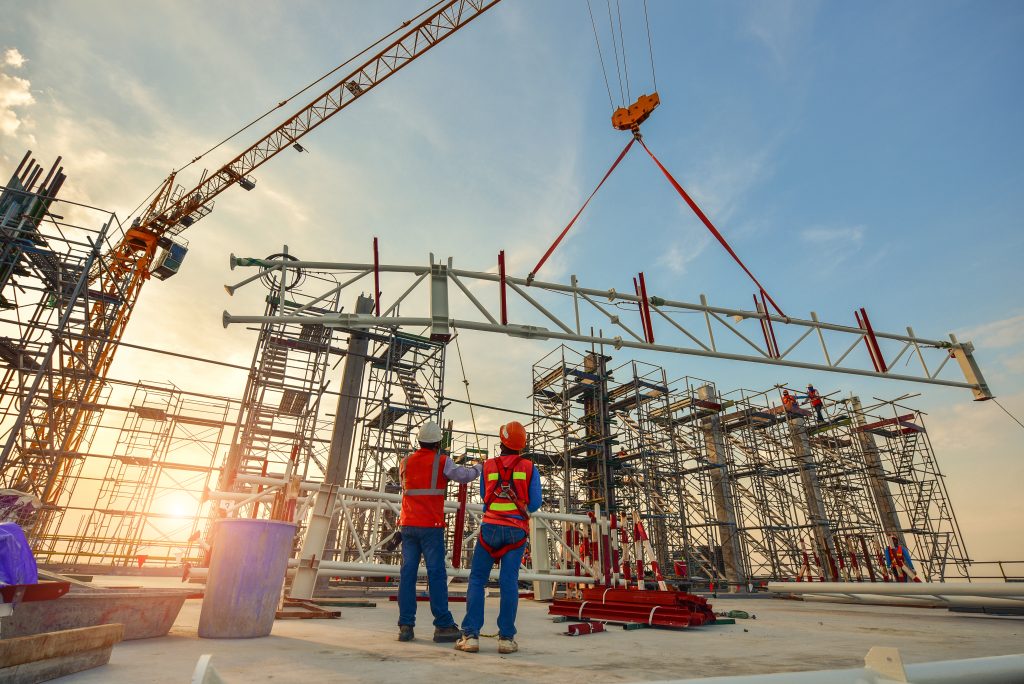
Scaffolding is a temporary working platform that provides safe access at height during construction, repair, or finishing work.
Quick answer
Scaffolding is not a convenience tool.
It is a life-safety system.
When scaffolding fails, it does not crack or deform gradually.
It collapses.
For Indian construction sites, scaffolding quality decides safety more than PPE, training sessions, or warning boards.
What scaffolding actually controls on real sites
Beyond access, scaffolding directly controls:
- fall risk from height
- quality of plastering and finishing
- worker fatigue and confidence
- legal, criminal, and moral liability
On low-rise residential projects, scaffolding is involved in nearly half of serious site injuries, despite being considered “temporary.”
Verdict: Temporary systems cause permanent damage when treated casually.
The non-obvious truth most sites miss
Here’s the uncomfortable reality:
Scaffolding is usually built by the least-trained people on site, but failure impacts everyone above and below it.
That mismatch — lowest skill, highest consequence — is why scaffolding accidents dominate residential construction mishaps.
This is not a materials problem.
It is a responsibility problem.
Main reason scaffolding accidents happen:
Improvised erection + overloading + zero fear of enforcement.
Common types of scaffolding used in Indian construction
| Scaffolding type | Typical use | Biggest risk | Safety focus |
| Single (bricklayer’s) | Brickwork | Weak wall support | Proper tying |
| Double | Stone work | Missing bracing | Cross stability |
| Cantilever | Obstructions | Load miscalculation | Structural anchorage |
| Suspended | External repairs | Rope or anchor failure | Anchorage checks |
| Mobile | Finishing | Tipping | Wheel locks & level base |
Verdict: On Indian sites, missing bracing causes more scaffold accidents than bad materials.
What actually goes wrong on Indian sites with scaffolding
I’ve seen scaffolding assembled overnight because “the plaster team is coming tomorrow.”
The failures followed a pattern:
- Planks reused beyond safe life → sudden snap
- Standards resting on loose bricks → settlement → tilt → collapse
- Five workers crowded onto one bay → load crossed silently → fall
Once, I refused to allow work to resume until an entire bay was dismantled and rebuilt.
The contractor argued. Labour waited. Deadlines slipped.
Two days later, a similar scaffold collapsed on a neighbouring site.
That argument still bothers me less than attending a hospital visit would have.
Verdict: The most dangerous scaffolding is the one everyone agrees is “good enough.”
Standards anchoring — and the enforcement gap
As per IS 3696 (Part 1) and IS 4014, scaffolding must be erected by competent persons, properly braced and tied, and loaded within safe limits.
For formal reference, these standards are issued by the Bureau of Indian Standards (BIS) and are routinely cited in CPWD works and labour-safety audits:
https://www.services.bis.gov.in/php/BIS_2.0/bisstandards_search.php
The uncomfortable reality is that on private residential sites, enforcement usually happens after an accident — not before.
Verdict: On Indian housing sites, safety compliance is voluntary until failure makes it mandatory.
One quantified field heuristic (non-negotiable)
- A single scaffolding bay should never carry more than 2–3 workers with tools.
- If plank span exceeds ~1.2–1.5 m without intermediate support, reject it immediately.
Anything beyond this is not productivity.
It is risk stacking.
The Scaffolding Brutality Rule™
If a scaffold collapse would seriously injure someone, it deserves stricter checks than permanent RCC work.
Temporary does not mean tolerant.
Immediate stop-work triggers (binary)
STOP WORK IMMEDIATELY if you see any of the following:
- missing guardrails or toe boards
- uneven or improvised base plates
- more than three workers on one bay
- cracked, sagging, or mismatched planks
There is no “adjust later” here.
Verdict: If scaffolding feels unsafe, it already is.
Visual execution directive (critical)
Place a side-by-side image showing base plates resting on loose bricks versus base plates resting on proper sole boards immediately after this section.
If standards are standing on bricks, broken tiles, or debris, the scaffold is non-compliant and unsafe, regardless of how stable it looks.
Cement & material logic — the indirect cost people ignore
Scaffolding does not use cement.
But poor scaffolding causes:
- rushed plastering
- uneven screeds
- skipped curing
This silently shortens the life of concrete and plaster below.
For external plaster and exposed finishes executed from scaffolding, PPC-based mixes tolerate slower, more uniform curing better.
Verdict: Unsafe scaffolding degrades material durability even when concrete quality is good.
What NOT to do with scaffolding
❌ Rest standards on bricks or debris
❌ Reuse planks without inspection
❌ Overload “just for today”
❌ Skip inspection because work is temporary
Verdict: Temporary shortcuts create permanent consequences.
One clear decision shortcut
If this was my site:
I would slow the job, rebuild unsafe bays, and accept delays — because no schedule recovery is worth a fall from height.
Frequently Asked Questions
1. What is scaffolding in construction?
Scaffolding is a temporary platform system that provides safe access at height during construction work.
2. Which scaffolding type is most common in India?
Single and double scaffolding are most common in residential construction.
3. Is scaffolding mandatory for house construction?
Yes, any work at height legally requires safe access systems.
4. Why do scaffolding accidents keep happening?
Because erection quality is poor and enforcement is weak until accidents occur.
5. Is bamboo scaffolding legal in India?
Yes, but only when properly tied, braced, and supervised.
6. Who is responsible for scaffolding safety on site?
The contractor and site supervisor carry direct responsibility.
7. Can PPE compensate for bad scaffolding?
No, PPE cannot prevent falls caused by platform failure.
8. Should scaffolding be inspected daily?
Yes, visual inspection before work is essential.
9. Is mobile scaffolding safe for finishing work?
Yes, only on level ground with locked wheels.
10. Is scaffolding failure usually sudden?
Yes, most collapses occur without warning.
11. Do homeowners share responsibility for scaffolding safety?
Yes, allowing unsafe work creates moral and legal exposure.
12. What is the safest number of workers on one scaffolding bay?
Two to three workers with tools is the safe upper limit.
Conclusion: safety is not transferable
Scaffolding may be temporary.
Responsibility is not.
If scaffolding fails, blame does not disappear with it.
It lands on the contractor, the site supervisor, and the homeowner who allowed unsafe work to continue.
Final Rule:
If safety depends on luck, the system is already broken.