
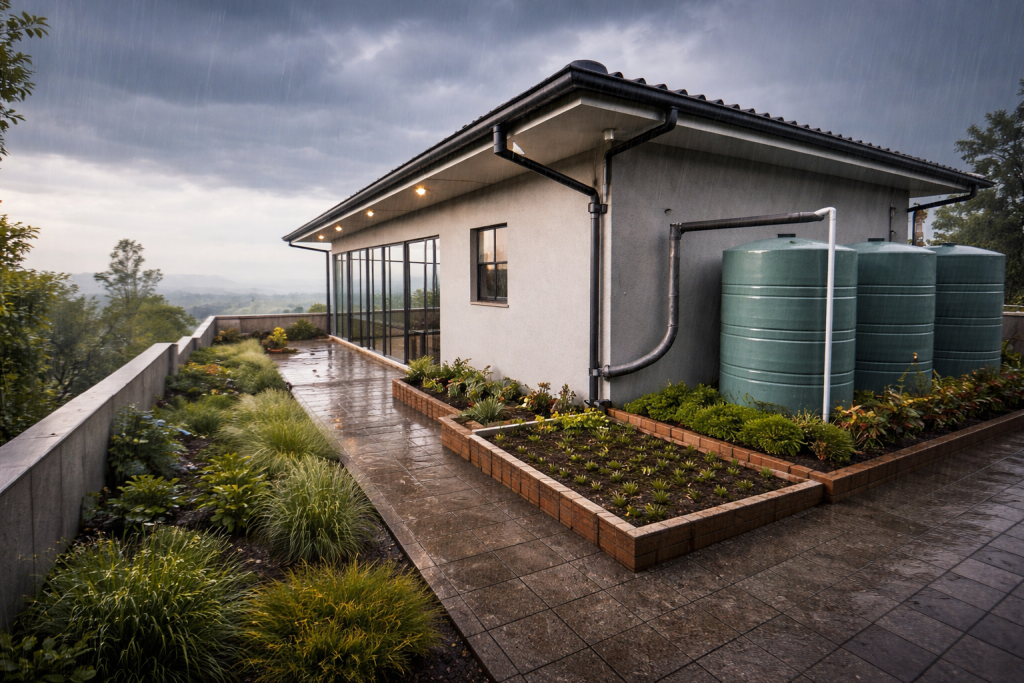
If you’ve ever stood on your terrace during monsoon season and watched clean rainwater rushing straight into the drain, you’ve probably had the same thought many of us have had: “Isn’t this a waste?”
That’s usually the moment when the idea of rainwater harvesting suddenly makes perfect sense.
Most of us worry about water shortages only when the tanker guy doesn’t pick up the phone or when the borewell pump starts making that strange grinding noise. But building smarter homes today means thinking ahead — especially about resources we often take for granted. And if you’re planning a new home, this is the best time to understand what rainwater harvesting is, why it’s such a lifesaver, and how it fits naturally into modern construction.
Why Smart Homes Start With Smart Water Planning
A lot of people assume “smart home” means app-controlled lights or automated blinds. But the real smarts lie in decisions you make before the first brick is laid.
Water is at the heart of every home — cooking, cleaning, gardening, bathing. And with groundwater levels dropping in many Indian cities, setting up rainwater harvesting at home in India is not just a nice extra; it’s becoming a practical necessity.
Construction is the best stage to add it. You already have open land, exposed trenches, and a team that can integrate the system neatly into the design. Retrofitting it later is possible, but it’s like trying to install wiring after painting the walls — it works, but it’s messy and expensive.
A Simple Explanation: What Is Rainwater Harvesting?
In simple words, rainwater harvesting is the process of collecting rainwater from your rooftop and storing it so you can use it later.
Think of it as putting a bucket under a leaking tap… except the bucket is underground and the tap is the sky.
When people ask what rainwater harvesting is, I usually tell them this: you’re basically saving today’s rain for tomorrow’s shortage. The water that would have run uselessly into the street instead fills up a tank or recharges your soil.
And honestly? Rainwater is some of the cleanest freshwater you’ll ever get — no TDS issues, no hardness, none of that chalky feel we complain about.
The Everyday Advantages of Rainwater Harvesting
It’s easy to talk about the big environmental picture, but most homeowners want to know what it means for daily life.
Here are the real, practical advantages of rainwater harvesting you’ll feel every day:
- Lower water bills. If your home relies on municipal supply, you’ll immediately cut down usage during monsoon months.
- Less dependence on tankers. In many cities, tanker schedules are unpredictable and expensive. Stored rainwater gives you backup.
- Your borewell lasts longer. Recharge pits help maintain groundwater levels, reducing the strain on your pump.
- Soft water for washing. Clothes feel nicer, and appliances like geysers last longer because there’s no scale buildup.
- Better gardening. Plants absolutely love rainwater. It’s naturally balanced and gentle.
Contractors will tell you, “Rainwater harvesting is the only solution that feels like it pays you back every year without asking for anything.”
Why Construction Stage Is the Best Time to Install It
During construction, the foundation is exposed, plumbing is accessible, and integrating pipes doesn’t require breaking floors or walls.
If you’re thinking about how to do rainwater harvesting in home, here’s the simplest version:
- Collect rainwater from your roof through gutters.
- Filter it to remove leaves, dust, and debris.
- Store it in an underground tank or send it to a recharge pit.
- Distribute it through your regular plumbing for non-drinking uses.
Doing this later — after tiles, landscaping, and walls are finished — means rework that nobody wants. So, if you’re building, this is the smartest move you can make. When your building uses good quality materials — say high-strength, low-permeability cement like JK Cement’s water-resistant cement — you reduce leakage and improve overall structural durability. Now pair that with rainwater harvesting and you suddenly have a home that uses water smarter instead of constantly chasing it.
What Rainwater Harvesting Looks Like in Real Indian Homes
Across rainwater harvesting at home in India, you’ll find simple, robust systems in cities and small towns alike.
A typical home setup might include:
- A 1000–3000 litre underground tank
- A basic sand-and-charcoal filter
- PVC piping connected to downspouts
- An overflow pipeline to a recharge pit
This works beautifully in Jaipur, Mysuru, Nagpur, Coimbatore — places with completely different rainfall patterns but the same concerns about water scarcity. And because the materials are standard, even a small team of masons and plumbers can install it easily.
How Much Does It Cost? (Here’s the Honest Truth)
Most people assume it’s expensive, but the cost of a basic system during construction can start as low as the price of a good smartphone.
What makes it affordable is that you’re already building underground structures — converting one into a storage tank or adding a recharge pit isn’t a huge jump.
Think of it like adding extra reinforcement where you know a heavy load will be — a small upfront investment for long-term durability.
A Quick Look at the Emotional Side
Talk to any homeowner who added rainwater harvesting early, and you’ll notice one line repeated again and again:
“It just feels good knowing you’re not wasting something so precious.”
In a world where we see summers getting hotter and water tables dropping lower, that feeling matters.
It also fits how Indian families tend to think – being smart with what they have, not wasting stuff, and making sure things are good for their kids.
A Few Helpful Tips Before You Start
If you’re serious about how to do rainwater harvesting in home, keep these practical points in mind:
- Use high-quality, durable pipes; cheap ones crack easily under UV exposure.
- Keep the first-flush filter accessible so it can be cleaned quickly during monsoon.
- Make sure the tank has a proper mosquito-proof mesh.
- If your area gets very muddy rain, go for a two-stage filter.
And if you’re planning a terrace garden, rainwater harvesting is practically a dream combination. A well-built home supports a good rainwater system, and vice versa.
Why This One Decision Makes Your Home Truly “Smart”
Because a smart home isn’t the one with the fanciest gadgets. It’s the option that’s tough, handles itself, and is nicer to the earth and your bank account.
Adding rainwater collection when you build something is a great choice that covers all bases: it’s sustainable, easy, saves cash, and adds worth down the line.
And it does all this quietly, without you having to constantly monitor or maintain it.
So if you’re beginning your home journey, think of rainwater the next time you see clouds gathering. Your future self — and your water bill — will thank you.
FAQs
1. Is rainwater harvesting really worth it for a single home?
Absolutely. Even a small roof can collect thousands of litres every monsoon. For most homes, it cuts tanker dependency drastically.
2. How much does a basic home rainwater harvesting system cost?
During construction, it’s surprisingly affordable—often less than 1% of your total plumbing cost.
3. Can harvested rainwater be used for drinking?
With advanced filtration, yes. But most homes use it for cleaning, gardening, flushing, and general utility.
4. What is the simplest setup for rainwater harvesting at home in India?
A rooftop collection pipe → filter → underground tank or recharge pit. Very basic, very reliable.
5. Does rainwater harvesting work in low-rainfall regions?
Even limited rain is worth collecting. But in moderate or high-rainfall zones, it’s a goldmine.
6. How often do I need to maintain the system?
Just a cleaning before the monsoon and an occasional filter check.
7. Will it increase mosquitoes or smell near the pit?
Not if installed properly. A sealed tank + screened pipe inlets keep insects and debris out.