Picture this: you’re building a sturdy boundary wall or plastering your living room, and someone asks if you’re using low-carbon cement alternatives. You might pause. Cement that’s kinder to the planet? Sounds like a buzzword. But pause for a moment—blast furnace slag cement is more than a trend; it’s a smart, sustainable option, especially here in India.
What Exactly Is Slag Cement?
Imagine making tea but instead of just tea leaves, you mix green tea and herbal leaves—adding layers, complexity, and subtlety. In cement terms, slag cement in India refers to Ordinary Portland Cement (OPC) blended with ground granulated blast furnace slag (GGBFS) from steel production. The slag is a by-product, ground into a fine powder and added to OPC. Instead of letting it go to waste, we harness its strength.
This blend slows down the curing time a bit, which gives longer-lasting strength, improved resistance to cracking, and makes the entire mix less carbon-heavy. It’s like a slow-baked bread—it takes longer, but tastes and ages better.
Why Choose Blast Furnace Slag Cement?
- It steals the spotlight from emissions
Cement manufacturing is responsible for about 7% of global CO₂ emissions. Replacing a chunk of OPC with slag reduces this significantly. The slag part comes from recycling waste, and you manufacture less virgin cement overall. That’s fewer emissions per bag, and that matters when scaled across India’s booming construction. - Durability that stands the test of time
Think of traditional OPC like a smartphone with good battery life but prone to glitches. Slag cement is the same phone, but with firmware that ages better. The mix resists sulfate attack, minimises shrinkage, and keeps structures stronger for longer. Less flaking, fewer repairs. - Cooler in hot climates
Blast furnace slag cement warms up more slowly than straight OPC. That means less heat of hydration, fewer thermal cracks, and more stability in warm-weather pours common in Indian summers. - Saves money and materials
Steel plants love selling slag, often at a lower cost than cement companies. That blend lowers per-bag costs a bit. And when you’ve got a mix that’s tougher and crack-resistant, future repair bills shrink too.
How It’s Made & Used in India
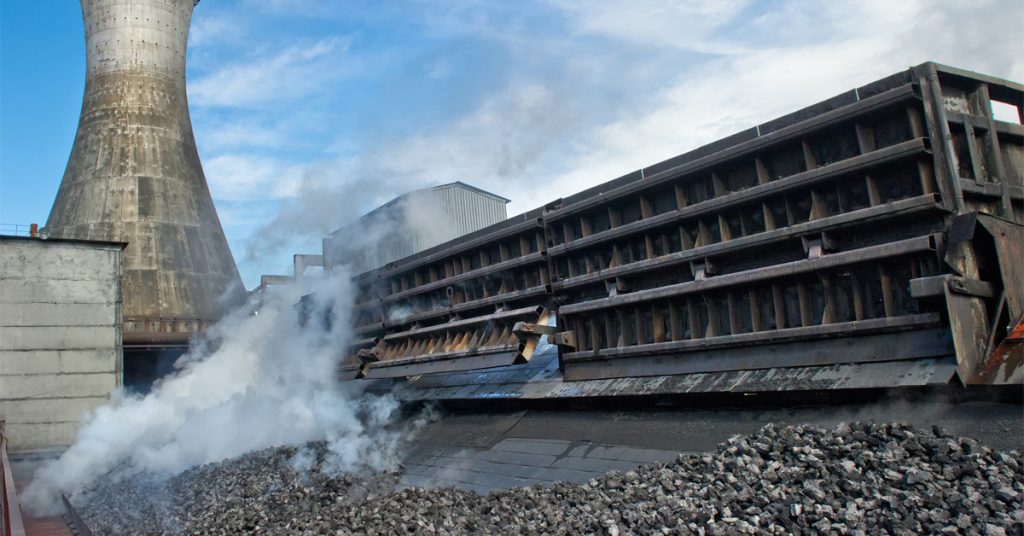
In steel plants across India—from Visakhapatnam to Salem—the remainder after extracting metal is quenched, dried, and processed into GGBFS. This fine grey powder, when mixed with OPC, becomes slag cement.
Builders use it in ratios like 30–70% OPC to slag. The higher the percentage of slag, the lower the carbon footprint, but it also takes a little longer, by a few hours.
For interiors, PCC, foundation concrete, or elements needing high durability like sewage treatment plants, a 50–50 or 40–60 mix works well. In precast panels, bridges, or marine structures, even a 70% slag ratio is common, extending structure life by decades.
Mixing & Curing – The How‑To Guide
Switching to slag cement in India isn’t complicated, but a few tweaks help:
- Water ratio matters: Use slightly more water than OPC-only mixes—just 3–5% more. The goal is a workable mix that doesn’t slump or separate.
- Set time gets slower: The concrete takes slightly longer to harden. That can be fine in the cooler mornings or evenings, and especially useful in hot weather to avoid rapid drying.
- Cure for comfort: Let it soak in moisture for 14 days—keeping the slab wet ensures that extra slow strength development happens well.
- Stick to ratios: If you’re using 50% OPC + 50% slag, keep it right. Patching with straight OPC can lead to uneven surfaces.
Real-Life Use Cases in India
- Mass housing and high-rises: Developers use slag-blended cement to reduce heat during large-scale pours, avoiding cracks and improving build quality.
- Water tanks & drainage structures: The extra chemical resistance from slag cement means less maintenance and fewer leaks.
- Tiles, pavers & flooring: In factories and homes, the surface remains smooth, crack-free, and low in shrinkage.
- Roadways & bridges: The stronger, longer-lasting concrete means less wear and tear under heavy use.
Industrial Benefits & Environmental Upside
- Slag recycling: It’s a win-win—steel plants convert waste into a high-value product; engineers get performance gains; the planet breathes easier.
- Cooler concrete: Low heat builds up less stress—especially in hot regions like Rajasthan or Bihar—reducing structural failures.
- Lower carbon footprint: Every ton of OPC swapped with slag cuts emissions we’d normally associate with cement. Multiply that by thousands of buildings, and you’ve got a real environmental shift.
Considerations and Caveats
- Longer cure time: Not ideal for super-fast jobs. If you’re aiming for next-day strip, plan well.
- Material availability: Not every market has abundant slag cement. Confirm supply before planning large batches.
- Standards apply: Look for standards like IS 16714 for ground granulated slag for cementitious use. Quality varies otherwise.
- Blends need experience: Architects and masons familiar with OPC-only mixes need a quick orientation—times, finishes, and curing change slightly.
Low Carbon Cement Alternatives – The Bigger Picture
Slag cement is just one star in a constellation of low-carbon cement alternatives. Others include fly ash blends, geopolymers, and calcined clay cements—each with its own benefits. But slag cement leads in India because it’s widely available, high-performing, and easy to use with existing systems.
Breaking It Down
Imagine you’re baking cookies. Plain OPC is like sugar cookies—everyone loves them, but they melt quickly in the sun. Slag cement adds oats and walnuts—slightly slower to bake, but sturdier, more resilient, and more filling. You trade speed for substance and skin that doesn’t tear easily.
Similarly, slag cement in India takes time, lasts longer, resists weather, and lowers your carbon bill—one bag at a time.
The Future Looks Less Grey—and Greener
If India is serious about reducing construction emissions and protecting our planet, Low carbon cement in India is a low‑hanging fruit wrapped in performance. You don’t need to reinvent techniques; you just need to swap part of the OPC with slag. And in doing so, you reduce your carbon footprint, build stronger structures, and make every slab a small step toward a cleaner, calmer future.
Think of each bag of slag cement in India as a promise that your home, your road, or your bridge won’t just stand; it’ll stand well and responsibly. You’re not just mixing mortar; you’re choosing a low‑carbon lifestyle built into concrete. And that’s a legacy worth laying, one block at a time.
FAQs
1. Will slag cement in India cost more up-front?
Slightly or often the same, depending on local slag prices. But the long-term savings on maintenance make it cost-effective.
2. Is slag cement hard to find?
Major metros and industrial hubs generally have it. Smaller towns? Check construction suppliers or steel-plant outlets.
3. Does it weaken strength?
Not at all. Early strength may be slower, but 7- and 28-day strengths match or exceed OPC mixes.
4. How do I check real slag?
It should meet standards—fine texture, no clumps, grey hue, and proper testing certificates from mills.
5. Is slag cement in India eco-certified?
Many developers using green building rating systems score higher by using high slag percentages, because you’re reducing carbon dramatically.