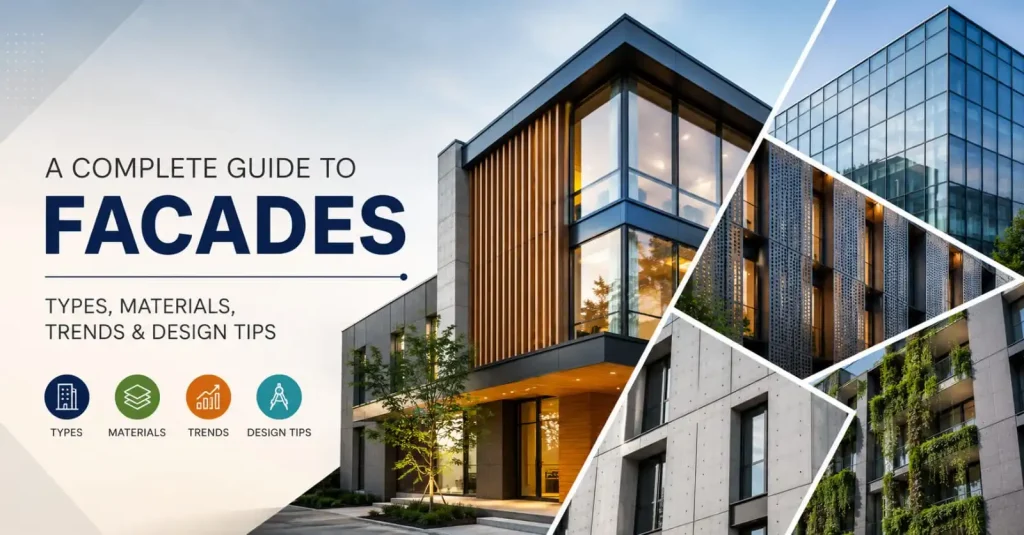
What catches your eye first when you walk past a building? The outside appearance. Isn’t it? Your eyes are drawn to the balconies and patterns of the building. That visible face of a building is known as the facade.
Facades are no longer just the elements to decorate the home. But the architects now use them for various purposes. Already thinking about what they are?
Read on this blog post to find out the facade meaning and more in detail.
What is a Facade in Architecture?
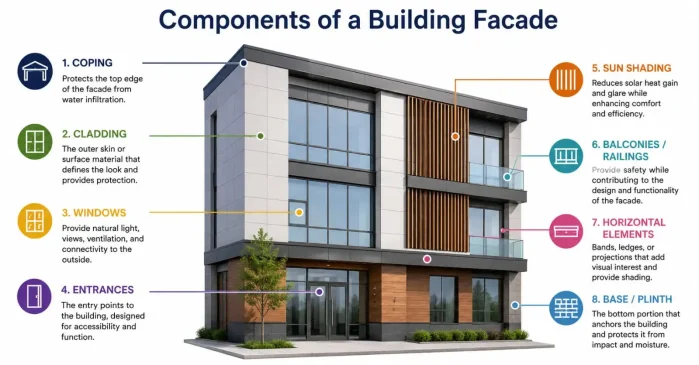
Facade is the visible side of a structure. It is the exterior face or outer surface of a building. A facade is a broad term that includes various architectural elements, given below:
- Walls
- Windows
- Doors
- Balconies
- Cladding
- Decorative features
- Sunshades and screens
Facades in the past were the cultural identity. People used them to showcase wealth and craftsmanship. That’s it? Nope! They also help in controlling the climate and conserving energy. An architect designs facades to balance aesthetics and performance. After all, the facade is the face of a building.
Why Are Facades Important in Building Design?
The facade helps more than just improving appearance. It protects the building from the outside environment. Given below are the main importance of facades in building design:
- Creates First Impression
Have you heard the saying, “Don’t judge a book by its cover”? Although we are familiar with this quote, we still judge a building by its exterior. This is why a modern facade is important. The building looks visually appealing and increases the property value.
- Improves Energy Efficiency
The right materials used to design a facade also improve energy efficiency. Why so? The facade with a good design and structure often controls sunlight and heat gain. It ensures proper ventilation that reduces the consumption of energy.
- Provides Weather Protection
Every weather comes with different challenges for the buildings. Rain in the monsoon and excessive heat in the summer are common. Facades also protect the structure from these challenges. It ensures that your building is safe in all weather conditions.
- Enhance Comfort
Let’s be honest: what does your comfort look like? Is it a natural cooling system and proper ventilation? Facade design improves indoor temperature and natural lighting. This provides you with a sense of comfort and peace at home.
- Supports Sustainability
The architects spend a lot of time designing the facade during project planning. The reason? Modern facade systems reduce the impact on the environment. How? They insulate and promote energy savings technologies.
What Are the Types of Facades in Architecture?
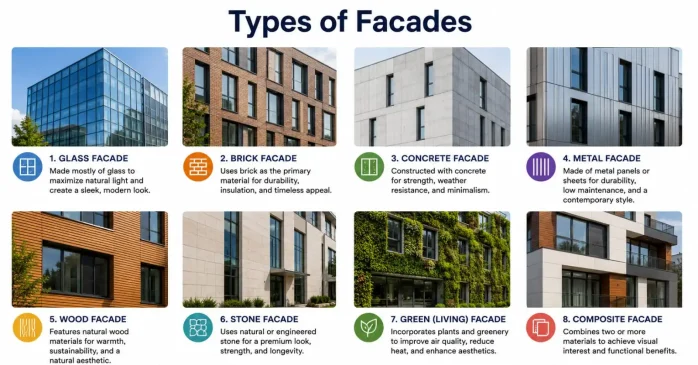
There are different types of facades in architecture. It depends on various factors, such as function, budget, and climate. Given below are some common types of facades in architecture:
- Curtain Wall Facade
It is a non-structural exterior wall made using glass and aluminum. You will usually find it in the following areas:
- Corporate offices
- Airports
- Commercial towers
They create a sleek and modern appearance. What’s more? Curtain wall facades allow natural daylight inside the building.
- Ventilated Facade
If proper ventilation in the building is your top priority, this type of facade is an ideal choice for you. It not only ensures better thermal insulation but also improves energy performance. It controls the moisture that makes a room comfortable.
- Double-Skin Facade
A double-skin facade has two separate layers with an air cavity. You will primarily see them in premium buildings where the priority is energy efficiency.
- Structural Facade
It is the type of facade that contributes to the structural ability of the building. The twist? It also makes your building look aesthetic from the outside.
- Green Facade
Green facades make your building exteriors look like a garden. It incorporates plants and vegetation. This facade improves air quality and also reduces urban heat.
What Are the Facade Materials in Modern Architecture?
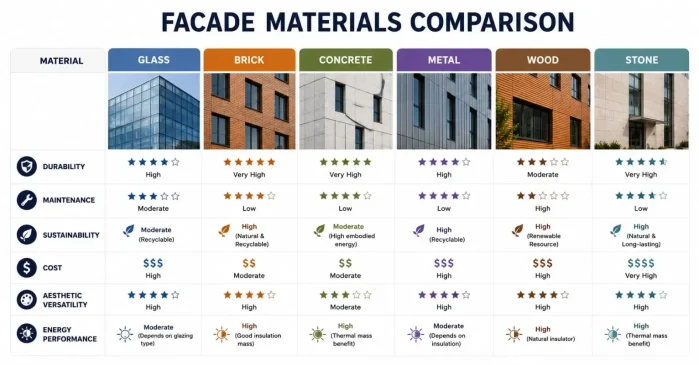
The material you choose highly influences the performance and appearance of a facade. Some of the facade materials in architecture are:
- Glass: It is usually found in commercial buildings and high-rises.
- Aluminium: It is lightweight and resists corrosion. It is used with glass facade systems.
- Stone: Natural stones, like granite or marble, create a timeless and memorable appearance.
- Concrete: It makes the facades durable and versatile. Architects often create contemporary industrial aesthetics with exposed concrete.
- Brick: The durability and low maintenance of this material make it popular for facades.
- Composite Panels: Aluminum composite panels (ACP) provide lightweight solutions with multiple colors and texture options.
- Wood: If you want the warmth and character outside the building, wooden facades are an ideal choice.
How to Choose the Right Facade Material for a Building?
Given below are the factors to keep in mind when choosing the right facade material for a building:
- Climate Conditions
The weather conditions in your area matter a lot. So, always consider factors like temperature, humidity, and others before buying a material.
- Purpose of a Building
Commercial buildings have different functional requirements than residential buildings. The facade material that you choose also depends on the purpose of your building.
- Maintenance Requirements
Some facade systems need high-maintenance to maintain the appearance and performance. It is advisable to compare different materials to select the ones that require less maintenance.
- Budget
You should choose the type of facade that perfectly aligns with your budget. Calculate both installation expenses and ongoing maintenance costs for a clear picture of the budget.
- Sustainability Goals
Sustainable facades use materials and energy-efficient designs that are sustainable. They not only reduce carbon footprint but also improve building performance.
What Are the Modern Facade Design Trends in Architecture?
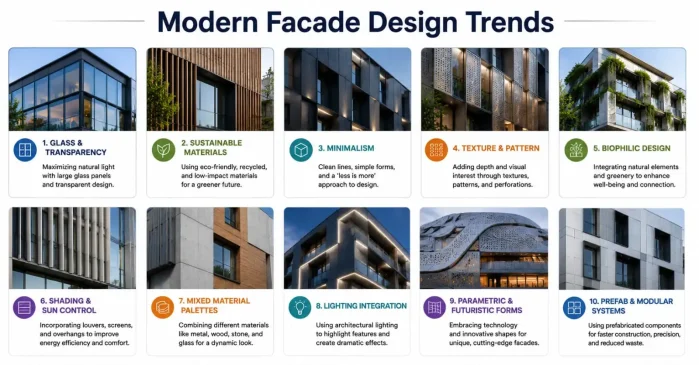
Architecture is something that comes with innovations each day. So, what’s trending nowadays in designing modern buildings? Given below are some of them:
- Sustainable Facades
Architects follow green building practices to create facades. This not only improves energy performance but also reduces carbon footprint.
- Dynamic Facades
Sunlight. Temperature. Weather conditions. The dynamic facades adjust based on these factors. They are similar to the smart sunglasses for buildings.
- Biophilic Design
It focuses on greenery. The best part? The architect uses natural materials to design the facade.
- Parametric Facades
Architects create complex patterns and unique geometric designs using the software in parametric facades. They design based on your type and outdoor space.
- Minimalist Exteriors
Simple and minimalist exteriors never go out of style. The architect mostly follow the below pattern if you want a simple outdoors:
- Clean lines
- Neutral colors
- Simple forms
Note: The above trends highlight how the modern facade is becoming both intelligent and visually appealing.
What Are the Benefits of a Well-Designed Building Facade?
Given below are the benefits of a well-designed building facade:
- Better Energy Performance
It reduces heat gain in summer and heat loss in winter. The result? It regulates indoor temperatures and improves energy efficiency.
- Enhanced Property Value
A strong first impression increases the visual appeal of a building. But how to create the appeal? It is easy to establish it with an attractive and modern facade.
- Improve Comfort
Facades create a healthy and comfortable environment. They maximize natural light and improve ventilation in indoor spaces. As a result, you enjoy better air quality at home.
- Longer Building Life
Rain. Wind. Sunlight. Pollution. The facade protects the building from all the external forces. It reduces environmental damage that extends the lifespan of the structure.
- Strong Brand Identity
The facade acts as a visual statement for the brand. A distinctive design makes the building memorable and leaves a lasting impression.
What Are the Common Challenges in Facade Design and Construction?
Given below are the common challenges that architects may face in the design and construction of facades:
- Water Resistance
The facade design should be water-resistant. It must maintain durability and appearance for many years.
- Thermal Performance
Another major challenge is to allow sufficient natural light while reducing the heat gain or loss. It is essential to achieve the right balance for energy efficiency and indoor comfort.
- Structural Integration
The facade should seamlessly integrate with the structural system of the building. Thus, a successful structural integration requires teamwork and coordination of architects, engineers, and contractors.
- Maintenance Access
Facades in high-rise buildings need safe and efficient access for regular cleaning and repairs. You can reduce long-term operational challenges and expenses if you plan maintenance systems early.
- Material Compatibility
Temperature changes and environmental conditions also impact the facade materials. It is advisable to ensure the compatibility of the materials to prevent issues like cracking, warping, or leakage.
What Are the Safety Tips to Follow When Using Facades in Architecture?
Given below are the safety tips to follow when using facades in architecture:
- Choose the tested and approved facade materials that meet building standards.
- Premium materials can also fail if you don’t install them properly.
- Select fire-resistant systems as the local regulations suggest.
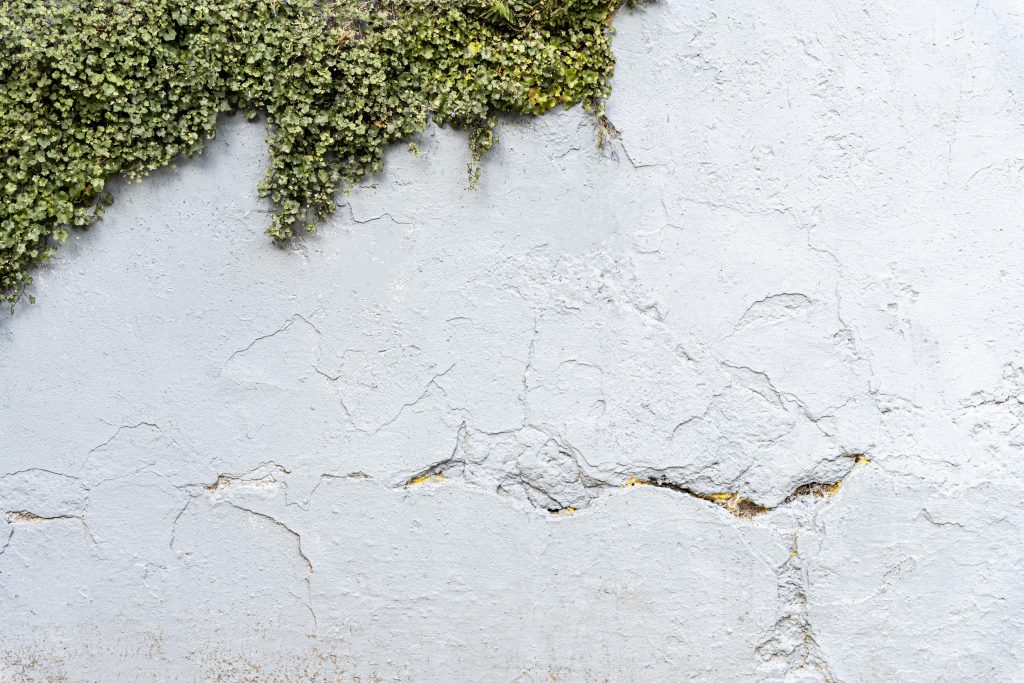
- Conduct regular inspections to identify cracks and leaks.
- Design tall buildings to manage the local wind conditions.
Conclusion
A facade is where architecture meets performance. It not only creates a first impression but also protects the structure. It provides comfort and contributes to sustainability. The right facade can completely transform the identity of a building. As architecture continues to evolve, facades are becoming smarter, greener, and more responsive to the environment.
Planning to build your home? Use a house construction cost calculator to determine construction costs effortlessly.
FAQs
1. What is facade in architecture?
A facade is the exterior face or visible outer surface of a building, often including walls, windows, doors, and decorative elements.
2. What is the facade meaning in simple words?
The facade meaning refers to the front or outer appearance of a building that people see from the outside.
3. Why is a facade important in building design?
A facade improves aesthetics, protects the structure, enhances energy efficiency, and increases occupant comfort.
4. What are the most common facade materials?
Glass, stone, brick, concrete, aluminum, wood, and composite panels are among the most commonly used facade materials.
5. Which facade material is best for hot climates?
Ventilated facades, insulated panels, and reflective materials often perform well in hot climates by reducing heat gain.
6. What is a green facade?
A green facade integrates plants and vegetation into the building exterior to improve sustainability, aesthetics, and air quality.
7. How often should building facades be inspected?
Most experts recommend professional facade inspections every few years, along with regular maintenance checks to ensure safety and durability.