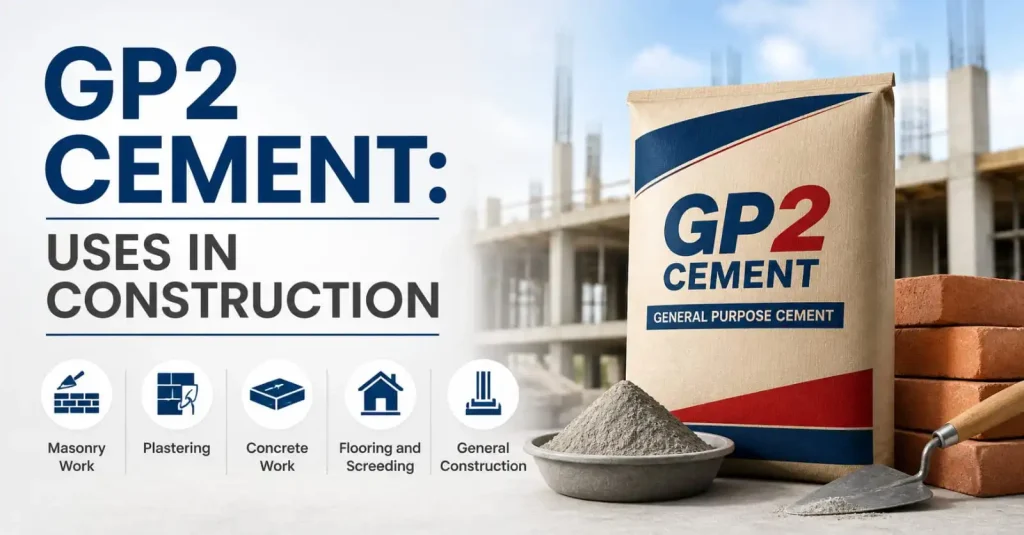
If you’ve heard someone on-site use the term “GP2″, they’re usually talking about a general-purpose cement mix used for plastering or masonry work.
The GP2 cement full form is commonly understood as ‘General Purpose (Grade 2)’ in practical usage — not a strict technical standard, but a working term used by contractors.
In simple words, Gp2 Cement is about getting the right balance of strength and workability for everyday construction jobs like plaster and brickwork.
What is GP2 Cement In Real Terms
There’s no official BIS category called ‘Gp2 Cement’. It is mostly used at sites to indicate the following:
- A general-purpose cement mix
- Plastering, masonry, and non-structural work usage.
- Easy application and a smooth finish.
So when GP2 cement uses are mentioned, it usually means practical, day-to-day construction tasks – not heavy structural work.
Think of it like this:
- OPC is for strength.
- GP2 is for handling and finishing.
GP2 Cement Full Form — What It Actually Means
Technically, it’s not a standardised term. But in everyday site language:
GP = General Purpose
2 = Indicates a mix or grade suitable for plaster/masonry.
So Gp2 Cement is more of a site shorthand than a lab-tested category.
And if you’ve worked with contractors, site language often matters more than textbook definitions.
Where GP2 Cement is Actually Used
The most common GP2 cement uses you’ll see are the following:
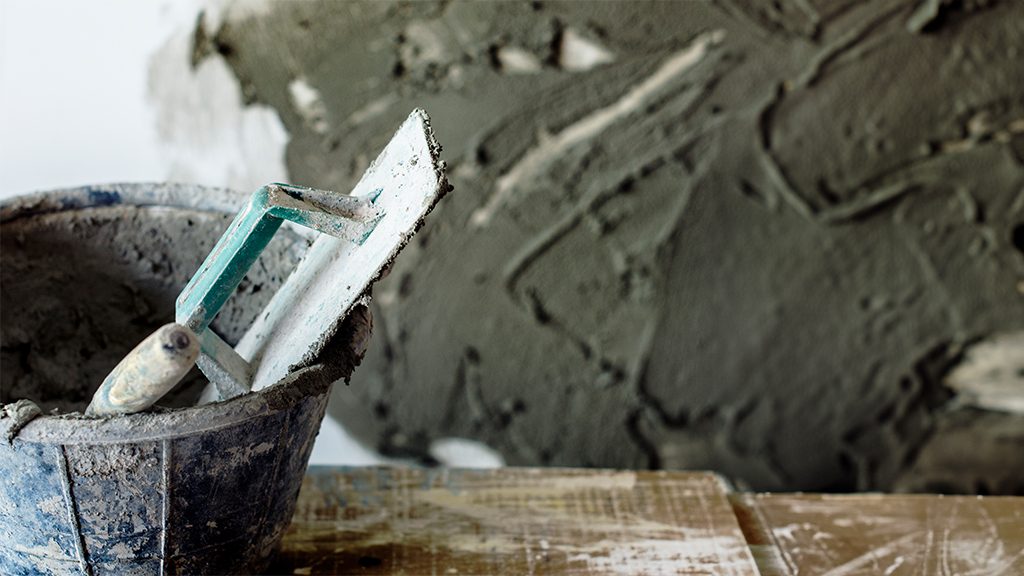
1. Wall Plastering
This is where Gp2 Cement shines.
- Smooth finish
- Easy to spread
- Better workability
- Perfect for internal and external plaster.
2. Brick Masonry
For brick joints and blockwork, GP2 cement uses are quite common.
- Good bonding
- Easy leveling
- Less shrinkage cracks (if mixed right)
3. Repair Work
Gp2 Cement is most handy for:
- Small patch repairs
- Crack filling
4. Flooring Base Layers
- Used in base layers before final finishing.
- Not for heavy loads – but perfect for levelling.
GP2 Cement Consumption Per m³ – What to Expect
Now the part most people actually search for — GP2 cement consumption per m³.
In simple and practical words, for plaster or masonry, cement consumption depends on the mix ratio.
Typical Consumption (Approximate)
- For a 1:5 cement mortar mix: Cement required ≈ 6–7 bags per m³
- For a richer mix (1:4): Cement required ≈ 7–9 bags per m³
So, the GP2 cement consumption per m³ usually falls in this range depending on the following:
- Mix ratio
- Surface condition
- Workmanship
- Real Site Insight
No one measures exactly on-site.
How to Get the Mix Right
Using Gp2 Cement properly is more important than just buying it.
Here’s a quick way to ensure good results:
Step 1: Choose the Right Ratio
Plaster: 1:4 or 1:5
Masonry: 1:6
Step 2: Use Clean Sand
Dirty sand = weak bonding.
Simple as that.
Step 3: Add Water Carefully
Too much water = cracks later.
Too little = poor workability.
Step 4: Mix Properly
Uneven mixing ruins even the best Gp2 Cement.
GP2 Cement vs OPC vs PPC
Let’s clear a common confusion.
| Type | Best Use | Strength | Workability |
| OPC | Structural work | High | Medium |
| PPC | Durable structures | Medium | Good |
| Gp2 | Cement Plaster & masonry | Moderate | High |
So when choosing between them, think:
Structure → OPC
Finish → GP2
Why Contractors Prefer GP2-Type Mixes
There’s a reason GP2 cement uses are so common.
- Easy to apply
- Saves time
- Gives a smoother finish
- Reduces rework
And in construction, time saved = money saved.
Why Choosing Quality Cement Matters
Even if you’re using a general-purpose mix, quality matters.
A reliable cement ensures the following:
- Better bonding
- Less cracking
- Longer life
JK Super Cement is known for its strong bonding, low heat of hydration formulations, and durability.
And for finishing layers, products like wall putty can further improve surface quality — something many homeowners overlook.
Common Mistakes to Avoid
Some common mistakes seen on site are:
- Using structural cement mix for plaster (overkill + costly).
- Adding excess water.
- Ignoring curing.
Even the best GP2 Cement won’t perform if the basics are ignored.
What You Should Remember
- GP2 cement’s full form is ‘General Purpose’.
- Used mainly for plaster, masonry, and repairs.
- GP2 cement consumption per m³ is ≈ 6–9 bags, depending on the mix.
- Focus on the application, not just the material.
- Proper mixing and curing matter more than brand alone.
On paper, terms like Gp2 Cement can feel vague. But on-site, they make complete sense. It’s less about definitions and more about getting the job done right, efficiently, and without rework.
In construction, the best mix isn’t the strongest one – It’s the one that works best for the job at hand.
FAQs
1. What is GP2 cement full form?
It generally means General Purpose cement (Grade 2) in site language, not an official classification.
2. Where is GP2 cement used?
Typically, in plastering, brickwork, and repair jobs.
3. What is GP2 cement consumption per m³?
GP2 cement consumption per m³ is around 6–9 bags, depending on the mix ratio.
4. Is GP2 cement apt for structural work?
No. It’s more apt for non-structural applications like plaster and masonry.
5. Can GP2 cement be used for flooring?
Yes, but for base layers – not for heavy load-bearing slabs.
6. Is GP2 cement the same as OPC?
No. OPC is a standardised cement type, while Gp2 Cement is a general-purpose mix concept.
7. How do I improve GP2 cement performance?
By using proper mix ratios, clean materials, and ensuring curing, that’s where real strength comes from.