There are different building materials necessary for construction. Concrete is one of those materials. Workers use it to build foundations and other structural members. However, they spend a lot of time and effort moving fresh concrete from one place to another. This is where a concrete pump is useful. It is a tool that moves fresh concrete through pipes. It delivers the concrete directly to the construction point. As a result, it improves the speed of the workers. Read on this blog post to find out the types and applications of concrete pumps.
What Is a Concrete Pump?
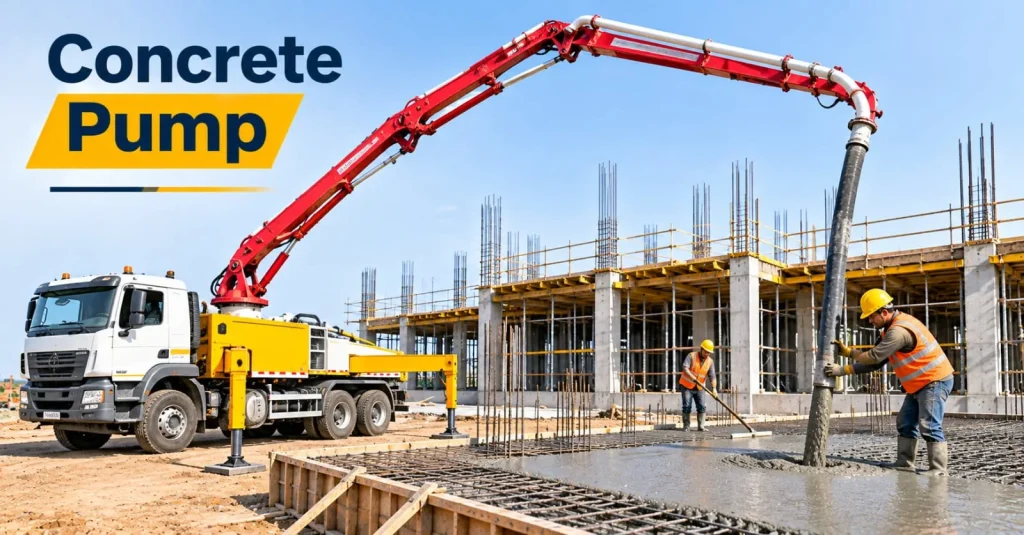
A concrete pump transports fresh concrete through pipelines to a specific location. The mechanical pressure moves concrete from a hopper to the pouring point. Given below are the common applications of a concrete pump:
- Residential buildings
- Commercial projects
- Bridges
- Tunnels
- High-rise structures
What Are the Types of Concrete Pumps in Construction?
Given below are the common types of concrete pumps in construction:
Boom Concrete Pump
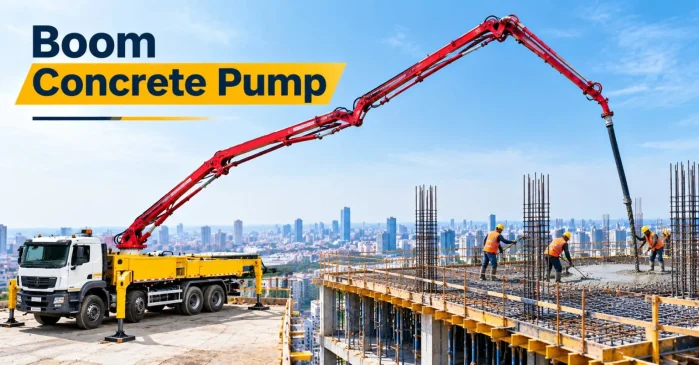
This type of concrete pump uses a hydraulic arm to deliver concrete. This arm is known as a boom. The movable sections help workers reach different areas of a construction site. The common applications of boom pumps are as follows:
- High-rise buildings
- Large slabs
- Bridges
- Commercial structures
But why must workers use a boom concrete pump? This is because it delivers concrete quickly over large areas. Moreover, a boom reaches considerable heights that reduce manual effort. Remember that a boom pump needs enough space. This is why the site must provide safe access and sufficient clearance for the boom.
Line Concrete Pump
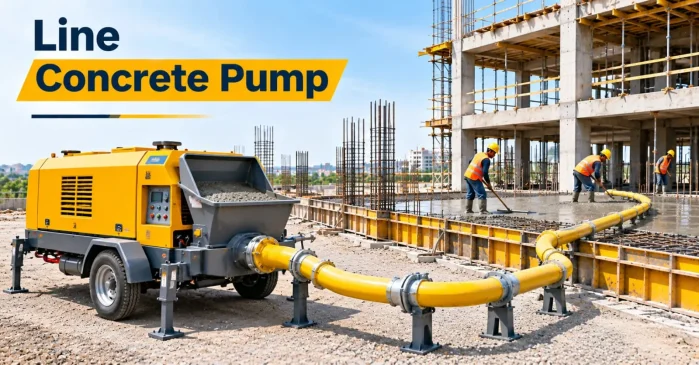
A line concrete pump is often known as a stationary pump. It delivers concrete through connected pipes or flexible hoses. Workers arrange the delivery line from the pump to the location. The common applications of a line concrete pump are as follows:
- Residential buildings
- Foundations
- Small commercial projects
- Sites with limited access
The most intriguing part of a line concrete pump is that it costs less than a large boom pump. It is advisable to secure the pipeline properly and check every connection before pumping.
Stationary Concrete Pump
This type of pump remains at a fixed position during the pumping operation. Workers connect it to a delivery pipeline that carries concrete to the placement area. Contractors often choose these machines for high-rise construction. The crew can extend the pipeline as the structure grows. Stationary pumps supply concrete consistently. However, they do not have a truck-mounted boom.
Truck-Mounted Concrete Pump
A truck-mounted concrete pump combines a concrete pumping system with a road vehicle. A few models carry a hydraulic boom. However, others support pipeline-based delivery. The truck travels between sites. This makes it useful for contractors to handle several projects. Its mobility also reduces the need to transport a separate pumping unit.
How Does a Concrete Pump Work in Construction?
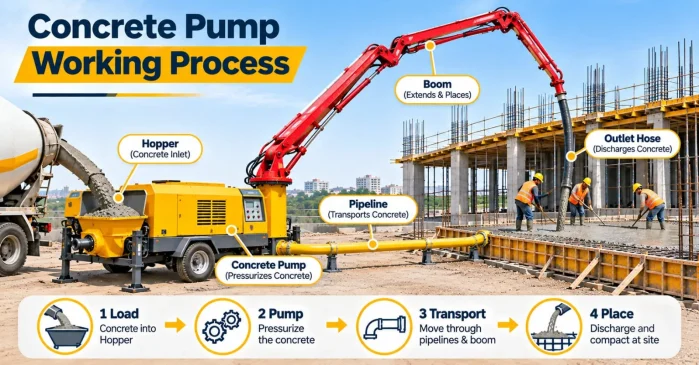
Given below is the process of how a concrete pump works in construction:
- The first step is to deliver fresh concrete into the pump hopper. The operator checks the concrete condition before using the equipment.
- The hydraulic system drives the pumping mechanism. The cylinders move concrete into a delivery pipeline. Further, the pump pushes the material through the pipes.
- The concrete reaches the placement point at this stage. The process of spreading and compacting the concrete depends on the project requirements. The team follows the specified placement process, including vibration where required by the concrete mix and project specifications.
What Are the Common Applications of Concrete Pumps in Construction?
The following are the common applications of concrete pumps in construction:
Residential Construction
Builders use concrete pumps to construct structural members and upper floors. Engineers mostly use line pumps for smaller sites. However, larger buildings require boom pumps.
High-Rise Buildings
Tall structures require proper delivery of concrete. Boom pumps and stationary pumps help contractors place concrete at height.
Infrastructure
Infrastructure development often needs concrete. Contractors use pumping machines to deliver concrete to different locations. It helps them save manual time and effort.
The Final Words
A concrete pump makes it easy to move fresh concrete from one location to another. It moves fresh concrete through pipes or hoses. Boom pumps are suitable for large and high-rise projects. However, contractors use line and stationary pumps for restricted sites. The right choice depends on the project requirements.
FAQs
1. What is the main purpose of a concrete pump?
A concrete pump transports fresh concrete from a mixer to the required placement area through pipes or hoses. It helps contractors pour concrete faster, reach elevated locations, and reduce manual labour on residential, commercial, and infrastructure projects.
2. What are the main types of concrete pumps?
The main types of concrete pumps are boom pumps, line pumps, stationary pumps, and truck-mounted pumps. Each type serves different construction needs based on pumping distance, delivery height, site access, and concrete volume.
3. Which concrete pump is best for residential construction?
A line concrete pump is often suitable for small residential projects because it fits sites with limited space. For multi-story houses and larger concrete pours, a boom pump may offer faster placement and better reach.
4. How high can a concrete pump deliver concrete?
A concrete pump can deliver concrete to different heights depending on its model, pumping capacity, pipeline arrangement, and concrete mix. Boom pumps use hydraulic arms, while stationary pumps use pipelines. Always check the manufacturer’s specifications for the maximum delivery height.
5. What is the difference between a boom pump and a line pump?
A boom concrete pump uses a hydraulic arm to deliver concrete to elevated or distant locations. A line concrete pump pushes concrete through connected pipes or hoses. Boom pumps suit large projects, while line pumps often work well on smaller or restricted sites.
6. Can a concrete pump handle all types of concrete?
A concrete pump cannot handle every concrete mix equally well. Pumpability depends on workability, aggregate size, mix proportions, and pipeline dimensions. Contractors must select a suitable concrete mix and follow the pump manufacturer’s recommendations to prevent blockages and ensure smooth delivery.