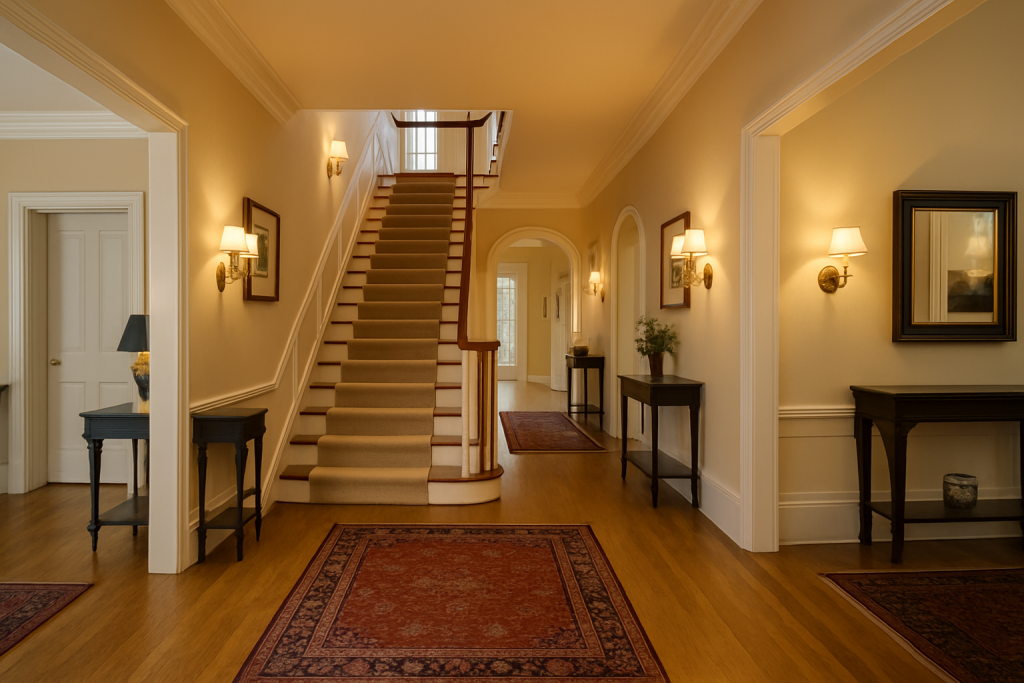
If you’ve ever walked into a home and instantly felt that something “just works,” chances are the layout is doing a lot of silent heavy lifting. The staircase is one of those elements. It looks simple—just steps going up or down—but according to Staircase Vastu, it carries significant energy flow. A staircase isn’t just a structure; it becomes a rhythm the house beats to every day. That’s why homeowners keep searching for the right staircase as per Vastu rules to ensure everything feels balanced and grounded.
Why Staircase Vastu Even Matters
Think of your home like a human body. You want your spine straight and strong, yeah? Well, a staircase built with Vastu principles does just that for your home. It sticks everything together and keeps the good vibes flowing between floors. Putting stuff in the right place brings good vibes and keeps things steady. If you don’t, it’s like dragging around something heavy. That’s why Vastu tips for stairs are helpful—they guide you in building a strong structure.
A lot of Indian families use these rules, not because they’re just old wives’ tales, but because they’ve noticed how where things are placed impacts air, light, feelings, and even how they do stuff every day. Vastu just organizes what’s naturally there.
Best spot for Stairs
Picking where to put your stairs using Vastu is like picking a good place for a tree in your yard. It needs a firm base, a clear way to go, and space.
Usually, the southwest is said to be the best for things that are heavy.
So placing your staircase here keeps the weight grounded and stable. If that’s not possible, the west or south zones work well too. The goal is simple: keep lightweight and open spaces—like northeast—free from dominant structures.
This is why the northeast is usually a strict “no” for staircases. It’s the spot where morning light enters, and blocking or weighing it down can disrupt that natural flow. Thinking of your home like a breathing space helps explain why stairs as per Vastu rules prioritize balance over blind tradition.
How Many Steps Should You Have?
The step count is one part people find strangely interesting. And it makes sense—numbers feel symbolic. A staircase that ends with an even number of steps often feels abrupt, while an odd number has a more natural rhythm.
In Staircase Vastu, odd number counts—especially ones ending in 1, 3, 5, 9, or 11—are believed to carry a steady energy pattern. Think of how most people prefer an odd number of sofa cushions or vases on a table. It simply feels harmonious. A staircase designed with Vastu principles follows the same idea: small details that make a room feel finished.
Clockwise or Anti-Clockwise?
A gentle clockwise ascent is usually recommended when planning a staircase position as per Vastu. This isn’t a rigid formula but comes from observing how we instinctively move. Most people carry things comfortably in their right hand and step up naturally in a clockwise motion. When your architecture supports the body’s instincts, the house simply feels easier to live in.
Choosing the Right Colors
Colors have moods of their own. Ever noticed how grey feels heavy and yellow feels airy? Staircases aren’t the place for deep, dark, overpowering tones. They can make the climb feel tight or heavy. Soft neutrals—beige, cream, warm grey, light pastels—create a sense of openness.
In the staircase as per Vastu, calm colors are recommended because staircases are transitional spaces. You don’t want them to steal focus or dominate. You want them to guide you, gently. A smooth color palette makes the journey between floors feel natural.
Materials That Work Best
If staircases were shoes, then the material would be the sole—literally grounding your movement. Stable, solid materials like wood, stone, granite, or concrete are traditionally ideal in Staircase Vastu because they give the impression of permanence and safety.
Metal staircases, especially spiral ones, may look modern but can feel light, sharp, or noisy. And in Vastu terms, they don’t offer the same grounding effect a staircase according to Vastu is meant to provide. That doesn’t mean you must avoid them—it just means pairing metal with wood or thicker steps often feels more stable.
Placement Tips That Make Life Easier
When thinking about staircase position as per Vastu, there are a few practical ideas worth noting:
- Avoid placing stairs right in front of the main entrance. It steals focus and energy the moment someone walks in.
- Don’t let the staircase touch or hover above water zones like bathrooms or pooja rooms.
- Make sure the staircase is well-lit. Light equals safety, clarity, and positivity.
- Create storage under the staircase only if it’s tidy and functional. Clutter tends to accumulate in hidden corners, and that’s the opposite of good Vastu.
- A staircase shouldn’t creak or wobble. Vastu or not, no one wants a shaky climb.
These aren’t just old rules—they’re about making things feel right. When your home just feels right, it works better.
Some Examples
Think about walking into a house and the first thing you see is the staircase right in front of you. It makes you look up, and the room feels smaller. Now, what if the stairs were off to the side? Suddenly, there’s more space. That’s what staircase direction is all about: creating a flow that feels easy.
Or, what about stairs in a bright northeast corner?
It blocks light, adds weight, and makes the space feel dim. Shift it to the southwest, and suddenly the home feels brighter and more grounded.
These aren’t coincidences. Architecture plays with psychology far more than we notice.
Final Thoughts
At the end of the day, Staircase Vastu isn’t about following strict rules. Think of it more as using design ideas that have been around for ages. If you choose a good spot for your staircase based on Vastu, use nice materials, keep the colors light, and make sure you have an odd number of steps, you’re making a home that just feels good and balanced. The way things are built is super important, but what you use matters too. A lot of people like using things like JK Cement to build staircases because they want a strong base that makes the whole house feel safe and solid. A staircase that follows Vastu is best when it’s in the right spot and built well. It needs to be strong and ready to handle daily life without any fuss.
FAQs
1. Which is the best direction for a staircase as per Vastu?
Southwest is ideal, followed by south or west zones.
2. Can I build a staircase in the northeast corner?
Vastu advises avoiding it, as it blocks natural light and adds heaviness.
3. What is the best step count according to Staircase Vastu?
Odd numbers are better—think 9, 11, 15, or 21.
4. Are spiral staircases okay in Vastu?
People usually don’t like them because they can feel a bit flimsy, but you can fix that with a good design.
5. What colors work for a staircase?
Light neutrals—cream, beige, light grey, soft pastels.
6. Can I keep storage under the staircase?
Yes, but it must be clean and clutter-free.
7. Is clockwise movement mandatory?
Not mandatory, but a gentle clockwise ascent feels natural and aligns with traditional Vastu logic.